Ballantine's is well known as a Scotch blended whisky brand, but the fact that the same house also releases single malts is surprisingly under-discussed. Lining up the 21-Year blend with the Glenburgie 15 single malt at home, the design behind the brand becomes much easier to read.
The 21 Year is the finished article on the blending side. Glenburgie 15 is one of the key malts behind it, bottled on its own. It's like listening to the full mix and the lead melody separately.
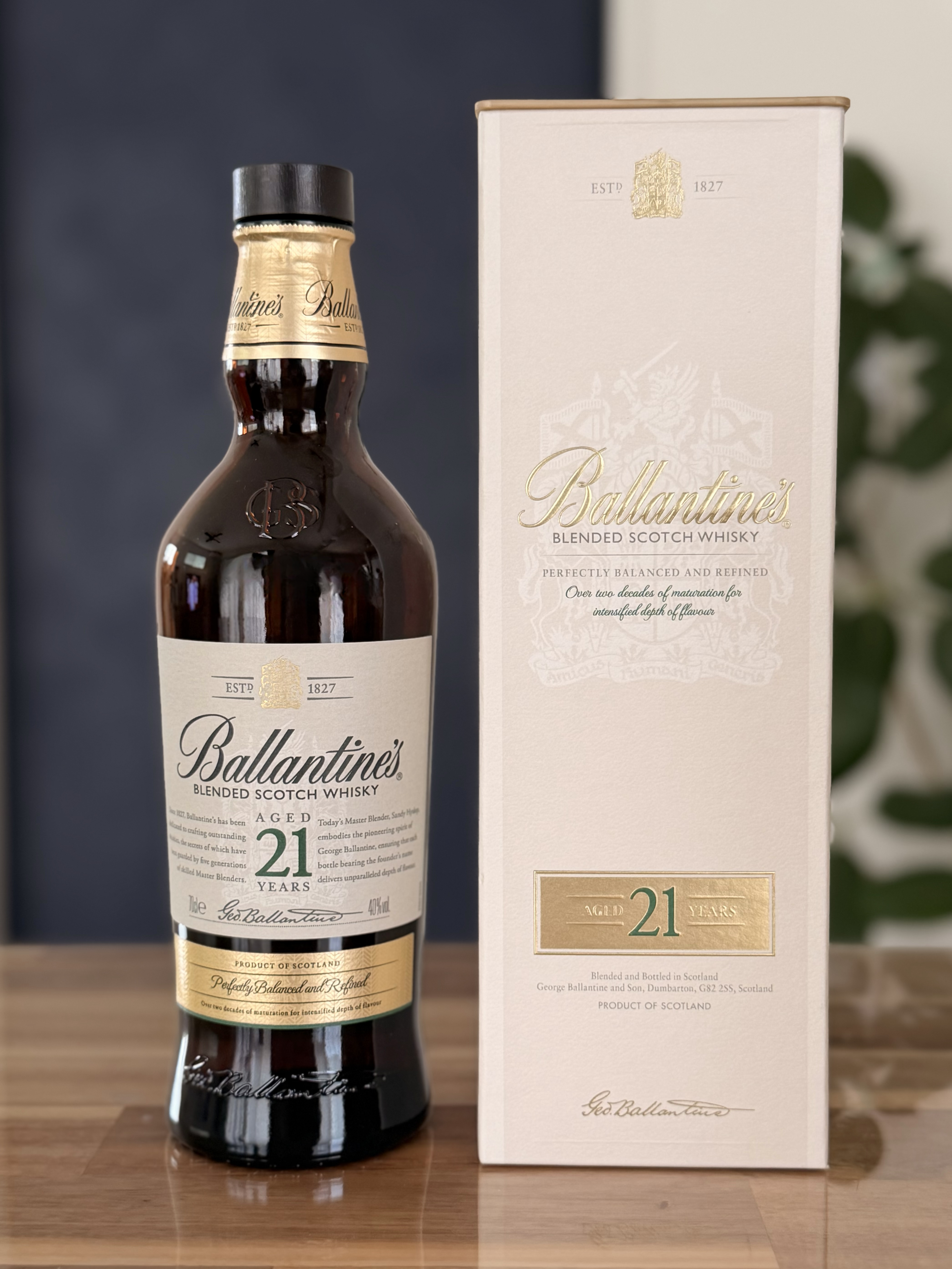
Ballantine's 21 — A Step Beyond 17
The line goes 12, 17, 21, 30. The 21 Year sits on the same trajectory as the 17 but pushes further toward smoothness and length rather than sharpness of outline. 40% ABV.
Honey and dried fruit on the nose, with vanilla and a settled oak woodiness behind. The palate gives sherry-cask raisins and orange marmalade, then a thin dry-peat smoke on the back end. The finish is long, with the cask aroma fading slowly. The 17 is already plenty; the 21 takes another step toward a "rounded edge" tone.
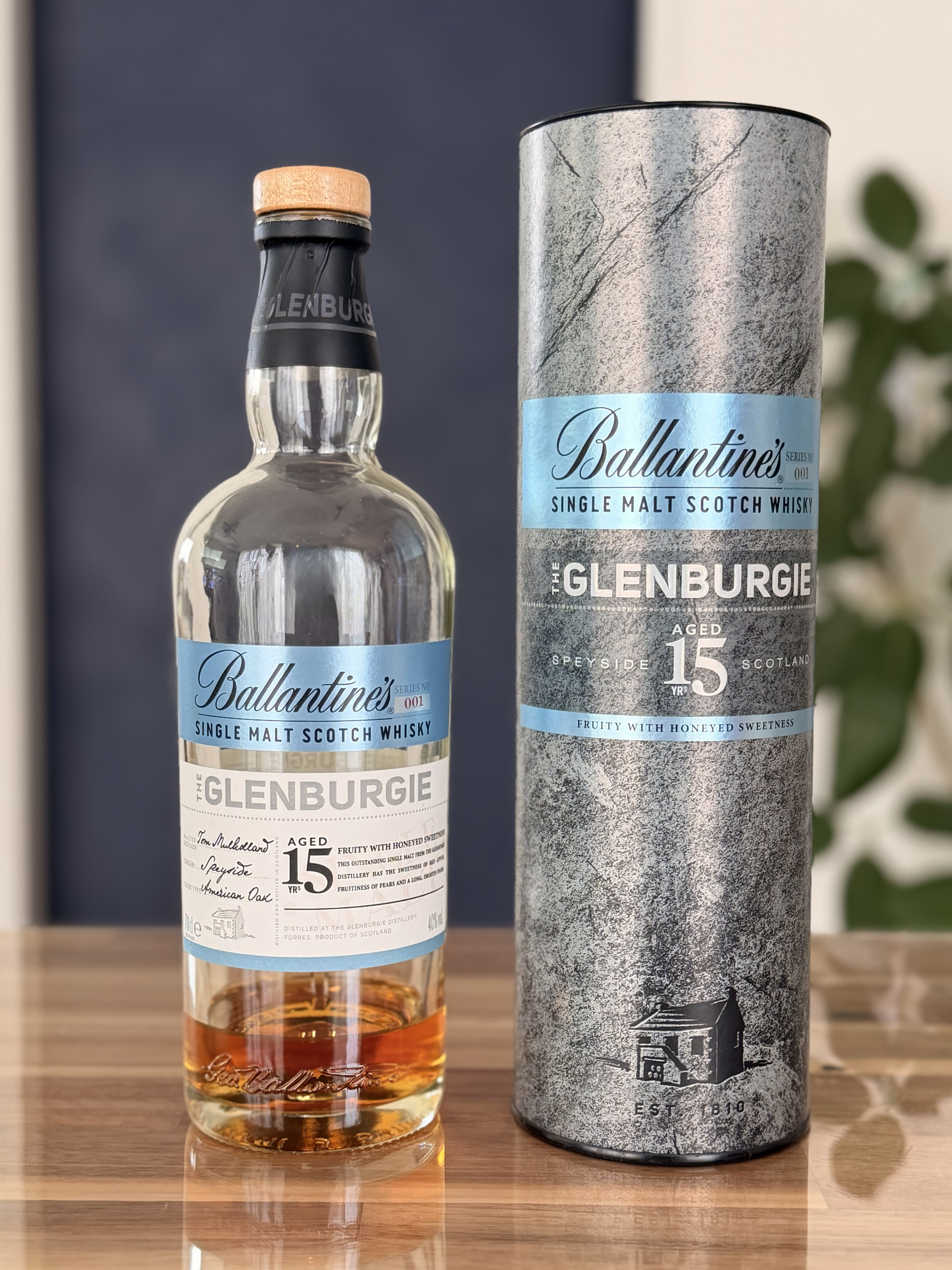
Glenburgie 15 — The Foundation Heard Naked
Glenburgie Distillery is in Speyside, near Elgin. Founded in 1810, it remains one of the most important key malts in the Ballantine's blend, with most of its capacity reserved for the in-house blend — the workhorse behind the curtain.
As a 15-year single malt, the nose offers red apple, pear, and a cassis-like berry note. There's a soft honey sweetness up front and a faint floral note on the back. At 40% ABV it sits on the milder side of modern single malts. Drink the 21 first, then Glenburgie, and the moment of recognition is clear: that fruit-and-honey core in the blend was this malt. Reverse the order and the artistry of the 21's blend lands harder.
Blends are sometimes called the "composite art" of malt and grain. Identify the components, drink the whole again, and the blueprint becomes visible. Ballantine's gets noticeably more interesting as a pair.
Ballantine's and Pernod Ricard
George Ballantine (1809–1891)
Started as a grocer in Edinburgh in 1827; later moved into whisky blending. Royal Warrant in 1895. Today Ballantine's sits within French group Pernod Ricard.
Key malt structure
The blend's core leans on Glenburgie and Miltonduff (Speyside), with Glentauchers alongside. Each of these has been released in The Ballantine's Single Malt Series.
21 vs 17
The 17 keeps key-malt character on the foreground; the 21 pushes the maturation longer, smoothing the edges and putting cask depth and matured weight forward. The 21 is the long-running marquee in Ballantine's premium tier.
Both available on Amazon.co.jp; 21 Year stock is mostly parallel import with price swings.