Late March 2015, the Semana Santa (Holy Week) holidays. Only a few months of my assignment were left. Traveling with fellow volunteers from my cohort, I headed for Tenorio Volcano National Park in northern Costa Rica — home to a river named Río Celeste, Spanish for "sky-blue river."
I'd been in Costa Rica for nearly two years by then. I'd seen volcanoes, jungle, the Pacific and the Caribbean. And still, the color of this river was unlike any landscape I'd seen before.
A Milky-Blue Waterfall
From the trailhead you walk through rainforest, then descend a long staircase to reach the Catarata Río Celeste — the Río Celeste waterfall. Ringed by green cliffs, white water pours into a plunge pool and vanishes into a milky-blue surface.
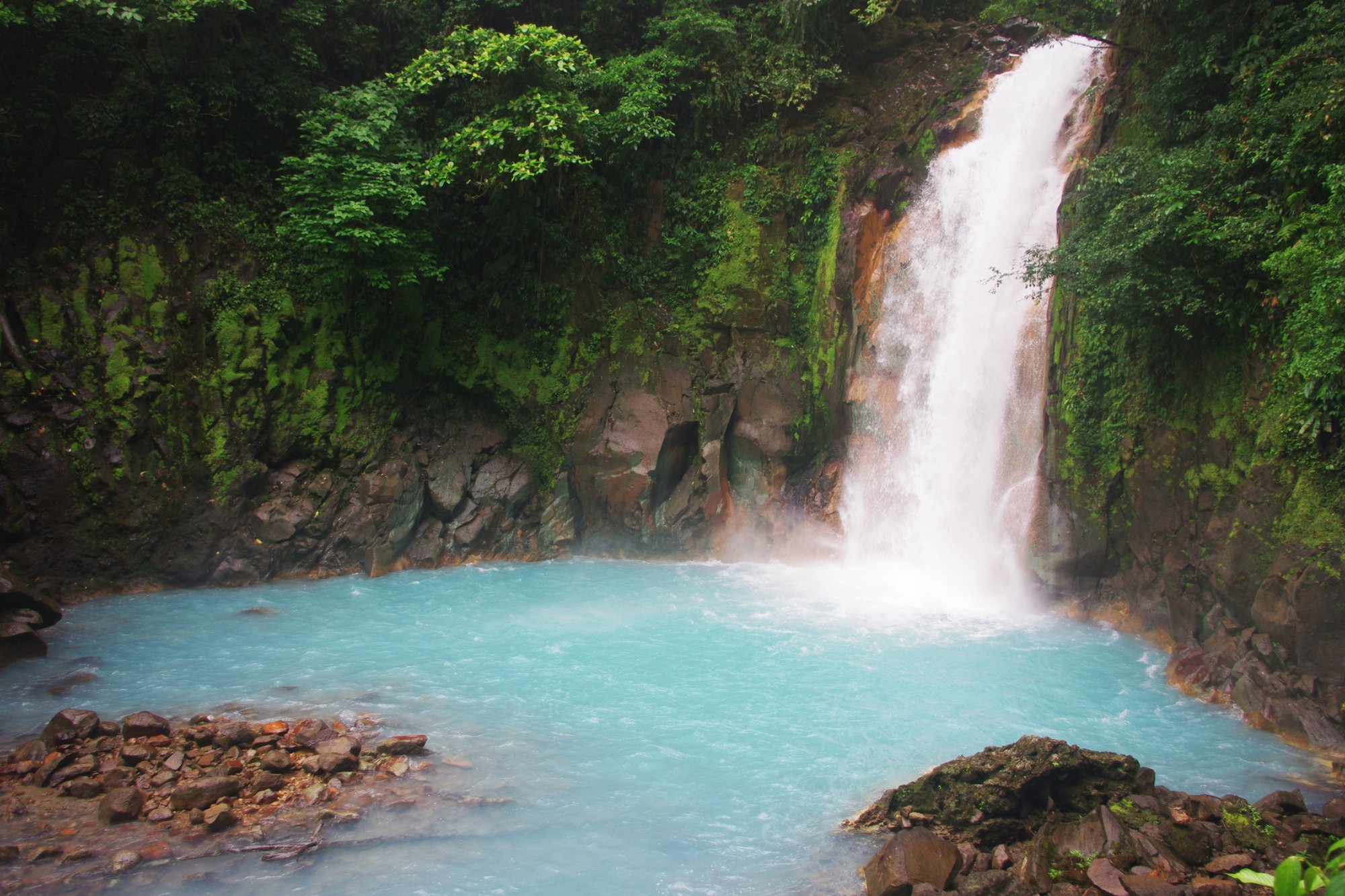
People sometimes ask, "You edited that photo, right?" It's the opposite. The real thing is bluer than the photo. It was this color even on a cloudy day — with sun breaking through, they say, it turns more vivid still.
El Teñidero: Where the River Turns Blue
The waterfall isn't the only thing that makes this park remarkable. Walk further along the trail and you reach a spot called El Teñidero — "the dyeing place." Here, two clear rivers meet, and from the moment they mix, the water turns blue.
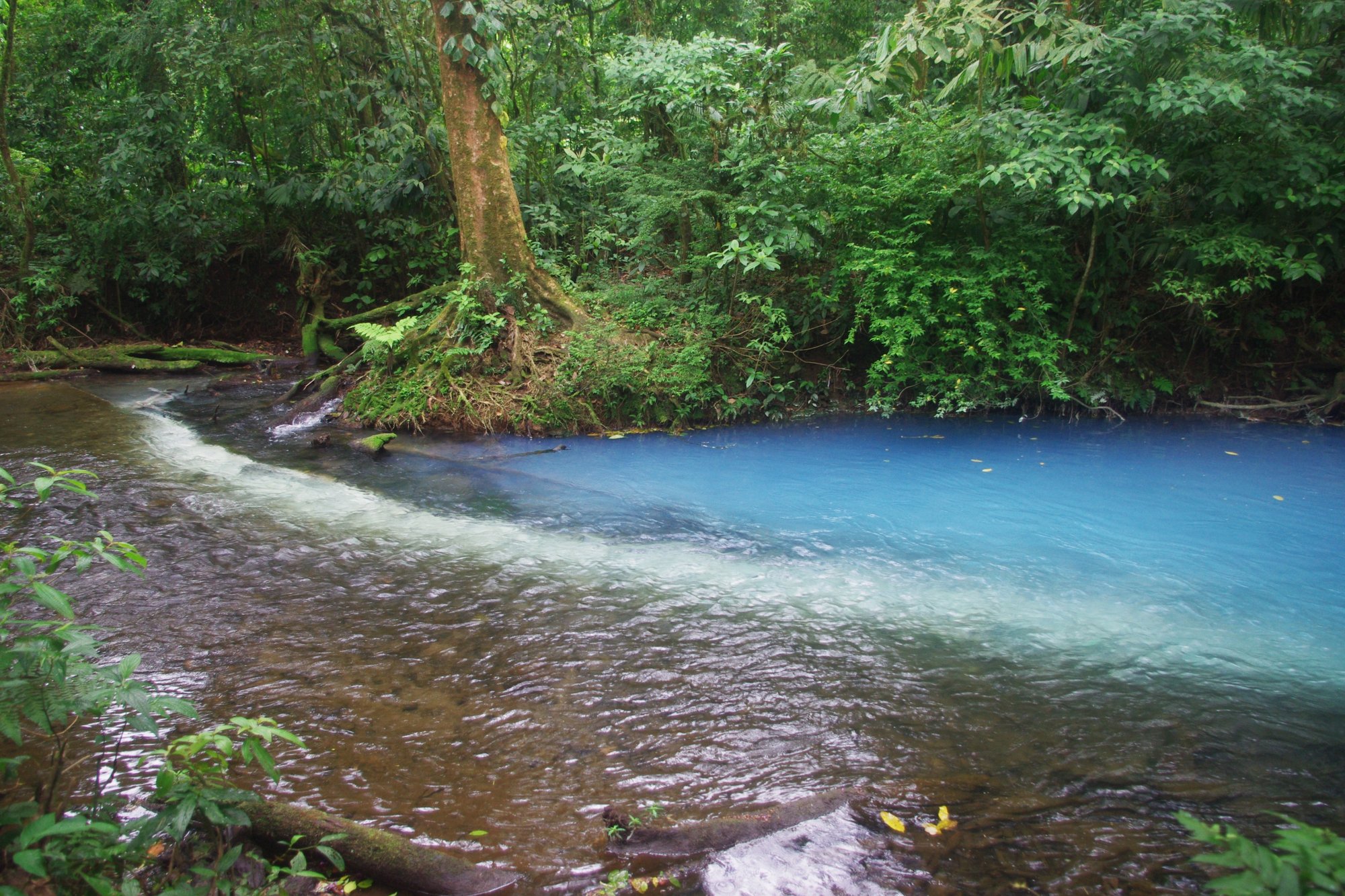
The boundary is almost comically sharp. Upstream, both rivers are ordinary and transparent; only from the mixing point onward is the water blue. It looked as if someone had poured paint into the river right there.
For a long time the phenomenon was a mystery, but in 2013 a research team from a local Costa Rican university worked out the mechanism. There's no blue "substance" dissolved in the water. When the two rivers mix, tiny mineral particles of volcanic origin grow larger and begin to scatter blue light strongly — the color isn't there; the light just looks that way. Hearing the trick explained didn't make the color in front of me any less strange.
The River Where God Washed His Paintbrush
There's a local legend: "After God finished painting the sky blue, he washed his paintbrush in this river." Standing at the confluence at El Teñidero, you understand exactly how whoever came up with that story felt. There aren't many places where the scientific explanation and the mythical one both feel equally right.
Maybe because the trip came near the end of my assignment, my memory of that day is bound up with a single feeling: there was still this much of Costa Rica I hadn't seen. Two years of living there, and I never ran out of this country's nature.
Even after science gave away the trick, it was a color where the myth survived.
Travel Guide (general info)
※ This section combines public information with the author's notes; please confirm the latest details on the official sites.
Tenorio Volcano National Park and Río Celeste
- Location: northern Costa Rica, near the village of Bijagua. Day tours run frequently from La Fortuna and Liberia
- Entrance fee: US$12 for foreign adults, purchased in advance online through the official SINAC site
- Trail: about 3 km each way. Allow 2–4 hours round trip covering the waterfall, viewpoints, and El Teñidero. After rain the mud gets serious — renting rubber boots is standard practice
- No swimming: swimming in the Río Celeste inside the park is prohibited
- Note (from 2025): the lower section of the staircase down to the viewpoint near the waterfall's plunge pool has reportedly been closed since mid-2025. Check the official SINAC site for the latest status before visiting
- Some days the color doesn't show: after heavy rain the water can turn murky gray. A clear day in the dry season (December–April) is ideal