The raw larimar stone I introduced last time came from a real place: Flor Ámbar Gift Shop, at number 44 on Calle Las Damas in Santo Domingo's colonial quarter. Tiled letters are set into the stone wall outside, and a wooden sign by the door spells out LARIMAR — look closely and the letters themselves are made of small blue larimar stones. This time I want to tell you about the shop.
The First Paved Street in the Americas
Calle Las Damas — the Street of the Ladies — was laid out in the early 16th century and is considered the first paved street in the Americas. The name is said to come from the ladies of the court of María de Toledo, wife of Columbus's son Diego, who strolled here in the evenings. Colonial stone buildings line the street, and the lamps and cobblestones preserve a 500-year-old scene almost untouched.
Just one block from the busy pedestrian street of Calle El Conde, the air turns quiet. And on a corner of that quiet street appear the shop's amber-colored sign and a door covered in brilliantly colored masks. You could not miss it if you tried.
Greeted by the "Limping Devil"
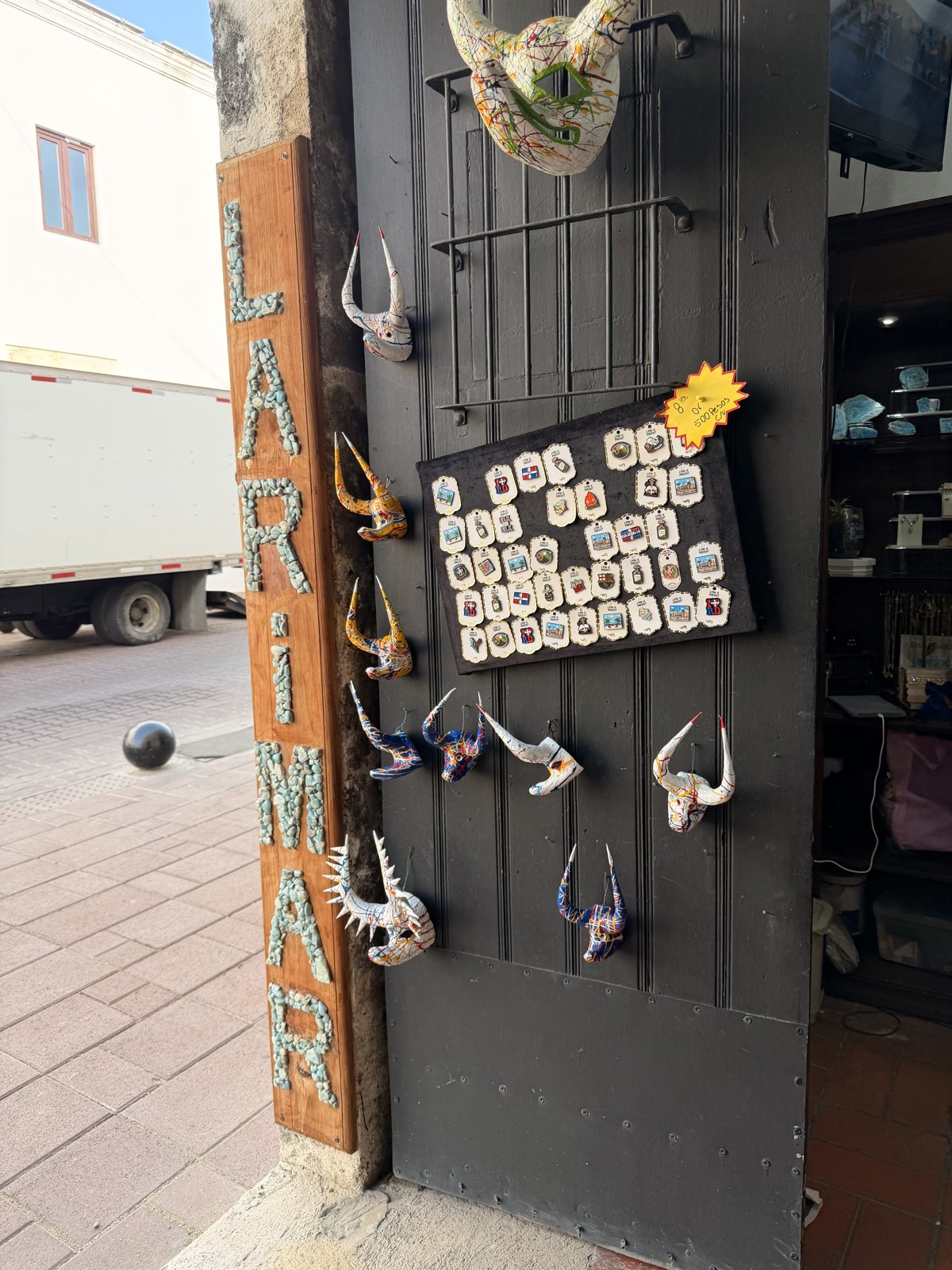
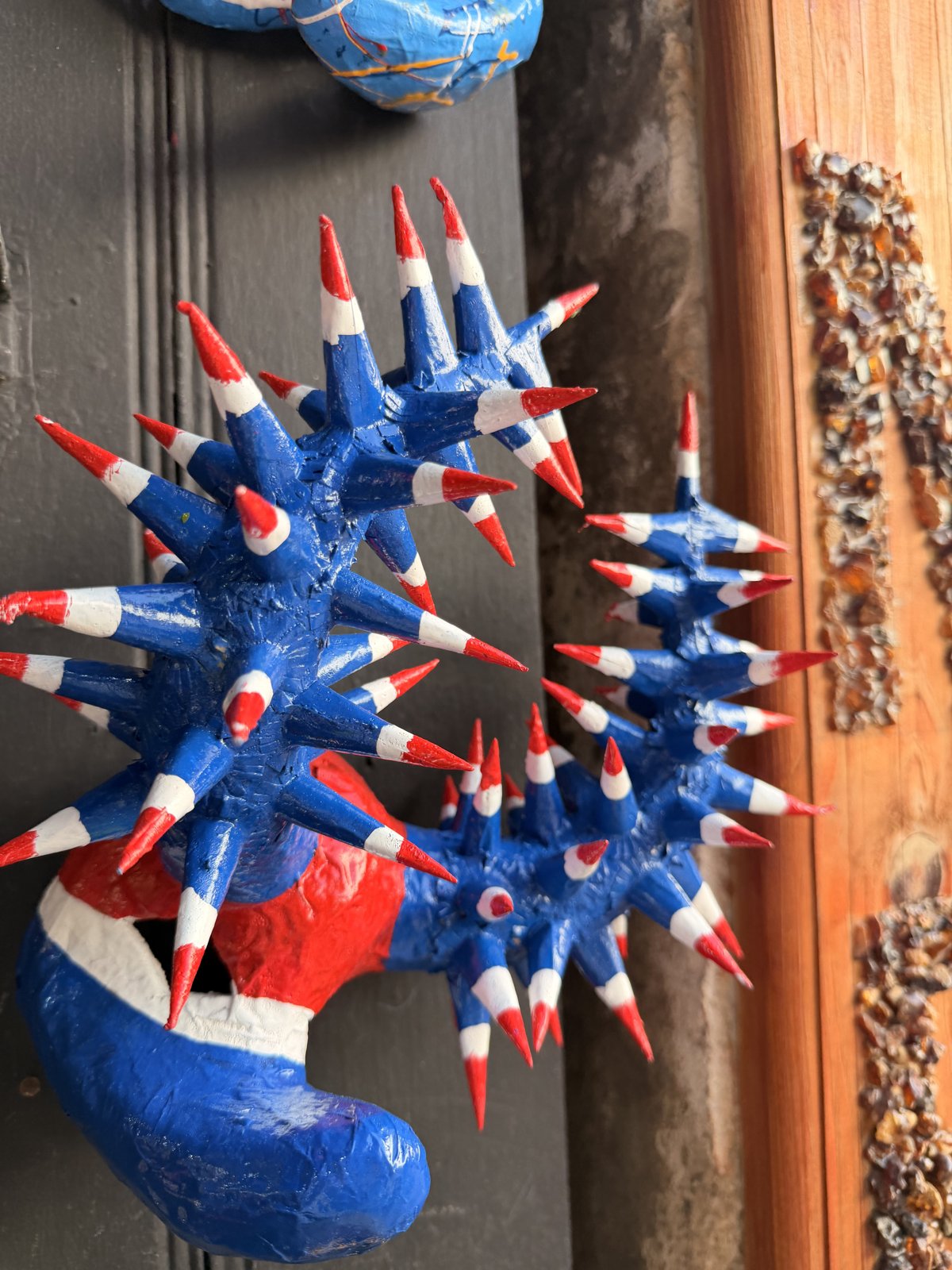
The masks hanging on the door belong to the Diablo Cojuelo — the "limping devil," the trickster of the Dominican carnival. Every February, led by the famous carnival of La Vega, these horned devils parade through streets across the country. The ones at the shop were painted in the blue, red and white of the national flag, with spikes running up every single horn. They make for a photogenic souvenir, but the papier-mâché work is entirely serious. Even outside carnival season, the heat of February radiates from that doorway.
A Shop of Two Stones: Amber and Larimar
The name Flor Ámbar means "amber flower," and true to it, the shop's other star is amber. The Dominican Republic is one of the world's great amber sources, and the mountains in the north even yield the rare "blue amber" that glows blue against the light. The glass cases in the back were packed with amber and larimar jewelry.
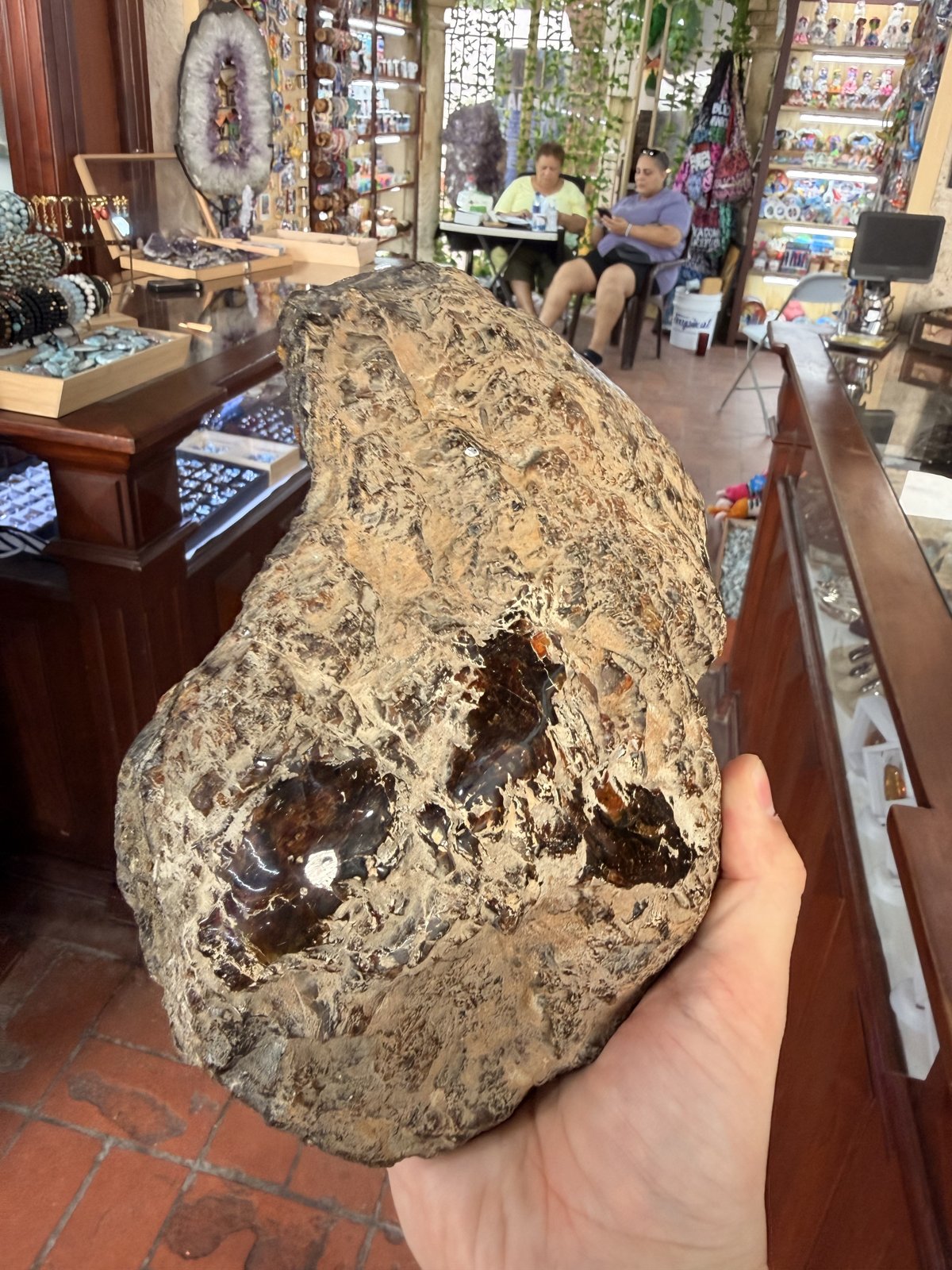
The best moment came when the shopkeeper handed me, quite apart from anything for sale, a huge chunk of raw amber. The boulder barely fit in my hands, and several polished "windows" on its surface opened onto a translucent, honey-colored interior. I knew in my head that this was tree resin turned to stone tens of millions of years ago — but the weight in my hands and that warm color still caught me off guard. Raw amber speaks more eloquently than anything finished in the showcase.
The Guard on the Glass Case
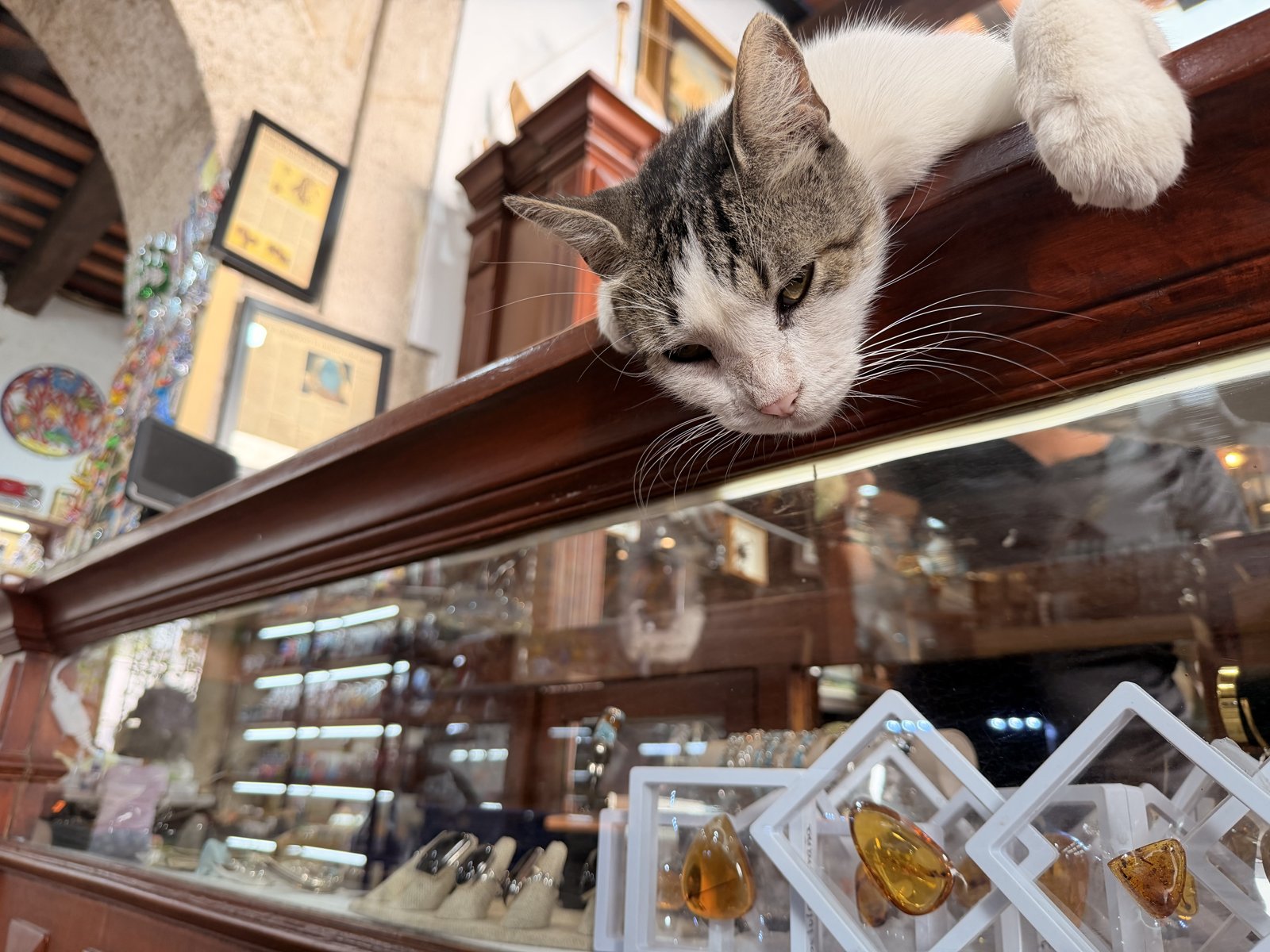
And perhaps the shop's real celebrity is the cat. It sprawls majestically on the glass case above the amber pendants, glances at you now and then, and closes its eyes again. Judging by how naturally it occupies the merchandise, it must be loved by staff and customers alike. The whole time I was choosing my stone, it never moved. A jewelry shop can feel a little formal — this guard takes the edge off perfectly.
Why I Chose a Raw Stone
What I picked at this shop was neither a polished pendant nor a ring, but a raw piece of larimar: a white matrix with the color of the Caribbean spreading across it like waves. Finished jewelry is beautiful, no question — but a raw stone carries the conviction of "the color of the sea, exactly as it came out of the ground." A stone that exists only in the mines of Barahona reached my hands in a shop on a colonial street, under the supervision of a cat. Every time I look at it now, the whole scene of the trip comes back with it.
Even before it was polished, the stone was already the color of the sea.
Travel Guide (General Information)
* This section was compiled from public sources as editorial context. Please check locally or officially for the latest information.
Flor Ámbar Gift Shop
- Location: Calle Las Damas 44, Zona Colonial — walking distance from the Cathedral and the Alcázar de Colón
- Selection: larimar and amber jewelry and raw stones, plus wood carvings, paintings, carnival masks and other local crafts
- Hours: roughly 9:30–18:00 (reportedly mornings only on Sundays). Confirm before visiting
Notes on Buying Stones
- Larimar: deeper blue with clear wave patterns commands higher prices. Imitations (dyed glass) exist, so buying from a physical shop is safer
- Amber: pieces with insect or plant inclusions, and blue amber, are rare and expensive. Beware of plastic imitations
- Taking it home: normal souvenir quantities are fine even for raw stones; large purchases may require declaration