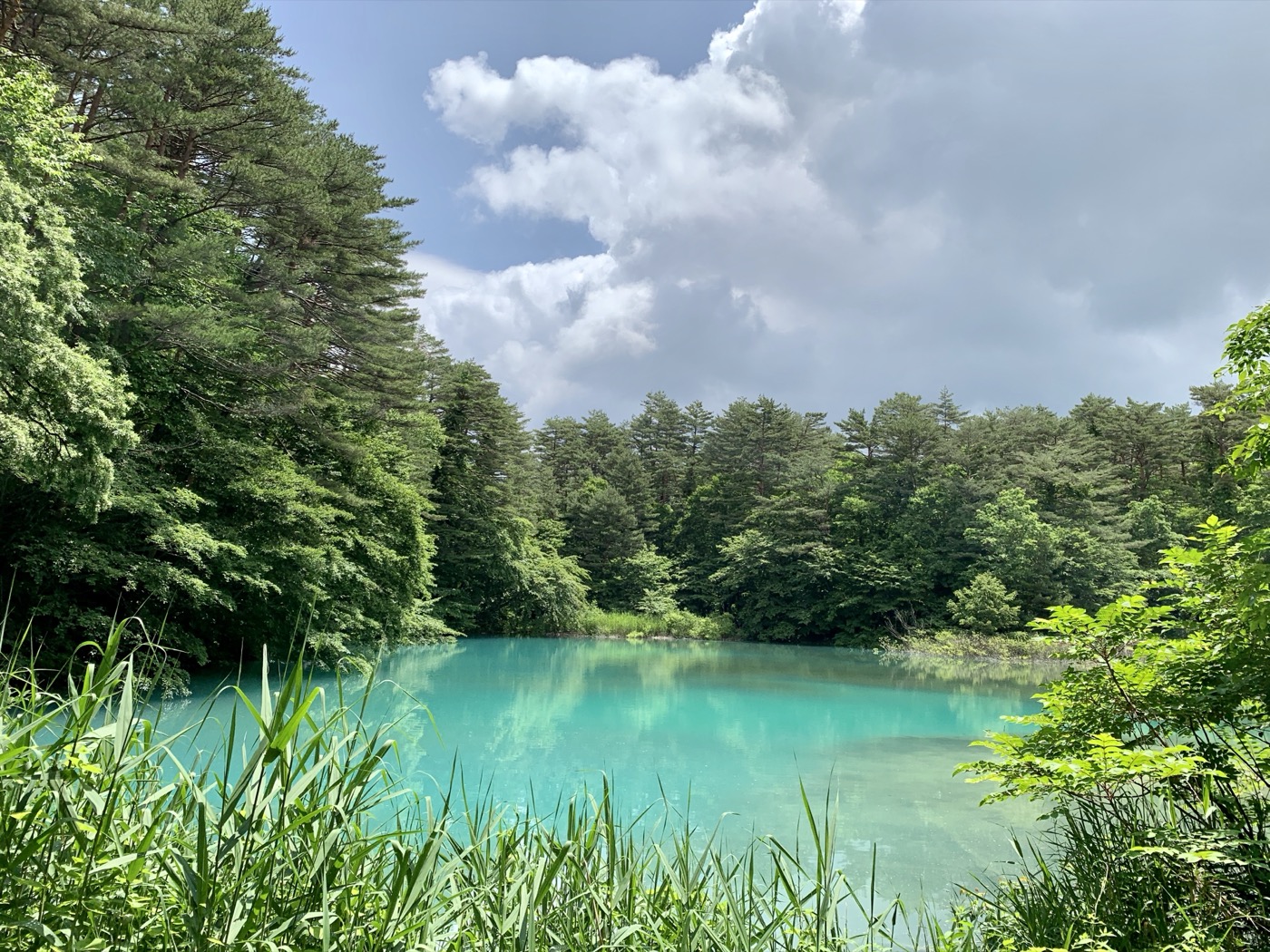
In Kitashiobara, Fukushima, the Goshikinuma ("five-color ponds") is the collective name for a cluster of ponds spread across Urabandai. Each pond carries its own color — emerald green, cobalt blue, milky blue — and the surface shifts with the angle and the weather.
Why the colors differ
The differences come down to varying amounts of volcanic sulfur, iron, and aluminum in each pond. The eruption of Mount Bandai in 1888 reshaped the terrain and created the cluster as it stands today. Light scattered by the components on the lake bed produces the mysterious blues and greens.
Walking the nature path
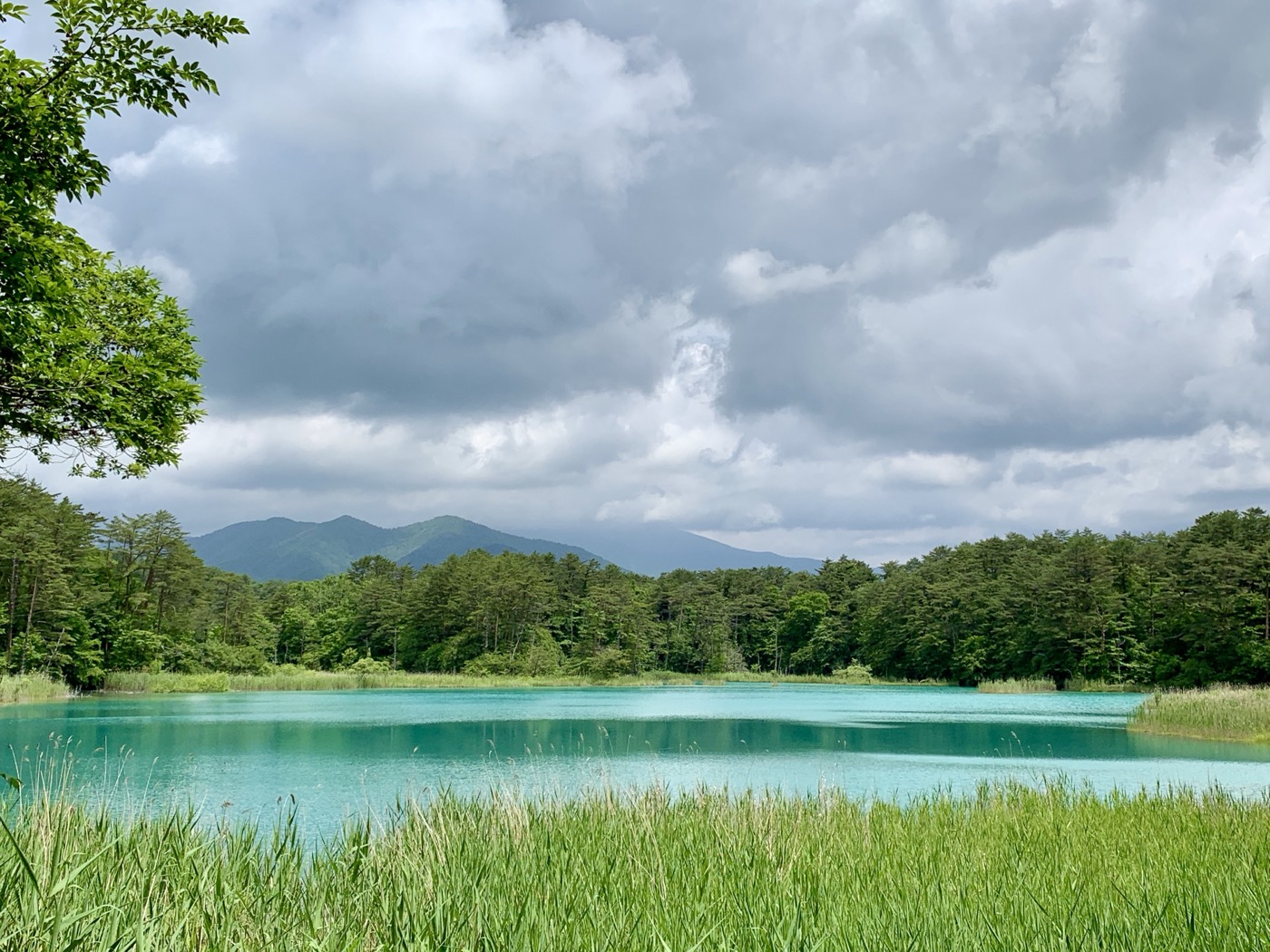
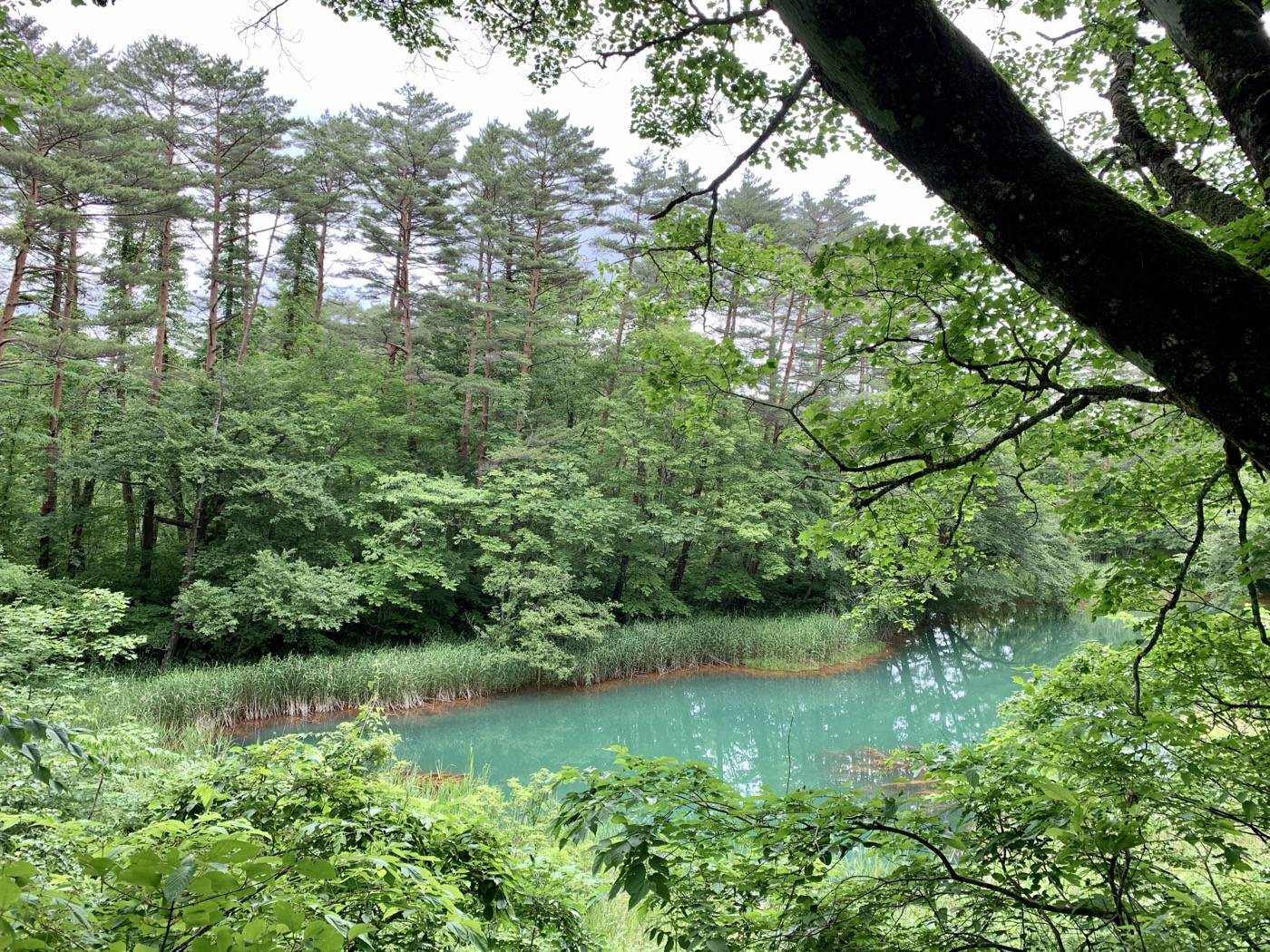
The nature trail from Bishamonnuma to Yanaginuma runs about 3.6 km and takes roughly an hour and a half on foot. Looking at the ponds as you walk, you really notice that each one has a different color. Especially beautiful in autumn foliage season.
The landscapes that volcanoes leave behind connect the bleak Bandai-Azuma Skyline with the calm of Goshikinuma. Same Fukushima nature, two very different faces.
Travel guide (general info)
※ This section combines public information with the author's notes; please confirm the latest road, weather, and operating details on the official sites.
About the Goshiki-numa pond cluster
- Origin: a group of more than 30 ponds dammed by the 1888 phreatic eruption and edifice collapse of Mt. Bandai (the Five-Coloured Ponds).
- Main ponds: Bishamon-numa (the largest, with rowboats), Aka-numa, Midoro-numa, Benten-numa, Ruri-numa, Ao-numa, and Yanagi-numa.
- Why the colours differ: a mix of Mie scattering by aluminium-compound microparticles, mineral precipitates of volcanic origin, and algae produces a distinct hue at each pond.
- Bandai-Asahi National Park: designated in 1950; not a Ramsar site, but of high scientific value.
Nature trail & seasons
- Trail: about 3.6 km from Bishamon-numa to Yanagi-numa; 1.5–2 h on foot.
- Fresh greenery: late May–June, with young leaves contrasting against the blue water.
- Autumn foliage: mid- to late October; a spectacular gradient of red, yellow, and blue.
- Winter: snowshoes recommended December–March; some ponds ice over.
Access
- By car: about 25 min from Inawashiro-Bandai-Kōgen IC (Ban'etsu Expressway) via Route 459.
- By rail + bus: from Inawashiro Station (JR Banetsu West Line), Bandai Tōto Bus to "Goshiki-numa Iriguchi".
- Parking: large lots on the Bishamon-numa side (Urabandai Visitor Center) and the Yanagi-numa side.
- Tip: a windless morning gives the most mirror-flat surface — that's when the colours look their best.