After walking the Palenque ruins in the Chiapas jungle, I stopped at Campeche, a city at the entrance to the Yucatán Peninsula. A UNESCO World Heritage Site (1999), it's a walled colonial fortress town. Arriving by ADO long-distance bus, I spent the day on its walls, museums, and colonial streets, then continued onward to Uxmal.
It's a port town facing the Gulf of Mexico (more precisely, the Bay of Campeche within it), but the city itself is built like a small inland-facing fortress, still ringed by its city walls.
A fortress town that fought pirates
The reason Campeche turned into a walled city is straightforward: through the 16th and 17th centuries, it was attacked again and again by pirates coming in from the Caribbean. The English and French raiders who followed in Francis Drake's wake hit Spanish ships off Campeche carrying Mexican silver and Maya goods bound for Europe — and at times stormed ashore to sack the town itself. Major recorded raids include 1597 (William Parker), 1633 (Pie de Palo), 1663 (Henry Morgan's fleet), and 1685 (Laurens de Graaf's occupation); the 1685 attack burned much of the town to the ground (see: Encyclopædia Britannica — Campeche).
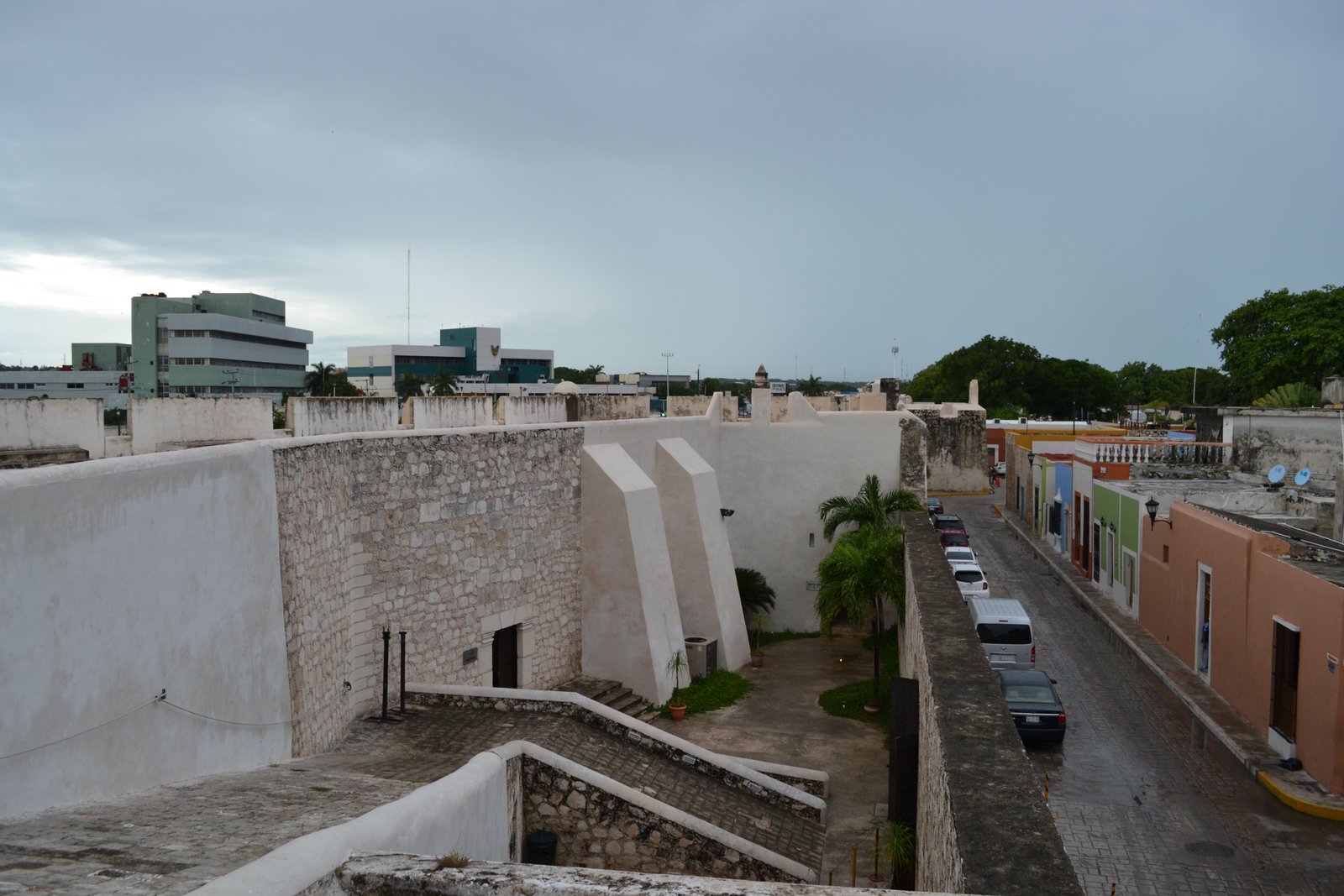
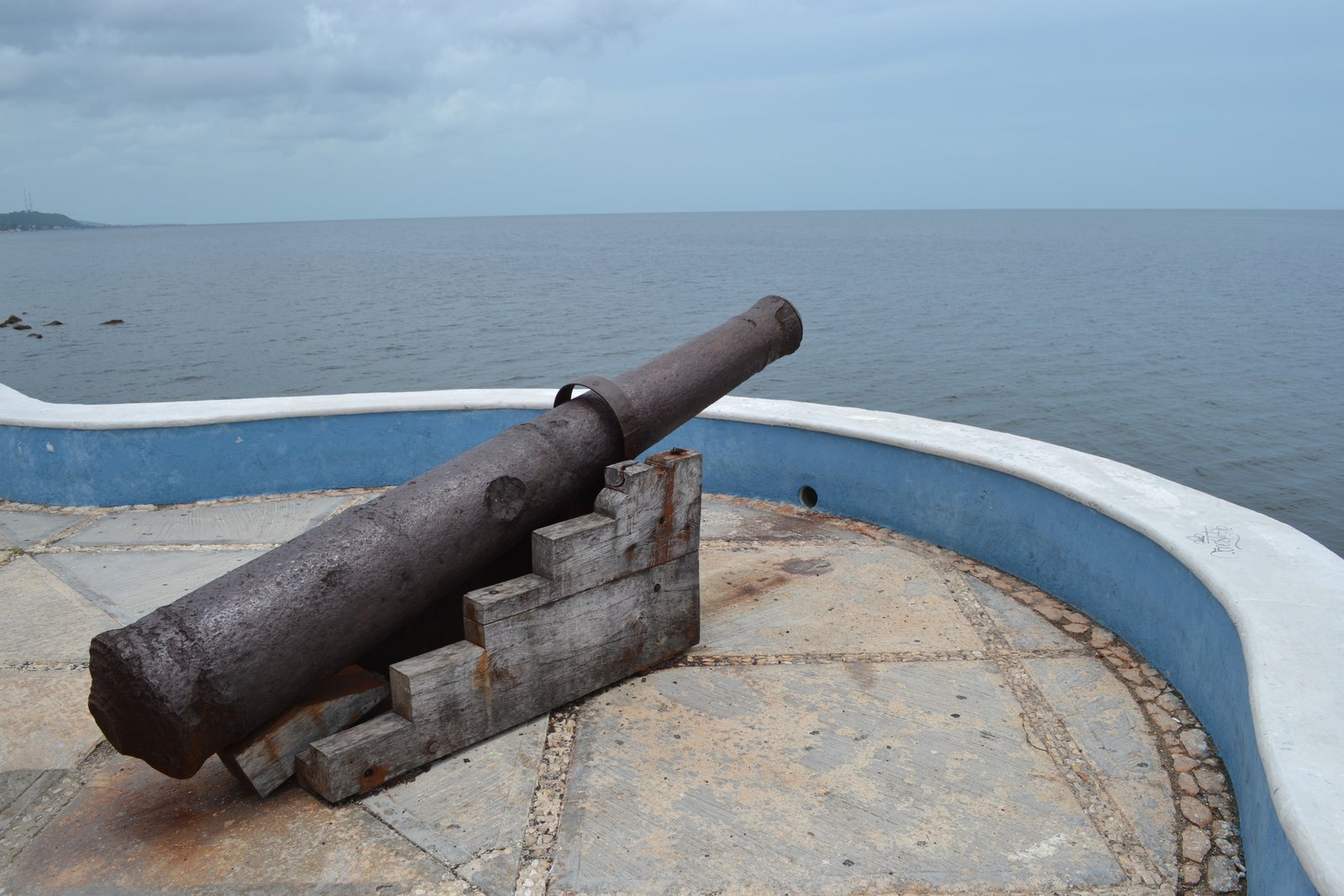
In response to those repeated attacks, between 1686 and 1704 the Spanish Crown built the bastions and walls that completely enclosed the town. The octagonal wall is about 2.5 km in total length, and eight bastions still stand today (two of them almost intact). Sea and forest outside, church, market and homes inside — a closed fortress town, designed to face the Caribbean, with cannons mounted toward the open water.
Pastel-colored colonial streets
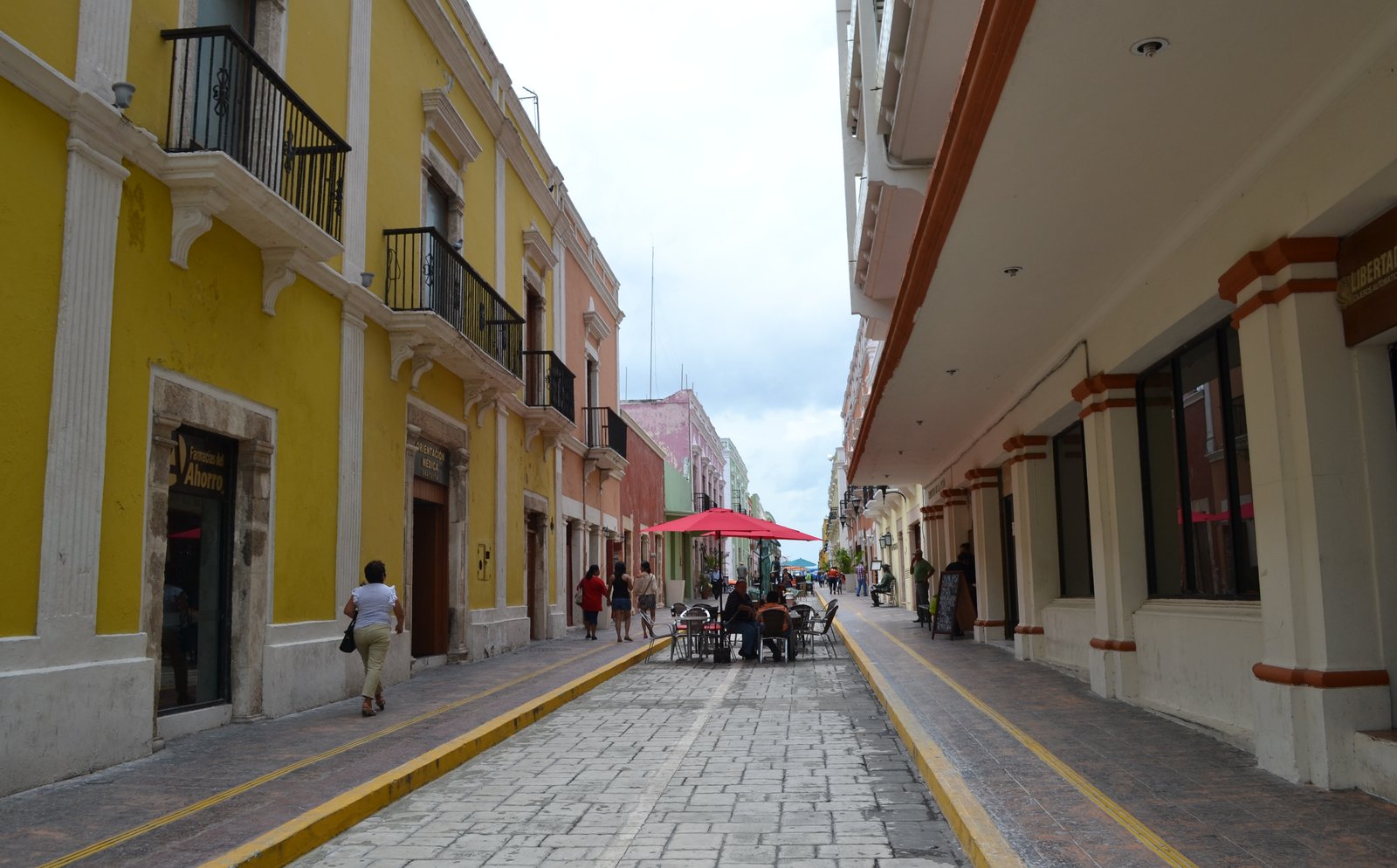
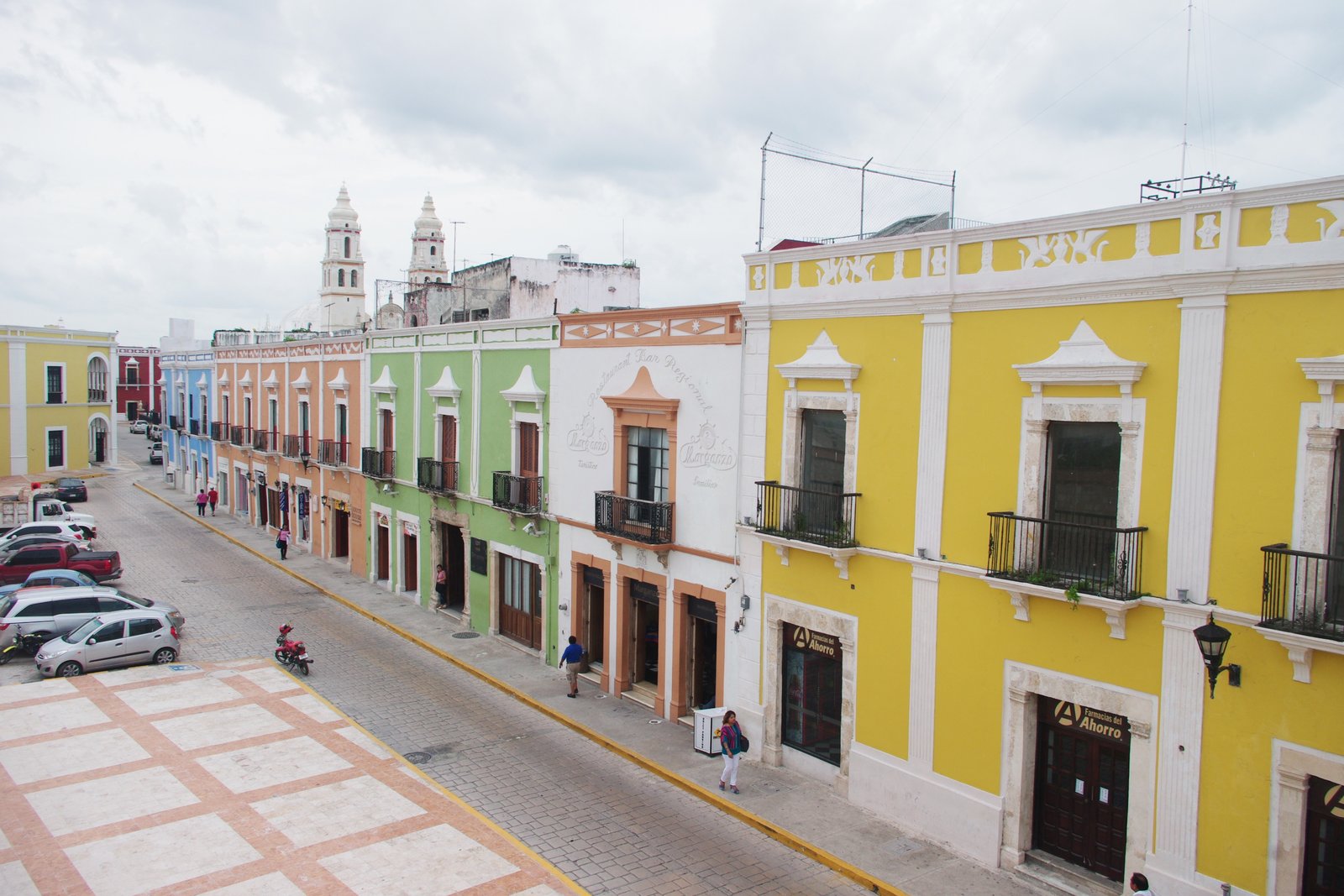
Inside the walls, the atmosphere flips. Yellow, light blue, salmon pink, soft green — pastel-painted buildings line both sides of the grid-pattern streets. The unified palette is the result of a citywide effort tied to the World Heritage inscription, but it doesn't feel forced — under the bright sun it's genuinely beautiful.
First time eating pollo con mole
Walking through town I went into a small restaurant near the yellow-fronted street, and that was where I ate pollo con mole for the first time. Chicken under mole negro — a black sauce made from chocolate and over twenty spices — one of Mexico's signature national dishes.
What stayed with me most was that warm tortillas came out tucked inside a dedicated ceramic warmer (likely an unglazed tortillero). Lift the lid and the steam comes up with the smell of just-toasted corn. The combination of the deeply spiced mole and the soft tortillas you want to keep eating one after another stuck — I'd order it again several times later in the trip after first learning the taste here.
Mole negro is widely known as a regional dish from Oaxaca, but it's a national staple eaten across Mexico, with regional and family variations in the spice blend. It's one of the "seven moles" — long-simmered sauces built from chocolate, multiple chiles, spices, nuts and dried bread — and is positioned as a fusion of pre-Columbian Mesoamerican ingredients with materials brought by the Spanish (see: Encyclopædia Britannica — mole sauce).
Museum hopping — Maya artifacts and colonial-era arms
Campeche has several small museums housed inside the bastions on and around the walls. I worked through one with Maya artifacts and another with colonial-era weapons and documents.
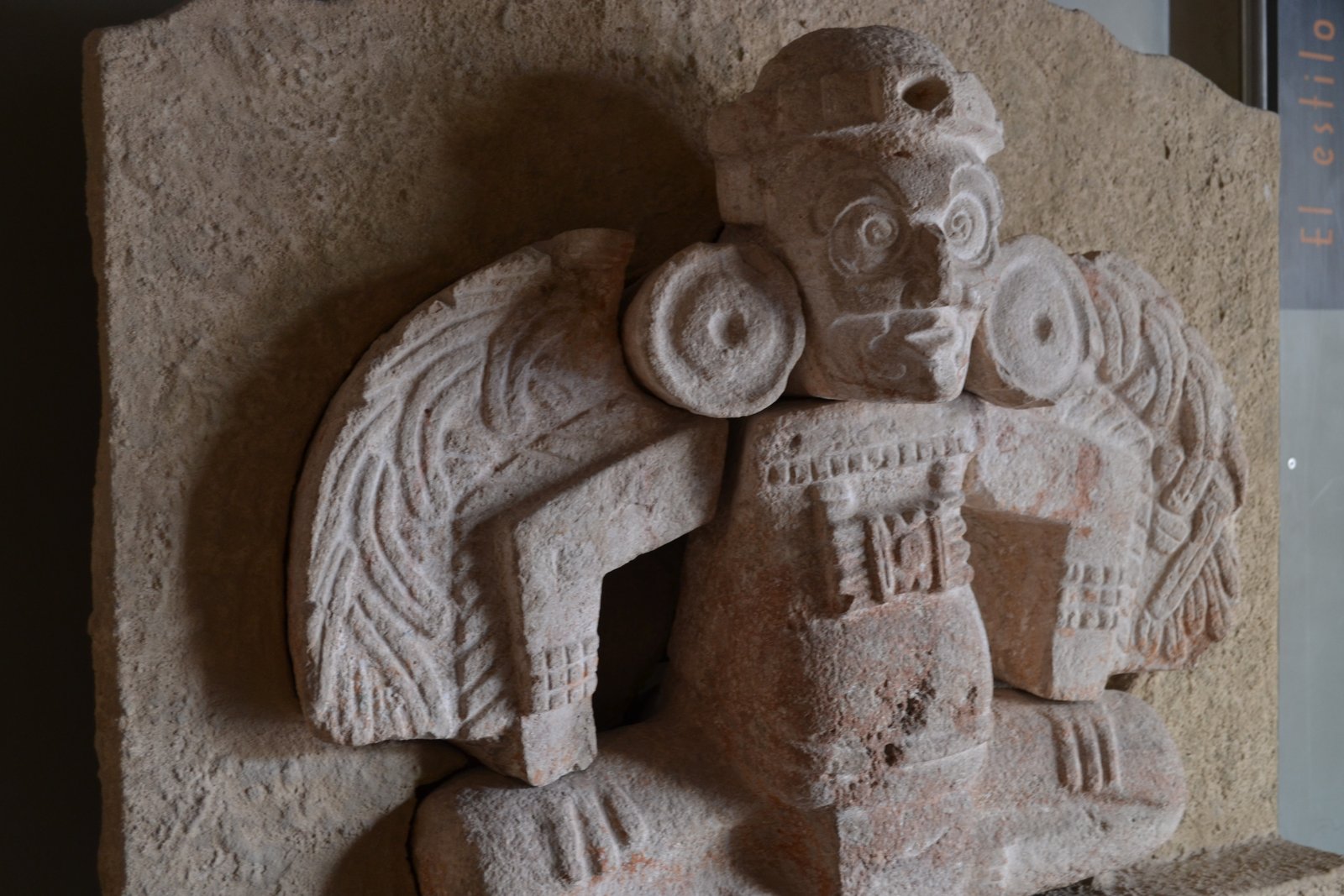
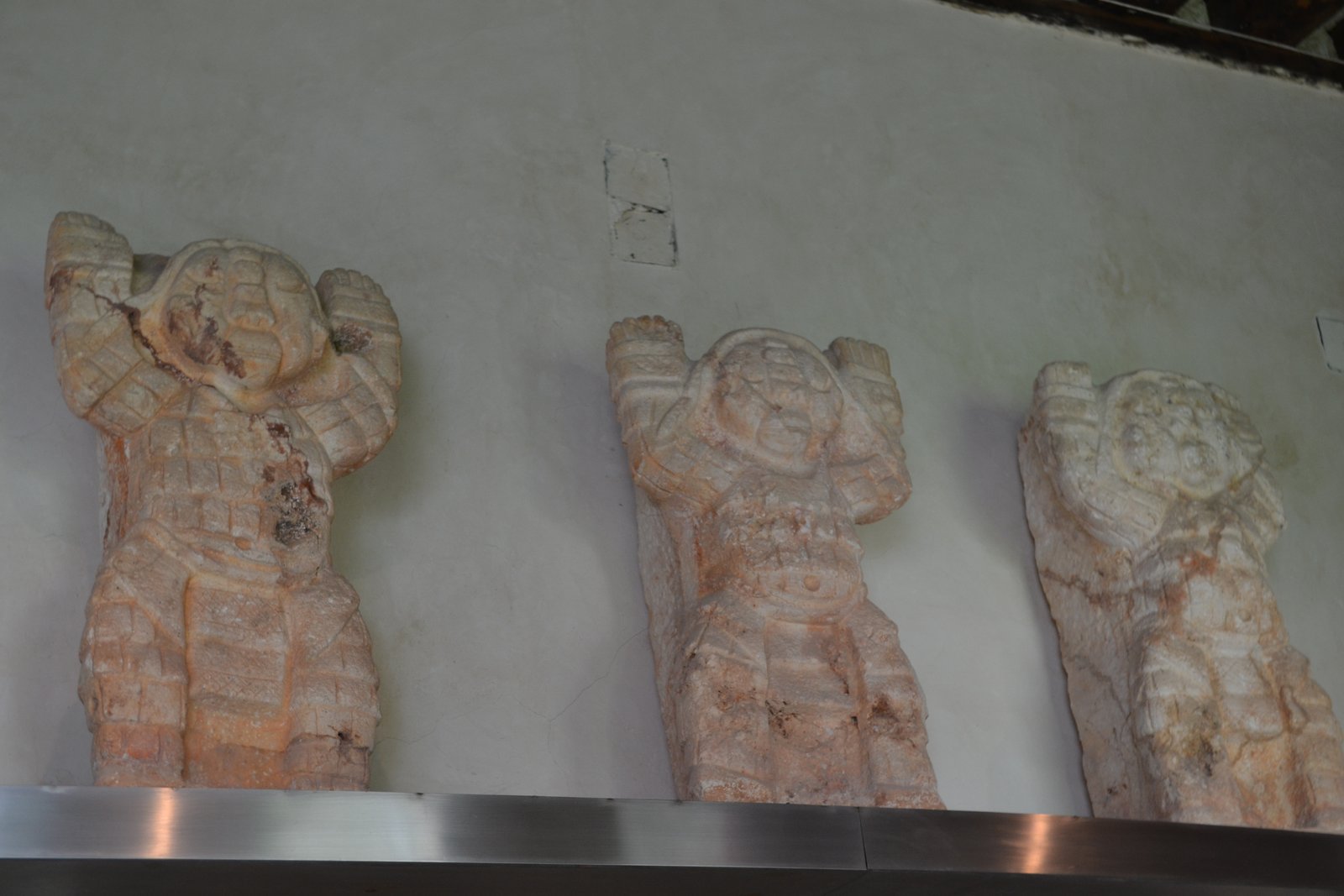
At the history museum the staff member walked me through the displays in a relaxed, friendly way — and that conversation made the city feel even warmer. With fewer tourists around, the distance to museum staff is shorter than usual; that's part of what makes Campeche good.
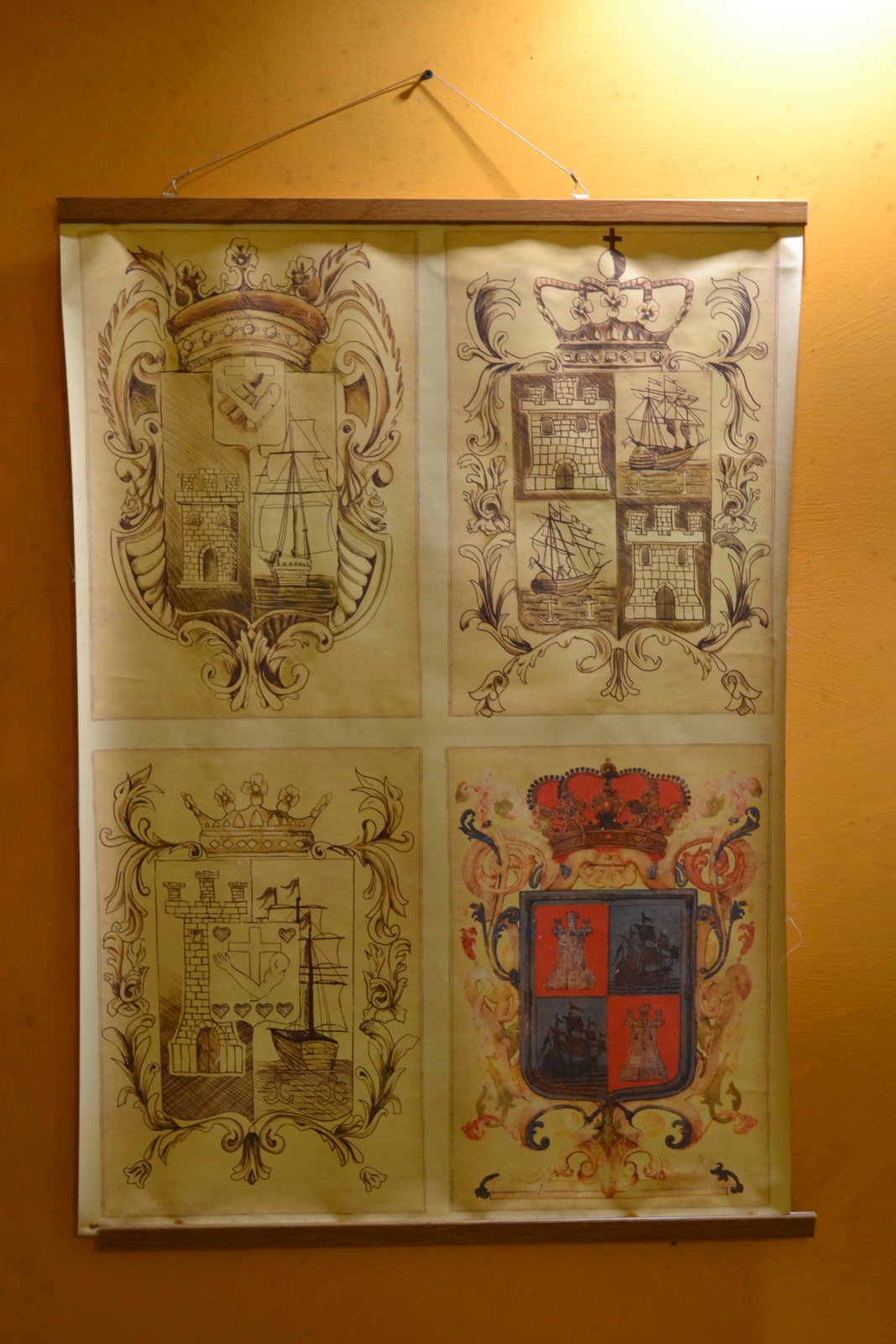
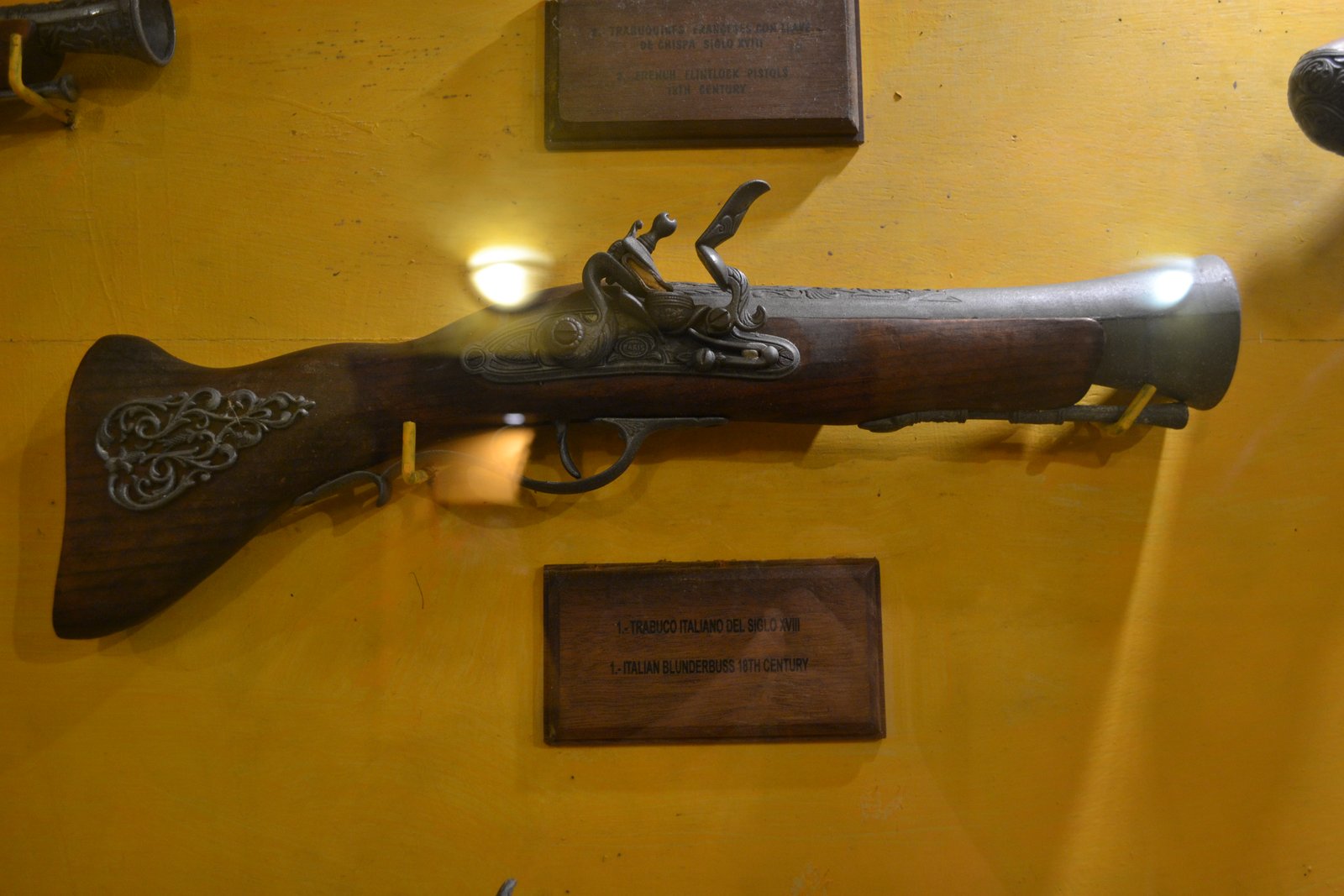
Inside and outside the walls — what Campeche left me with
Of all the stops on the Mexico tour, Campeche was "a town that's not too big as a tourist destination, but where the historical density is fully intact." Not the overwhelming scale of Teotihuacán or Uxmal, not the beach resorts of Cancún or Tulum. Its World Heritage value is that an entire colonial fortress town is preserved as a single piece.
A small fortress that wrapped its own walls around itself to brace against threats from the sea, with all the colorful daily life sealed up inside — a day in Campeche was the most quietly affecting way to take in the depth of Mexico's Spanish colonial layers.
Places I visited
Travel notes (general info)
※This section is editorial reference based on public information. Please confirm prices and operating details on official sites.
Getting there
- By air: Campeche International Airport (CPE), with direct flights from Mexico City (VivaAerobus, Aeromar), about 2 hours
- From Mérida: ADO bus, about 2h30 (multiple daily)
- From Palenque: direct ADO bus, about 5–6 hours
- From Villahermosa: ADO bus, about 6 hours
- Within the city: the old town is about 1 km square; main sights are walkable. The wall walk also works on foot
Recommended nearby spots
- Edzná archaeological zone — Maya site known for its five-story stepped pyramid, about 1 hour by car from Campeche
- Calakmul archaeological zone — World Heritage site with massive pyramids and tropical forest, about 5 hours by car (overnight stay recommended)
- Champotón — port town tied to a local mermaid legend, about 1 hour by car
- Campeche State Anthropology Museum (Fuerte de San Miguel) — housed in a 1771 fort, on the southern outskirts of the city
- Isla Aguada — lagoon with dolphins and seabirds, about 2 hours by car from Campeche