About four and a half hours by bus northwest of Mexico City, tucked into the mountains at 2,000 m above sea level, sits an almost unbelievably colorful city. Guanajuato — a town that flourished as a silver mining hub in the 16th century, and is now a UNESCO World Heritage site (1988): Historic Town of Guanajuato and Adjacent Mines, ranked among Mexico's most iconic destinations. The silver veins discovered here in 1548 once supplied roughly a third of the world's silver at the height of colonial production, channeling enormous wealth back to Spain (source: Encyclopædia Britannica — Guanajuato).
I'd read somewhere that Guanajuato is "a city like a jewel box." Standing in front of the colorful houses stacked up the hillside, the description doesn't feel like an exaggeration at all.
Pípila and the view from above
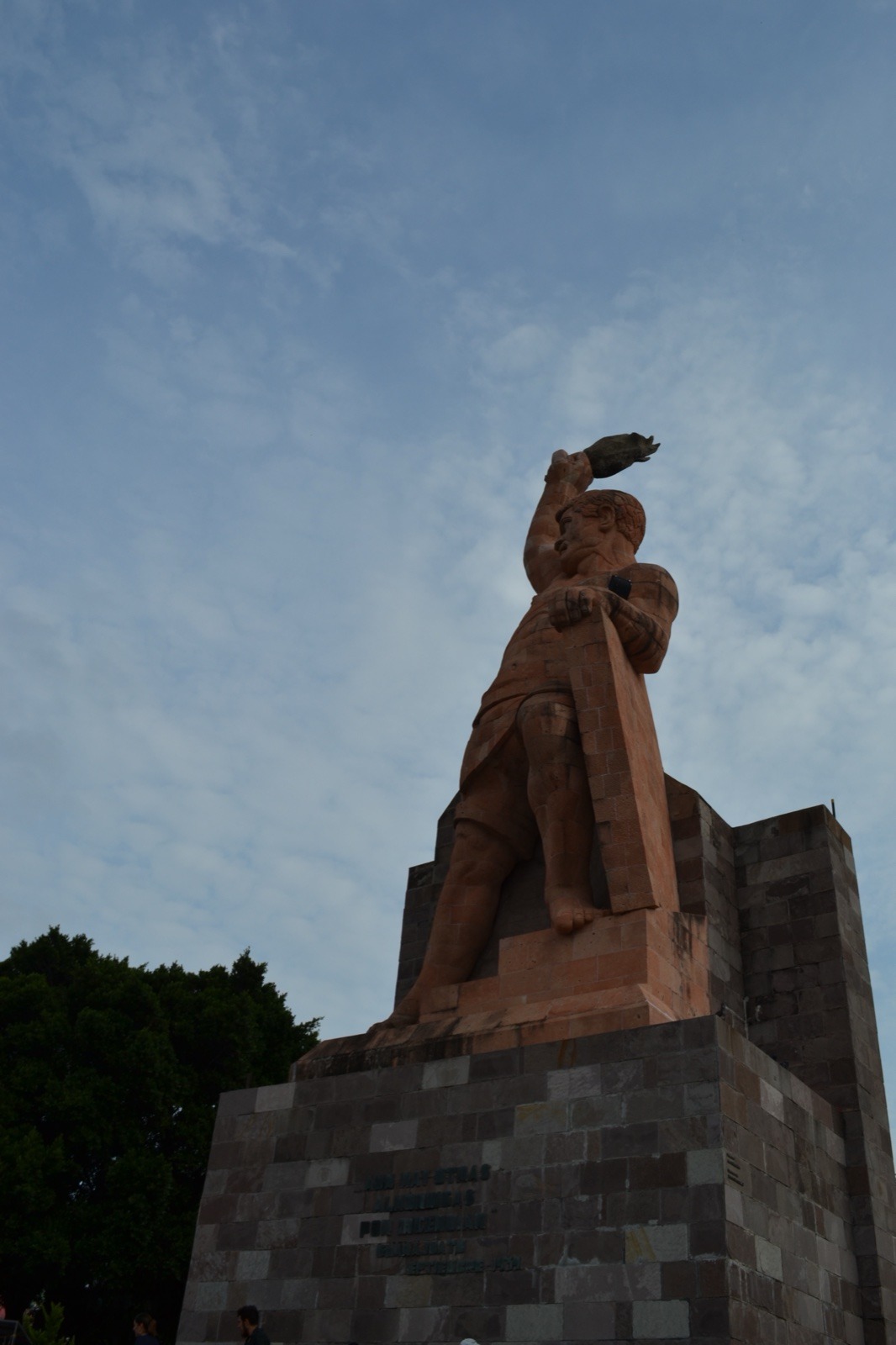
Everyone says the first thing to do in Guanajuato is to climb the hill to the Monumento al Pípila. Pípila was the nickname of Juan José de los Reyes Martínez Amaro, an early hero of the Mexican War of Independence. On September 28, 1810, during the Battle of the Alhóndiga de Granaditas in Guanajuato, he is said to have strapped a stone slab to his back and used it as a shield to set fire to the gates of the Spanish stronghold — an act that became a foundational symbol of the independence movement led by Miguel Hidalgo (see: Encyclopædia Britannica — Guanajuato).
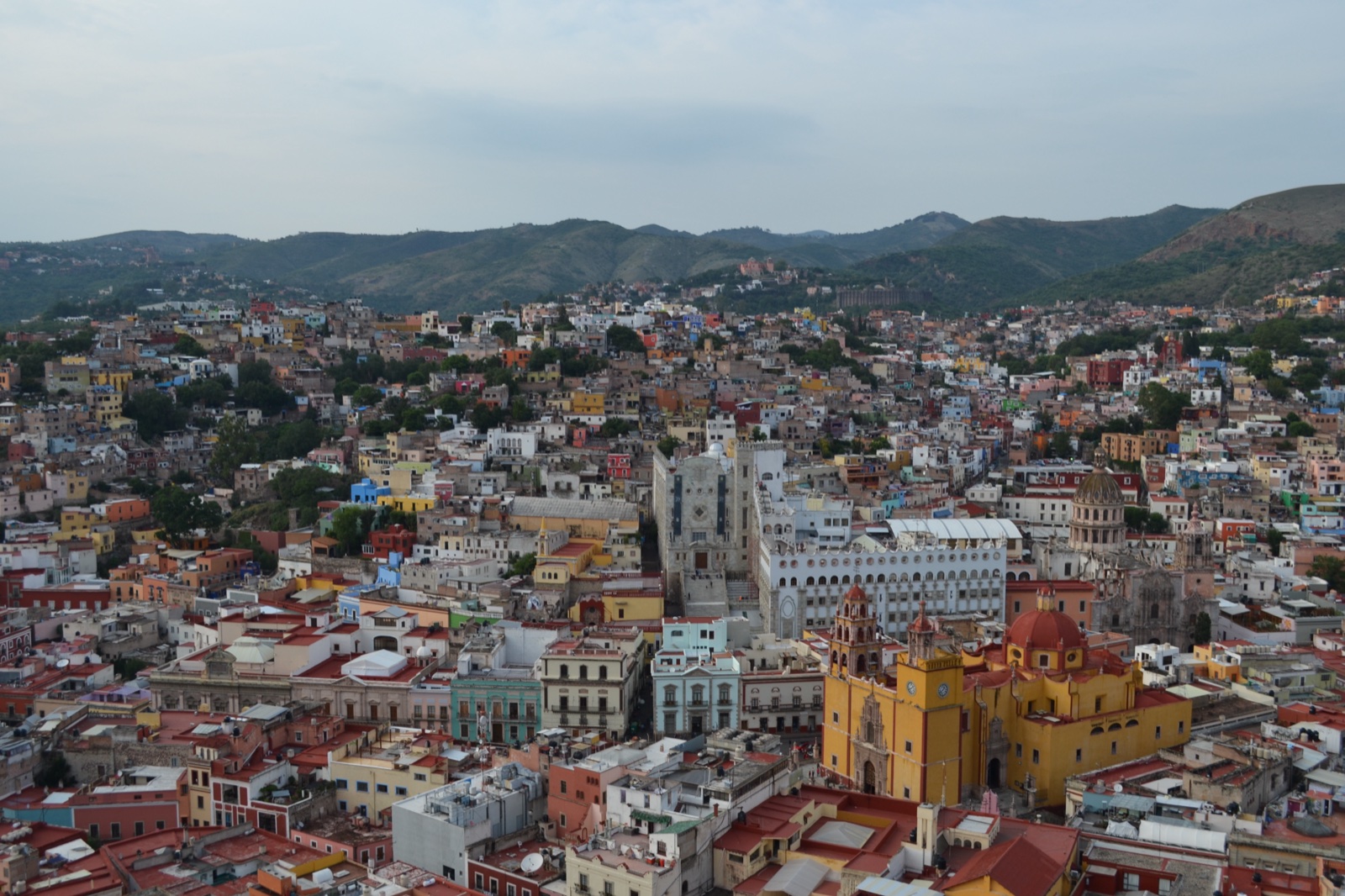
The moment you step onto the terrace at the foot of the statue and look down at the city, you catch your breath. Pink, yellow, blue, red, and green houses pack the slopes. In the center stands a stately yellow basilica, and behind it the white buildings of the university. So this is what "jewel box" really means.
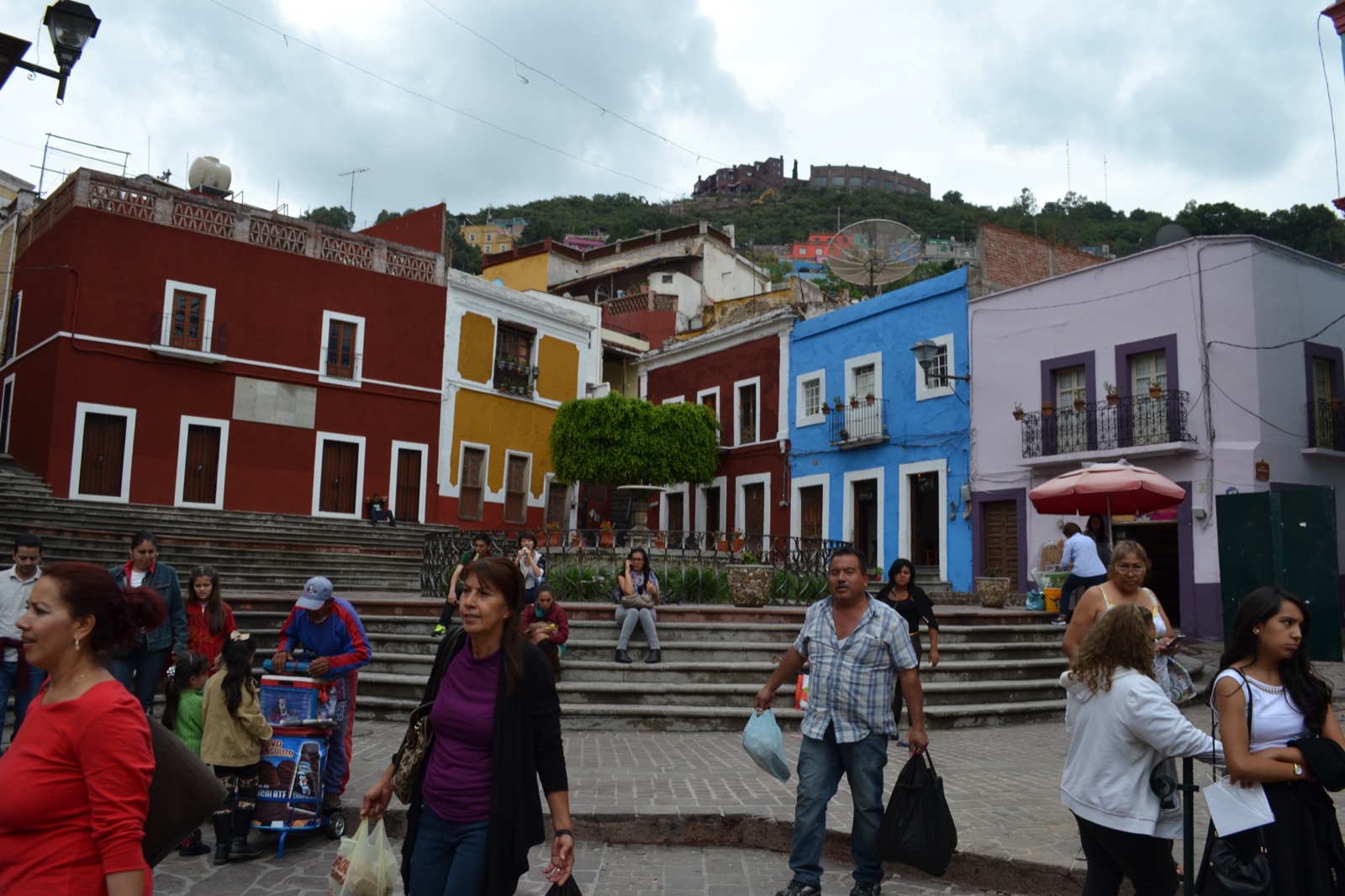
The yellow basilica and the colorful plaza
At the heart of the city stands the Basílica de Nuestra Señora de Guanajuato, a landmark visible from almost any point in town. Bright yellow walls with pink trim — a textbook example of colonial architecture.

City of Don Quixote — and a chat with a shop owner
Guanajuato is also the city of Cervantine culture. The Festival Internacional Cervantino is held here every October, and references to Don Quixote — statues, a museum — are scattered all over town.
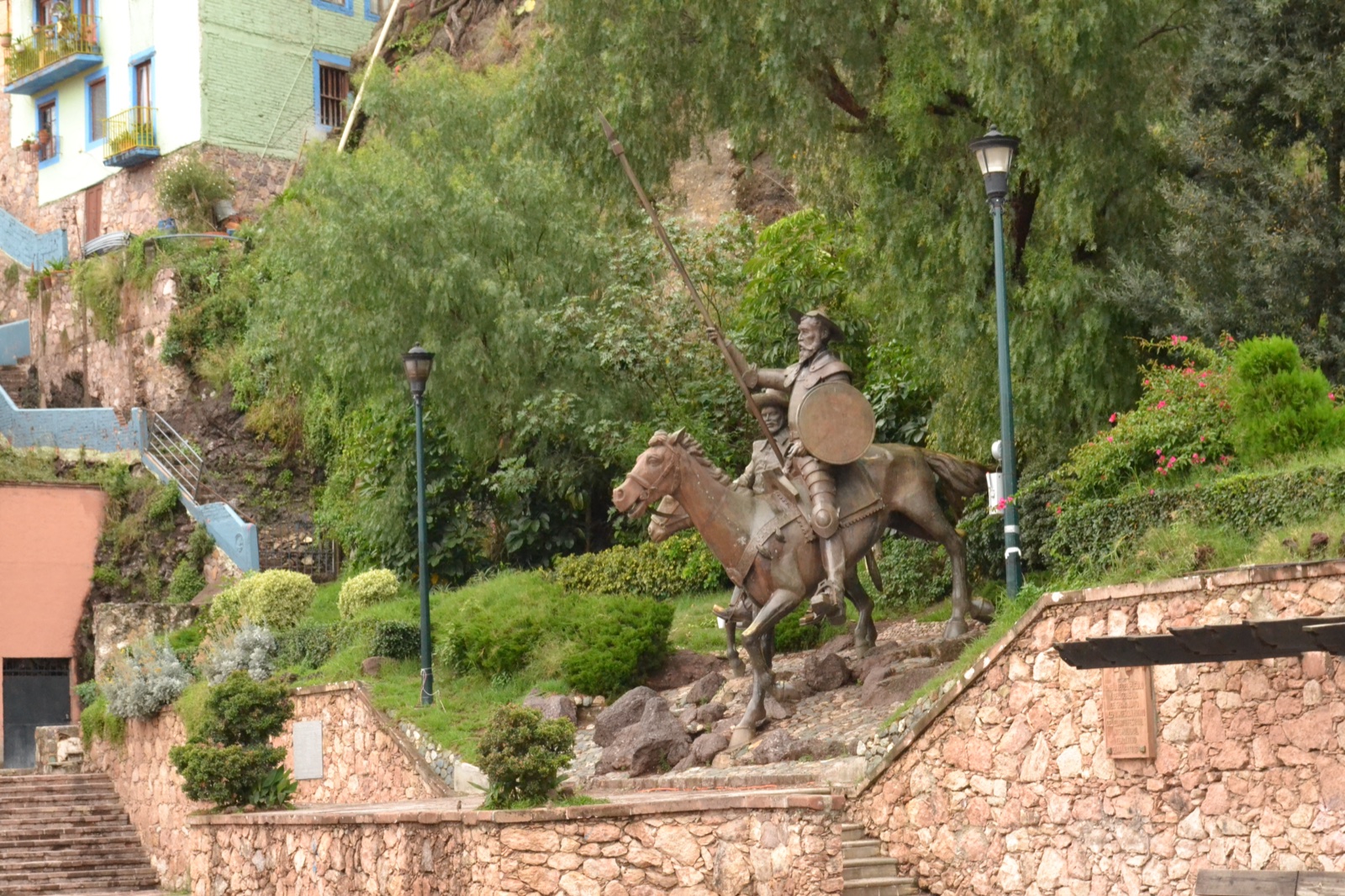
While walking around, I stopped into a small shop selling Don Quixote figurines. The owner asked, "Where are you from?" When I told him I was on my way up the Pípila hill to look down at the city, he smiled and said, "Then come back through here on the way down. I'll give you a souvenir."
In the end, I didn't go back. He clearly seemed kind, and maybe I should have stopped in. But "receiving something for free" from a stranger in a strange city always comes with a little caution. Acts of kindness while traveling can be tricky to read — when to accept gratefully, when to keep a little distance. I just thanked that shopkeeper in my head.
The Alley of the Kiss — a tragic legend
Walking the narrow alleys of the old town, you eventually run into a sign reading Callejón del Beso (Alley of the Kiss). Just 68 cm wide, the legendary alley where the balconies of the houses on either side almost touch — close enough that two lovers could reach across and meet.
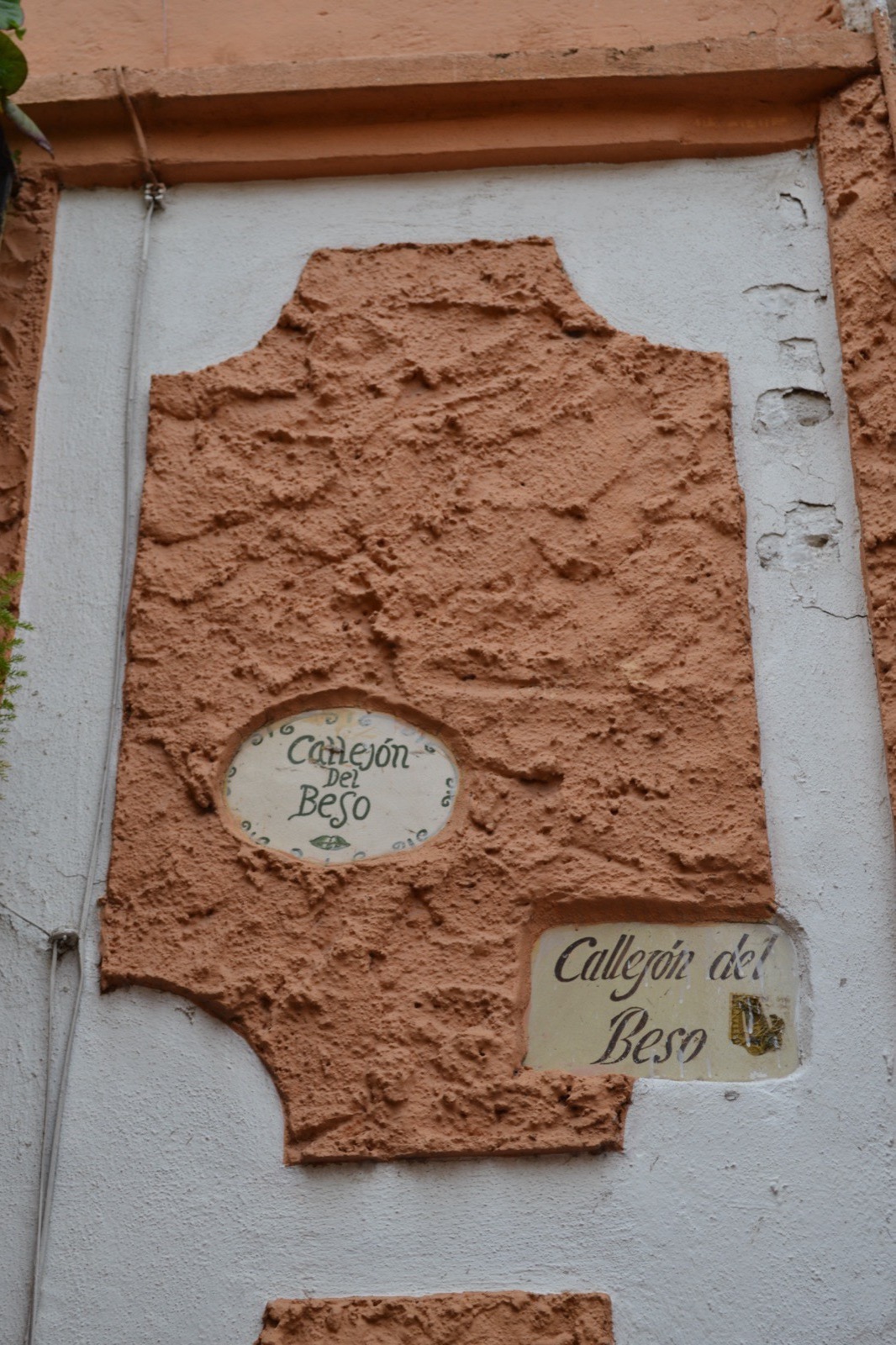
The legend goes like this: in the 18th century, in two facing houses, lived Doña Carmen — daughter of a wealthy merchant — and Don Luis, a poor young man. Her father refused to allow the relationship, so the two could only exchange love through kisses across the balconies. One day Carmen was discovered by her father, who killed her in his rage; Luis kissed her cold hand and left forever. Today, couples who stand on the third step of this alley and kiss are said to be promised seven years of happiness (some say fifteen).

The Mummy Museum — why is it there?
Another major draw of Guanajuato is the Museo de las Momias de Guanajuato, on the edge of town. Around 100 naturally mummified bodies are displayed behind glass. I didn't take photos — just walked through.
"Why are the mummies here?" — I asked a local after leaving. The answer: "They were people whose families couldn't afford the perpetual burial fee, so they were dug back up." I half-believed it, but later research showed it was essentially correct.
From 1865 to 1958, Guanajuato had a system in which families had to keep paying a periodic burial tax to maintain a grave. When they could no longer pay, the body was exhumed. Thanks to Guanajuato's 2,000 m elevation, low humidity, and mineral-rich soil, the exhumed bodies didn't decompose — they naturally mummified. Eventually those mummies started being shown to visitors, and the museum we have today grew out of that. 111 mummies are currently on display, making it one of the world's most significant collections of natural mummies and a study subject for anthropology and pathology research.
"Too poor to keep your grave, so your body becomes an exhibit" — it's hard to know exactly how to feel about that. But considering the Mexican view of death, where death sits right next to life, this too may simply be one of the country's particular ways of mourning.
A surprisingly Japanese-friendly city
One thing that surprised me walking around Guanajuato was how often I crossed paths with Japanese tourists. I barely saw anyone Japanese in Mexico City or on the Yucatán Peninsula, but Guanajuato had noticeably many.
Japanese media often introduces Guanajuato as "the most beautiful city in the world" or "a city like a jewel box," and I think that's why it's by far one of the most recognizable Latin American destinations to a Japanese audience.
Guanajuato at night
The city's real climax is at night. As the sun sets, the basilica and the university light up, and small lights from the windows of homes spread across the entire hillside.
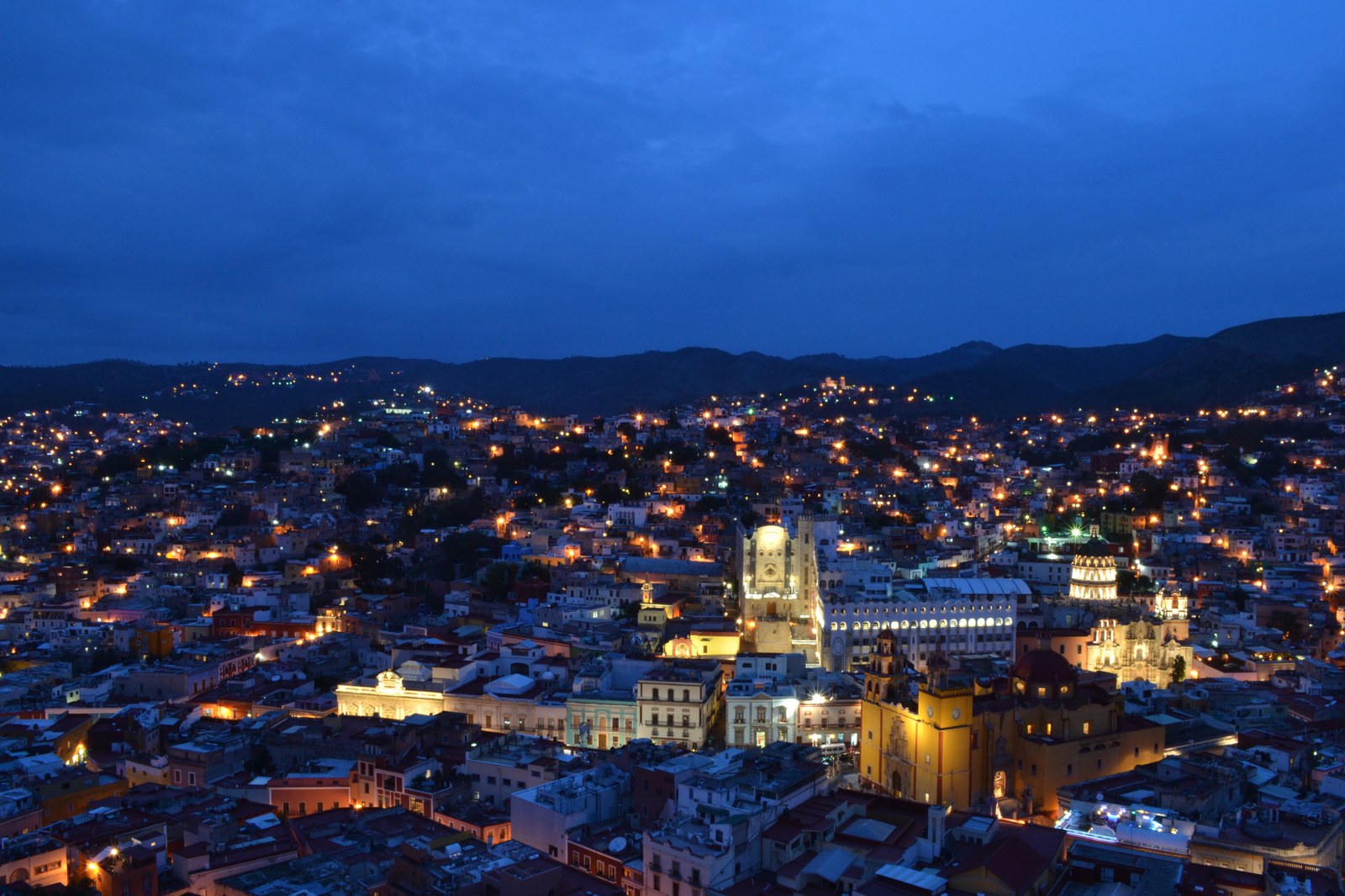
The metaphor of the "jewel box" only really comes into its own at night. The colorful daytime houses sink into shadow, and instead countless tiny lights appear — as if someone really did open a box and pour out a handful of gemstones onto the slope.
After just one day on foot, Guanajuato had already given me too many places I wanted to come back to.
Maybe I really do owe that shopkeeper a return visit one day to pick up that souvenir.
Places visited
Travel notes (general info)
※This section is editorial reference based on public information. Please confirm prices and operating details on official sites.
Getting there
- By air: domestic flight from Mexico City to León International Airport (BJX), about 1 hour, then 45 min by airport bus
- By bus: from Mexico City's Norte terminal via ETN/Primera Plus, about 4h30 (multiple daily)
- Within town: the historic center is best on foot. Lots of hills — bring comfortable shoes
- To the Pípila monument: by funicular, or by stairs about 15 min behind the Juárez Theatre
- Best season: October's Festival Internacional Cervantino turns the entire city into a festival venue
Recommended nearby spots
- San Miguel de Allende — another colonial World Heritage town, about 1h30 by car from Guanajuato
- Valenciana Mine (Mina La Valenciana) — once the world's top silver-producing mine; tunnel tours available, 15 min by car from town
- Templo de San Cayetano — Churrigueresque masterpiece commissioned by the Valenciana mine owner, next to the mine
- Alhóndiga de Granaditas — site of the Pípila legend, now a regional history museum
- Dolores Hidalgo — birthplace of the Mexican declaration of independence, about 1 hour by car