During my stay in Mexico City, I took a side trip about 50 km northeast to the Teotihuacán archaeological site. From Autobuses del Norte (the city's northern bus terminal), the local bus to "Pirámides" gets you there in about an hour. Teotihuacán flourished from the 2nd century BCE to around the 7th century CE — one of the largest ancient cities in Mesoamerica. At its peak in the 4th–5th centuries, the population reached 100,000–200,000, placing it among the five largest cities in the world at the time (source: Encyclopædia Britannica — Teotihuacan). It was inscribed as a UNESCO World Heritage Site in 1987. The name "Teotihuacán" itself is Nahuatl, given by the Aztecs who arrived later — meaning "the place where the gods were born." What the people who actually built the city called their own home is still unknown.
The day I visited was clear. At 2,300 m, the highland sun was strong, but a dry wind blew through the entire site, so it didn't have the heavy, humid heat I would later feel on the Caribbean side around Cancún. A perfect day for spending hours on foot in a vast ruin.
In the morning, I had a freshly griddled tortilla from a stall on the way to the bus terminal. For the price, it was generous and surprisingly filling — a good runup to a long day of walking ruins.
The Avenue of the Dead — a 2 km central axis
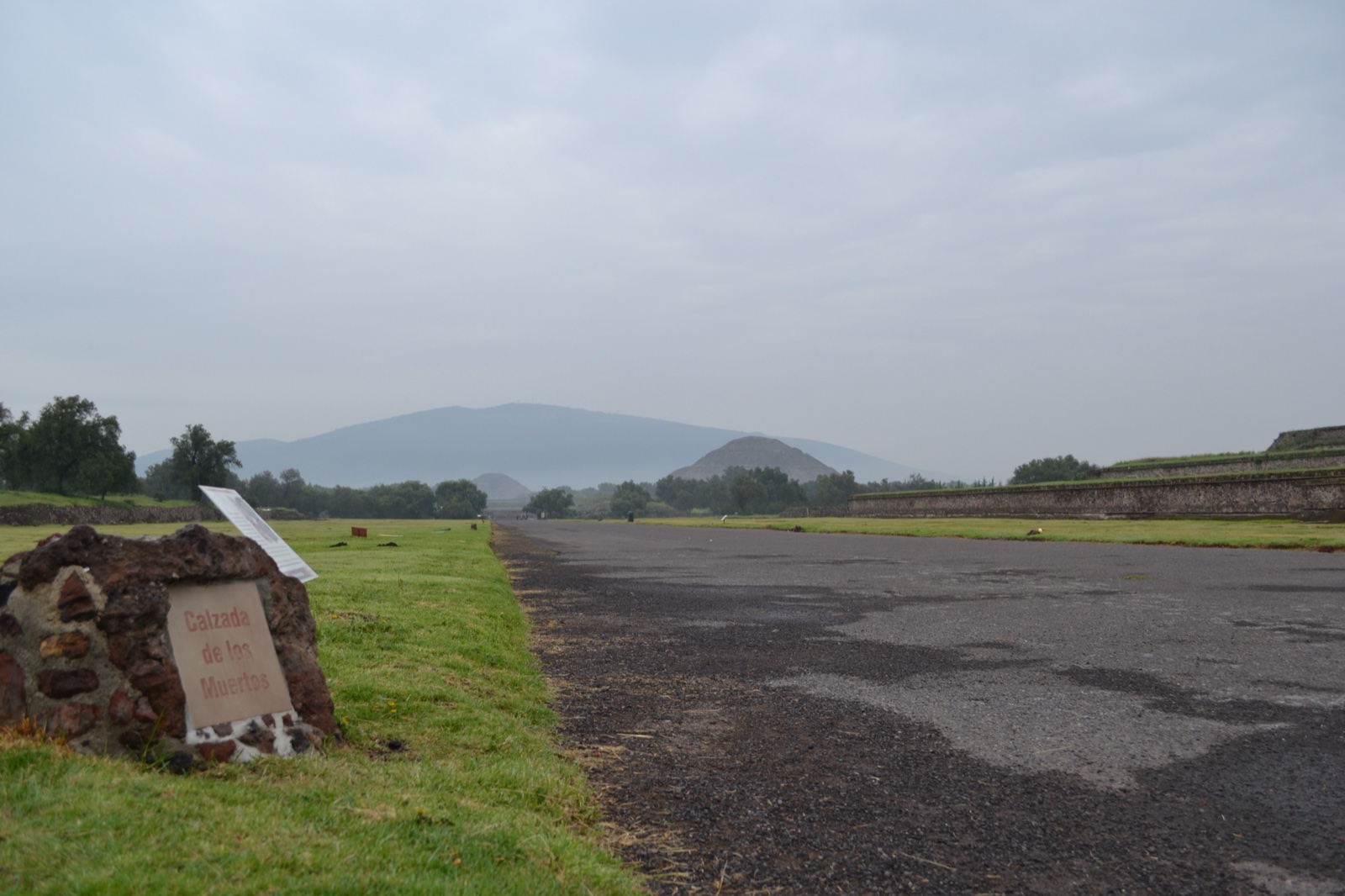
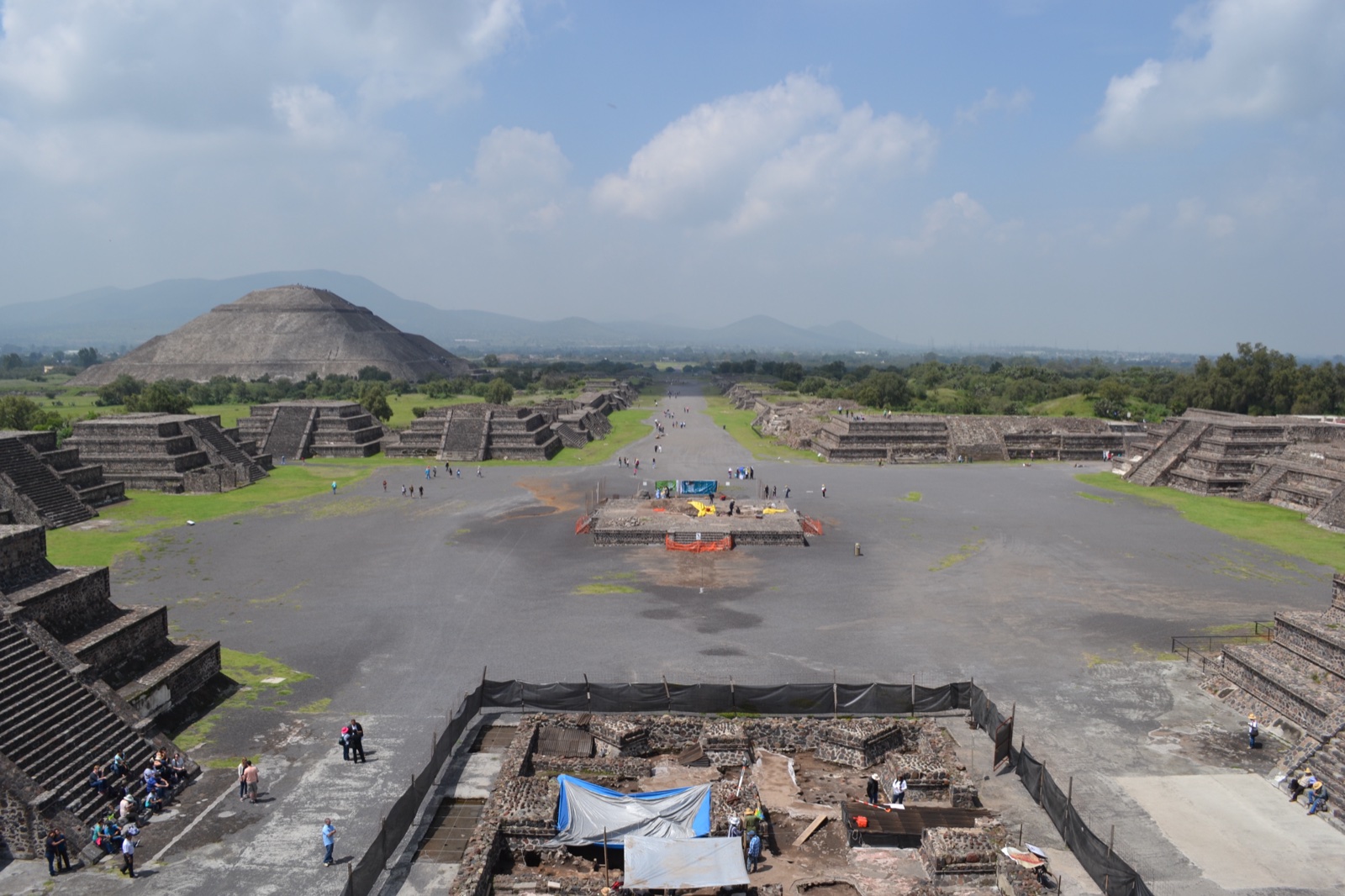
The site is bisected from south to north by the Calzada de los Muertos (Avenue of the Dead), about 2 km long. It runs straight from the Ciudadela ("citadel") at the south end to the Pyramid of the Moon at the north, lined on both sides by dozens of temple platforms. The name was given after rediscovery — the Aztecs assumed the structures along the avenue were tombs.
Stalls dot the avenue, selling obsidian knives, masks, and what look like flutes. After peeking at a few of them, you realize they all carry roughly the same things. In the end I didn't buy anything that day.
While walking, a quiet dog had at some point started following behind me. Used to tourists, it kept its distance but stayed roughly in step with me. After a while it drifted off toward another group.
The Temple of Quetzalcóatl — the heart of the Ciudadela
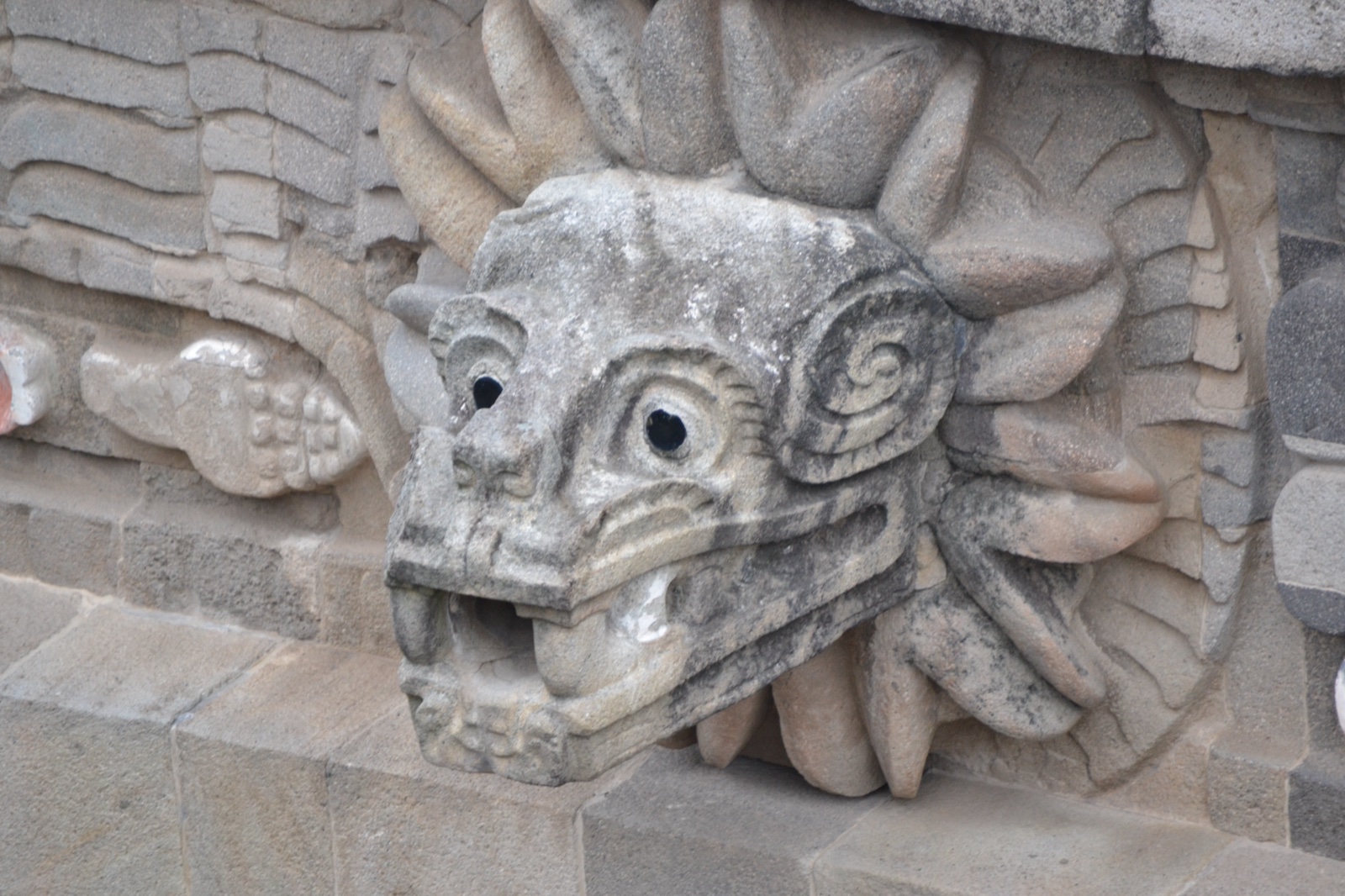
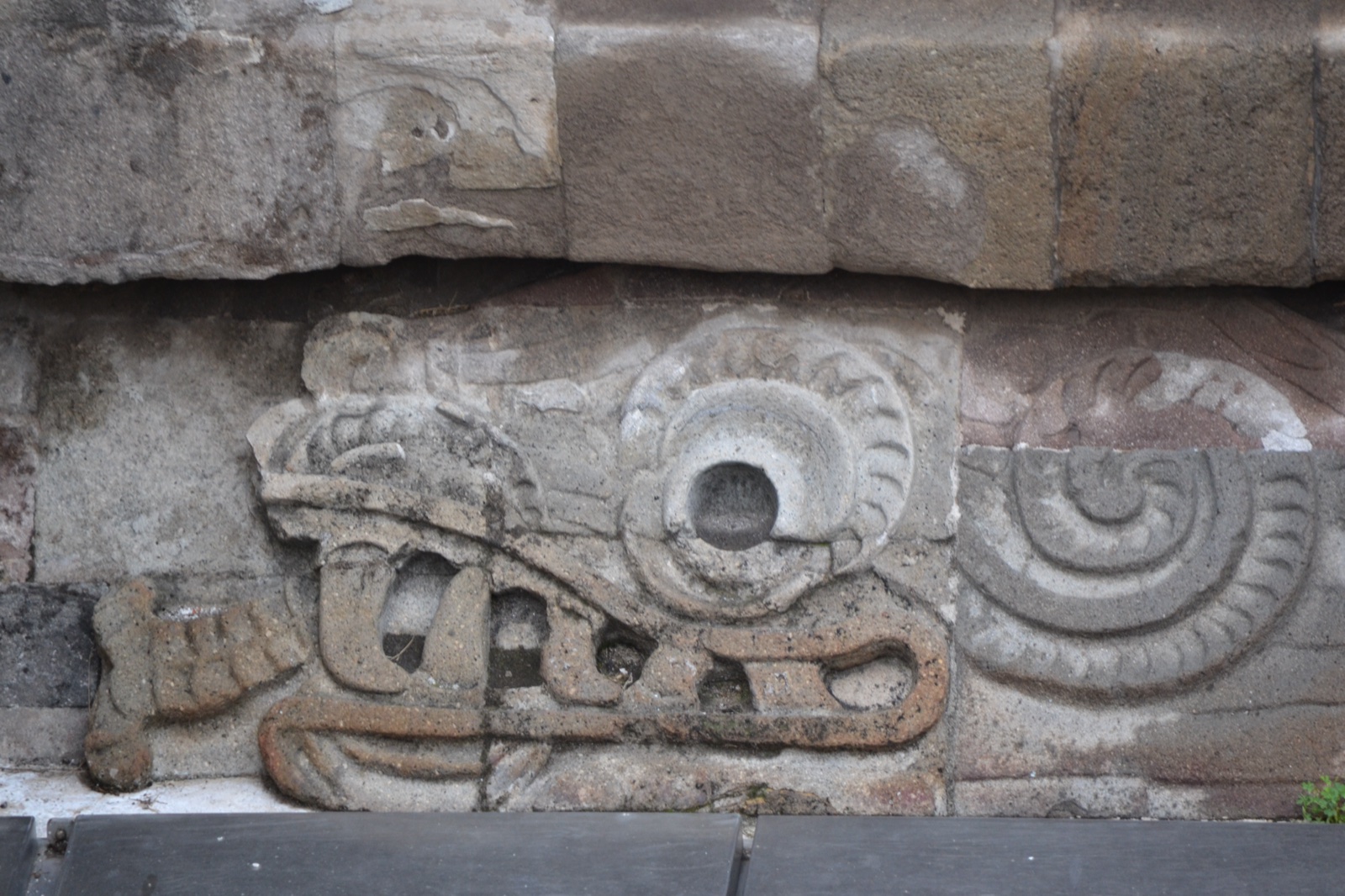
At the south end of the Avenue, in the middle of the enormous walled plaza of the Ciudadela, stands the Templo de Quetzalcóatl (Temple of the Feathered Serpent). Along the sides of its staircase, rows of feathered serpent (Quetzalcóatl) heads with open mouths protrude from the wall — a defining example of the precision of Teotihuacán sculpture.
The Pyramid of the Sun — a 220 m base
Heading north up the Avenue of the Dead, the massive Pyramid of the Sun (Pirámide del Sol) appears on the east side. The base measures roughly 220 m on each side and the height is about 65 m — placing it, among ancient pyramids, just behind the Great Pyramid of Giza in Egypt and the Great Pyramid of Cholula in Mexico. Excavations at its base have uncovered evidence of sacrifices and traces of dwellings, suggesting it was not just a religious monument but a central machine of the city itself.
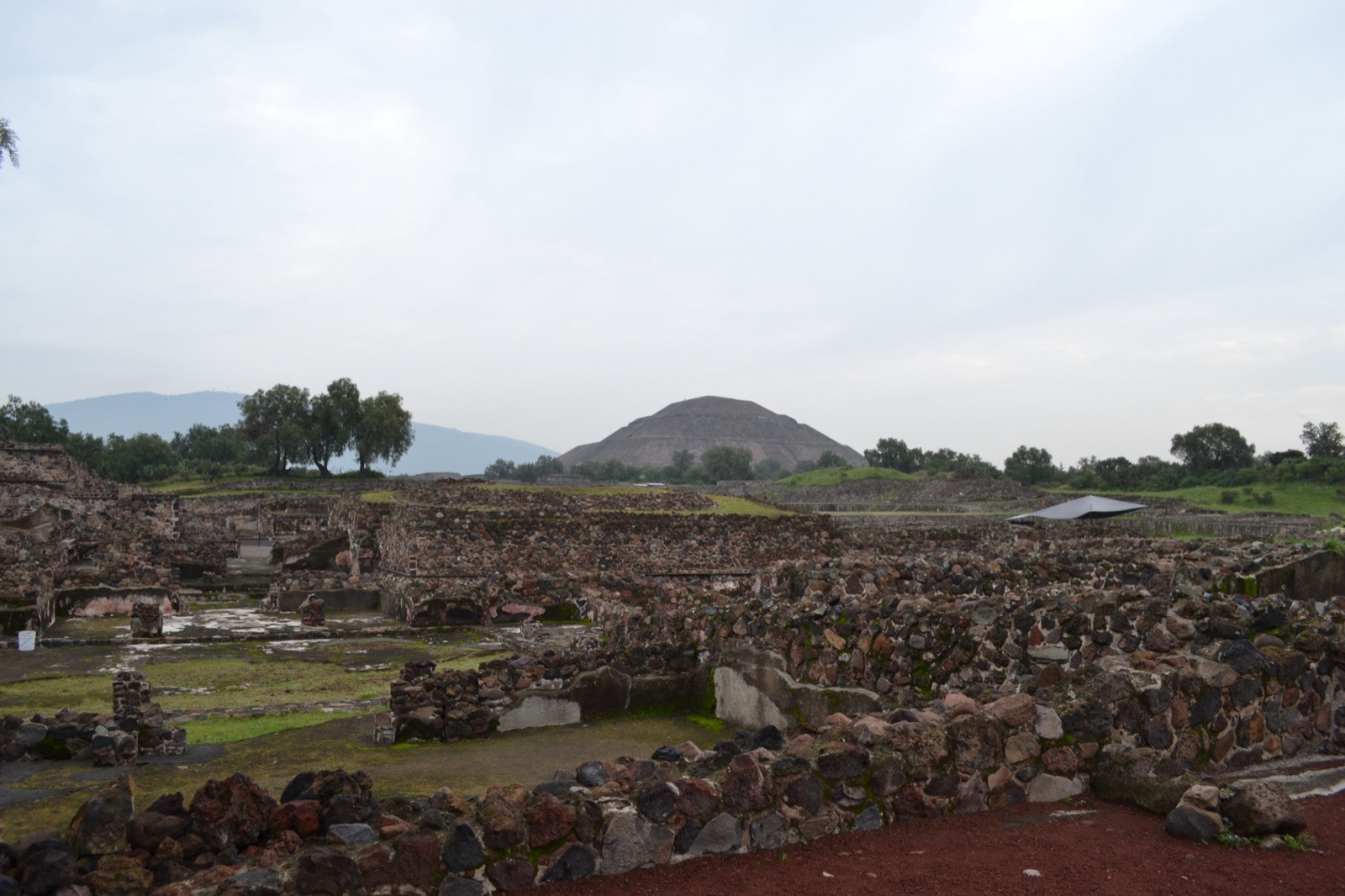
Standing in front of it, your field of view is almost entirely filled with pyramid. I'd already "known" it was big from photos and numbers, but in person it's even bigger than you imagine — looking up from the base, the staircase seems to vanish into the sky, and I was honestly stunned.

The steps are steep, and going down takes more concentration than going up. At the windswept top, you can literally look down on the entire city. The Pyramid of the Sun was the only one I climbed all the way at Teotihuacán.

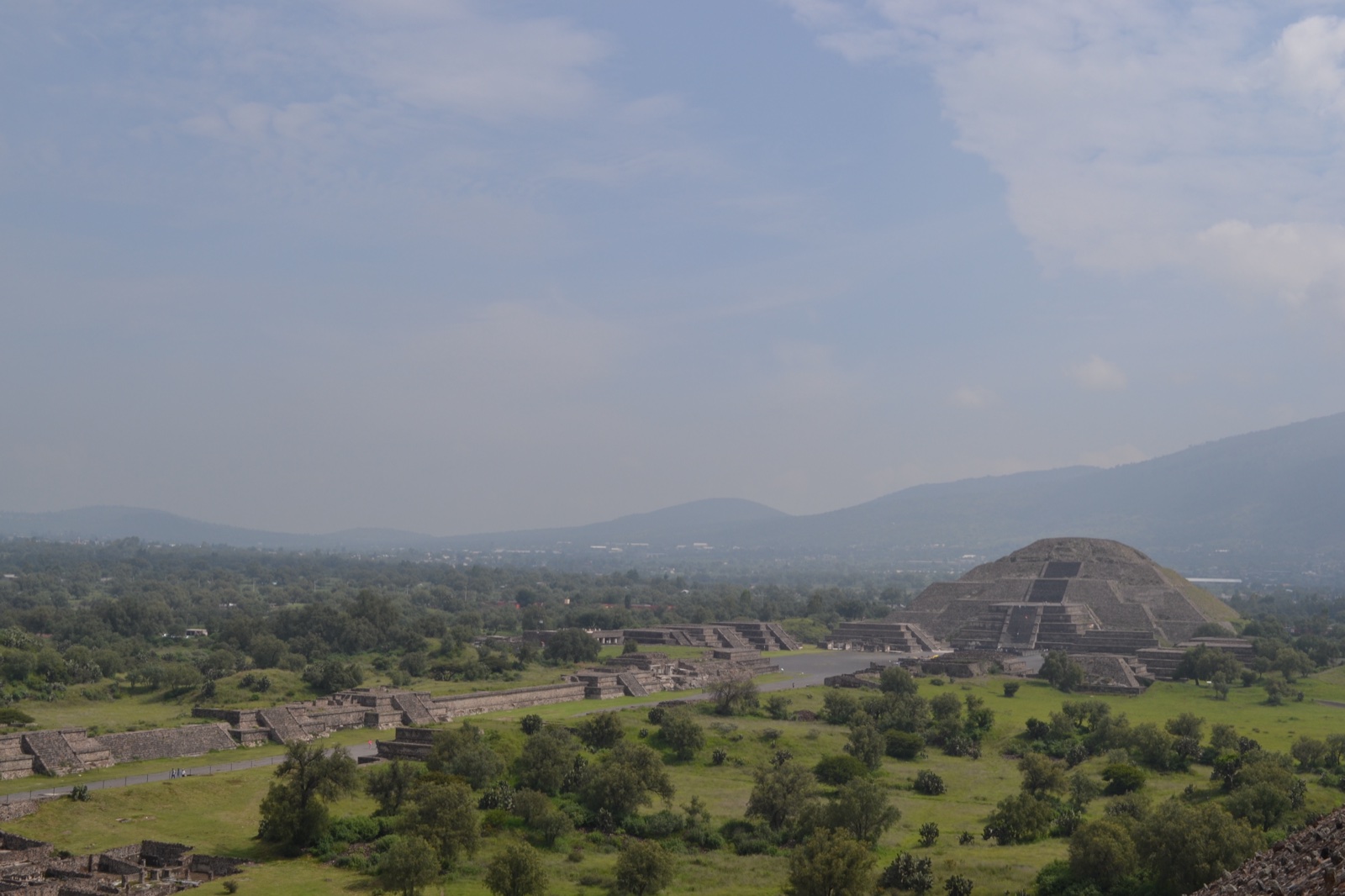
The Pyramid of the Moon and Cerro Gordo, seen from above
Looking from the summit toward the north end of the Avenue, the Pyramid of the Moon (Pirámide de la Luna) comes into view. Slightly smaller than the Pyramid of the Sun, but placed so that its silhouette aligns precisely with the ridgeline of Cerro Gordo ("Fat Mountain") behind it — clear evidence that the city's planners intended a sacred landscape integrated with the terrain itself.
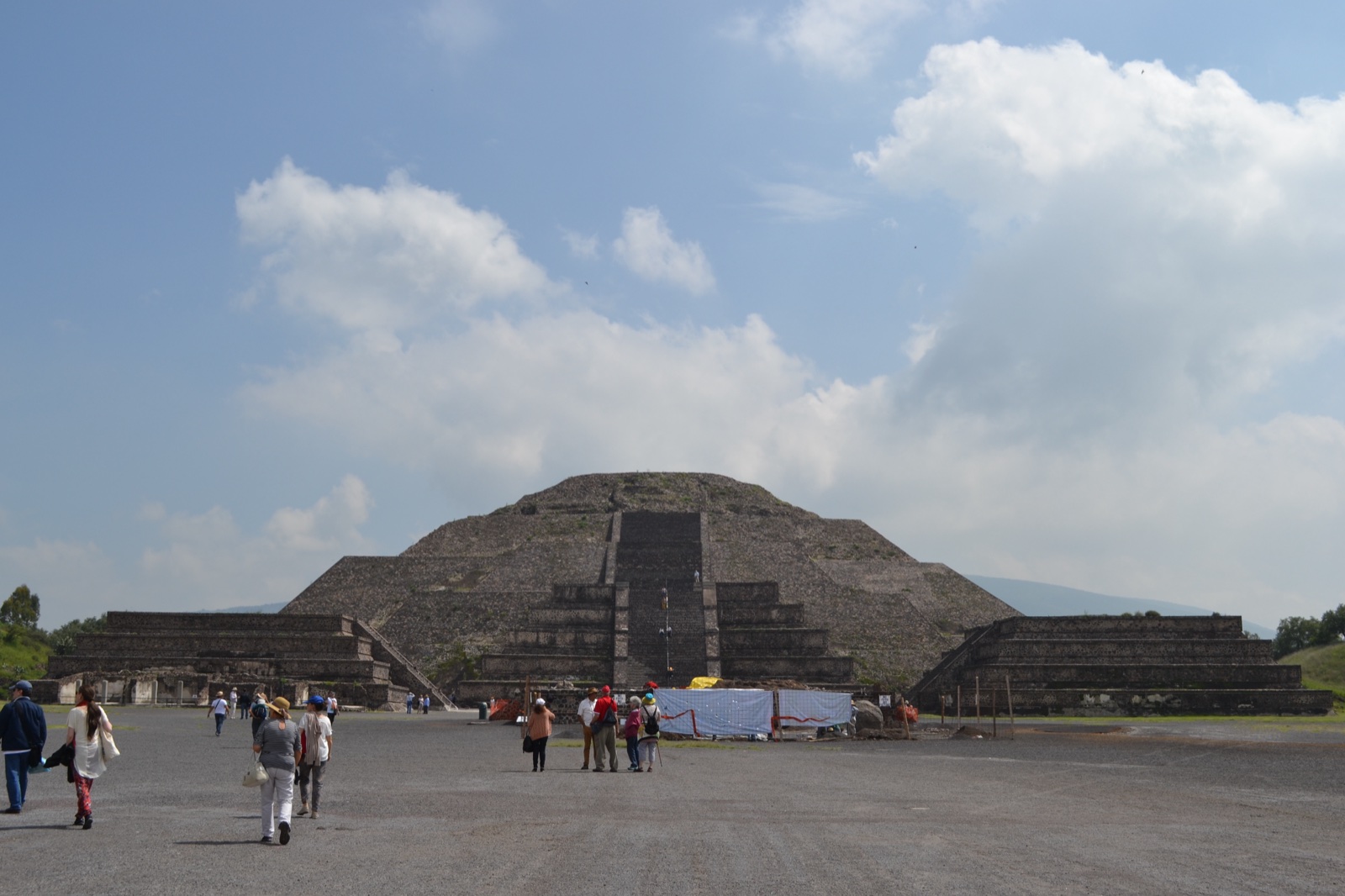
The Pyramid of the Moon — the end of the Avenue
The last stop is the Pyramid of the Moon, anchoring the north end of the Avenue. Its base is built up in multiple terraces, and excavations near the summit have produced bones and offerings believed to be tied to ritual ceremonies. Smaller temples surround the Plaza of the Moon in front of it. The symbolism here is even stronger than at the Pyramid of the Sun — it reads as a denser, more ritually charged space.
Climbing all the way to the summit of the Pyramid of the Moon is restricted depending on the season, but the first platform is open. Turning around to face south from there, the Avenue of the Dead runs straight ahead, with the Pyramid of the Sun visible at the far left — a single view that captures the entire layout of Teotihuacán. An incredible vantage point.
Why Teotihuacán was abandoned in the 7th–8th centuries is still not fully resolved. Recent research suggests a combination of prolonged drought, internal class conflict between the elite and lower-class population, the deliberate burning of the city's ceremonial core, and warfare with neighboring centers. The Aztecs only reached this area from the 13th century onward, by which time the city had been abandoned for centuries. The vast deserted ruins they encountered became the source of their name "place where the gods were born."
What did the people who lived here 2,000 years ago call their own city? Why was it abandoned on such a scale? Teotihuacán still has more questions than answers. And yet, just the fact that these enormous stone structures still stand integrated with the land is enough to make you intuit, immediately: there was a high civilization here.
No question about it.
Places visited
Travel notes (general info)
※This section is editorial reference based on public information. Please confirm prices and operating details on official sites.
Getting there
- By bus: from Autobuses del Norte, take the "Pirámides" or "Teotihuacán" Autobuses Teotihuacán bus, about 1 hour (every 30–45 min)
- Metro: Line 5 connects directly to Autobuses del Norte station
- By rental car or taxi: about 1 hour from central Mexico City via the highway
- Hot air balloon: sunrise balloon flights over the pyramids are popular (advance booking required)
- Admission: about MX$95 for foreign visitors (2024). Free on Sundays for Mexican citizens and residents
- Allow: 4–6 hours just for the main monuments. Almost no shade — bring a hat and water
Recommended nearby spots
- Teotihuacán Site Museum (Museo de Sitio) — south of the Pyramid of the Sun, with finds and a model of the city
- Ex Convento de San Agustín de Acolman — 16th-century Augustinian monastery, about 20 min by car from Teotihuacán
- Tepotzotlán National Museum of the Viceroyalty — Baroque church masterpiece, about 45 min by car
- Basilica of Guadalupe — easy combo with Teotihuacán on the way back to Mexico City
- Mexico City Historic Center — Zócalo, Templo Mayor and the Cathedral as a one-day plan
References
- UNESCO World Heritage Centre — Pre-Hispanic City of Teotihuacan
- INAH (Mexico's National Institute of Anthropology and History)
- Encyclopædia Britannica — Teotihuacan
- SECTUR (Mexican Ministry of Tourism)
- Anthony F. Aveni, Skywatchers of Ancient Mexico (University of Texas Press, 1980) — archaeoastronomy of Mesoamerican capitals including Teotihuacán
- Geoff Stray, The Mayan and Other Ancient Calendars (Wooden Books) — a concise primer on the Maya Long Count, calendar round and astronomy