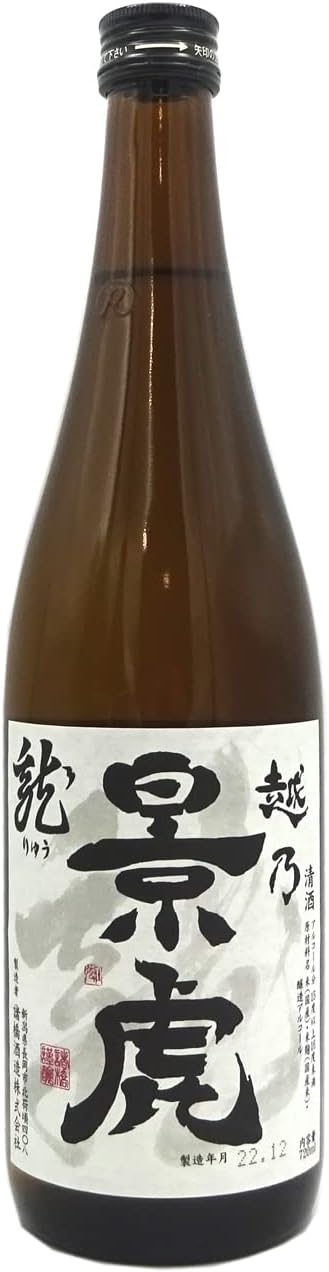
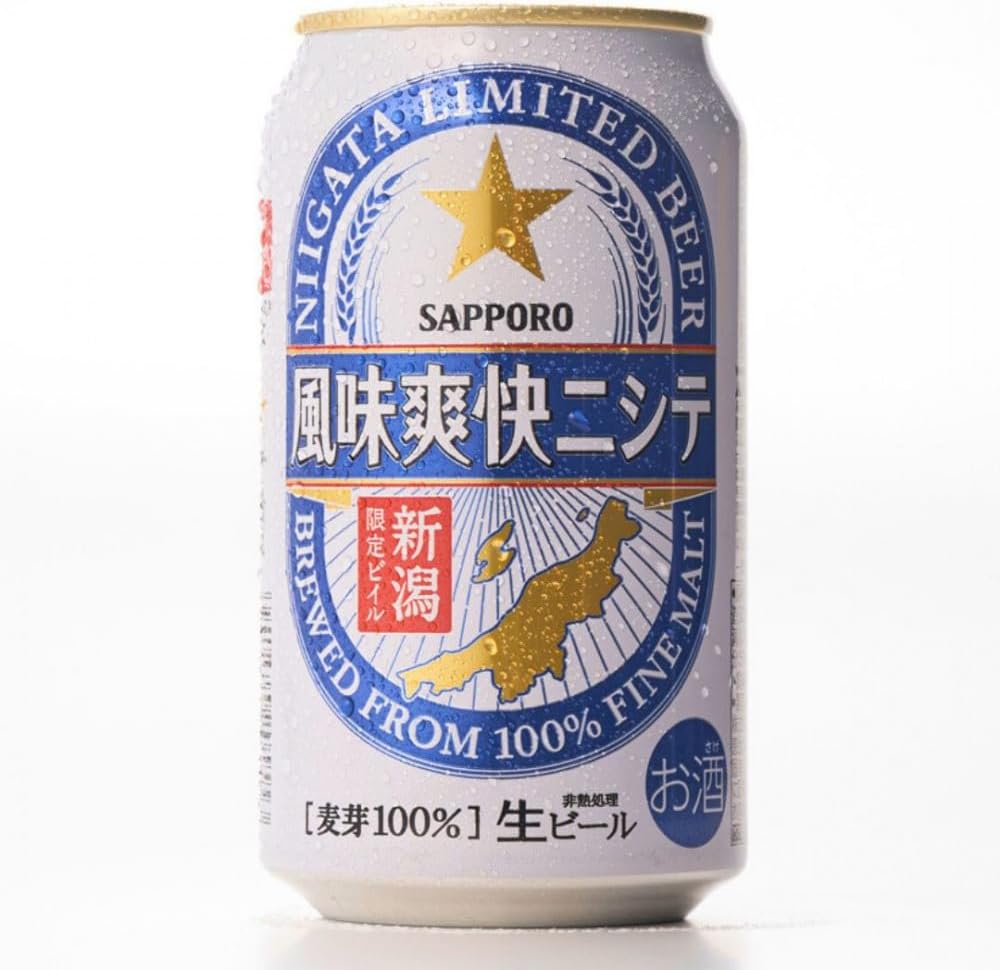
Whenever I go to Niigata, the sake selection is so wide it freezes me up. The prefecture has more than 90 active breweries, and its seishu (refined sake) shipments are the third largest in Japan after Hyōgo and Kyoto. Rice (Koshihikari, Gohyakumangoku), snowmelt water, a cold climate suited to long, low-temperature fermentation — everything sake-making needs is in one place. There's also the fact that Sapporo Beer's first head brewer, Nakagawa Seibei, was from Yoita in Niigata, which is why even Japanese beer has a "Niigata-only" can in the lineup.
This time I was just wandering around Niigata for fun, detouring through a few places, and ended up with four bottles: a couple of local-only cup sakes, a regional tokubetsu honjōzō, and a regional beer. Less souvenir lineup, more "what locals actually drink." Here they are in order.
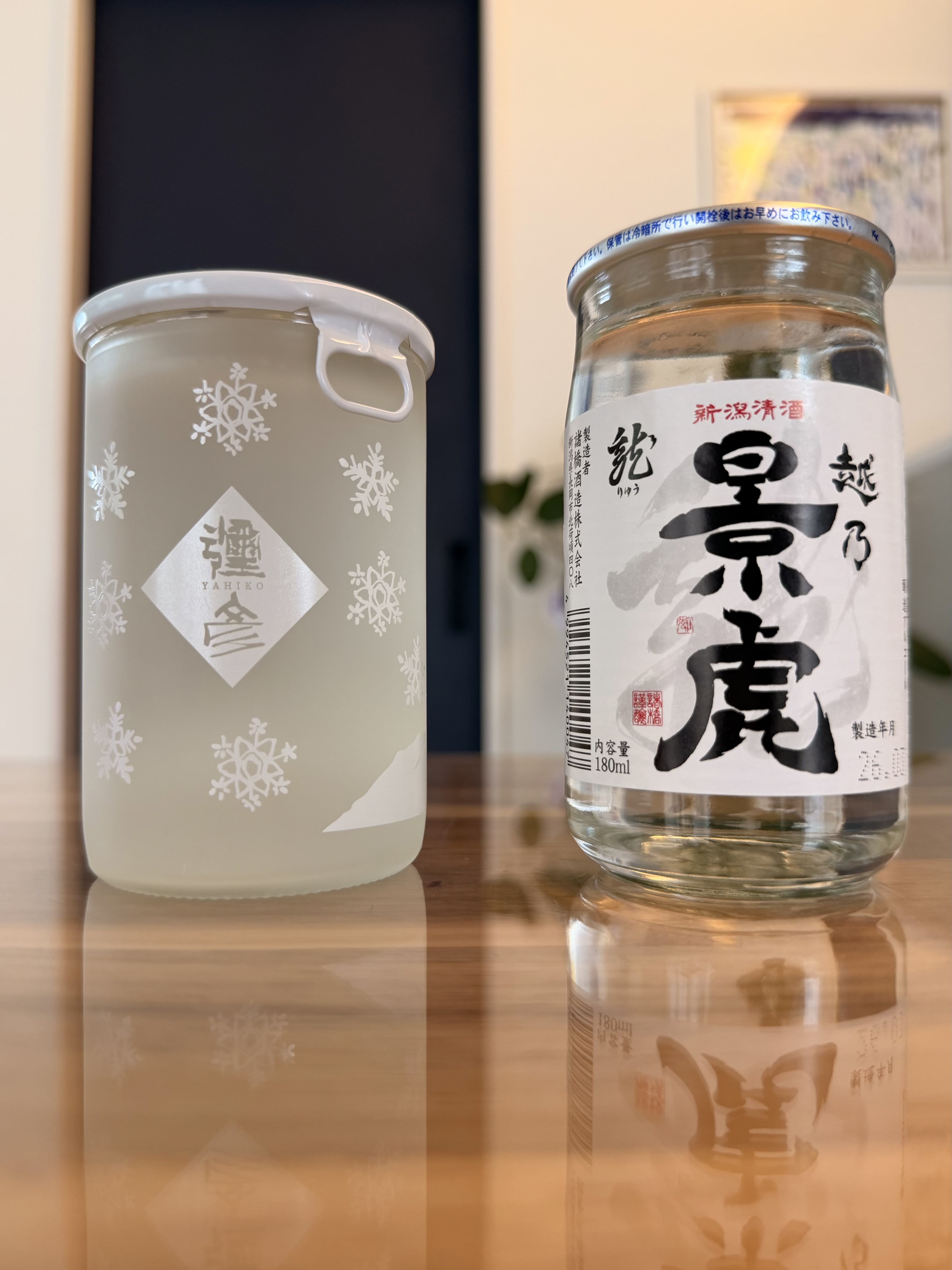
Koshino Kagetora Ryū Futsū-shu 180 mL Cup
The cup version of Morohashi Shuzō's flagship "Koshino Kagetora," from Tochio in Nagaoka, Niigata. "Kagetora" is the coming-of-age name of the warlord Uesugi Kenshin, and Tochio is where Kenshin spent his teenage years. It's a futsū-shu (table-grade), but dry, clean, with the finish snapping right off. Holds up cold or warmed; the textbook Niigata "tanrei karakuchi" — clean and dry.
The 180 mL cup is the right size for the train platform or a quick stop on the road, and you'll find it in just about any station kiosk in Niigata. As a food sake it sharpens the outline of grilled fish or simmered dishes and absorbs their saltiness without complaint.
Yahiko Cup, Snowflake Label
A locals-only cup from Yahiko Shuzō, in the village of Yahiko in western Niigata. The brewery sits in the temple town in front of Yahiko Shrine, and the snowflake label is a kind of good-luck charm in itself. Inside it's a clean-style futsū-shu, but with a touch of rice umami still hanging around — a little rounder than Kagetora.
Not strictly "only available at the gift shop on the way back from the shrine" — but distribution outside the prefecture is pretty thin. Take it home as a souvenir, and the empty cup gets a second life as a small dipping cup.
Sapporo "Fūmi-Sōkai Nishite" Niigata-Only Beer
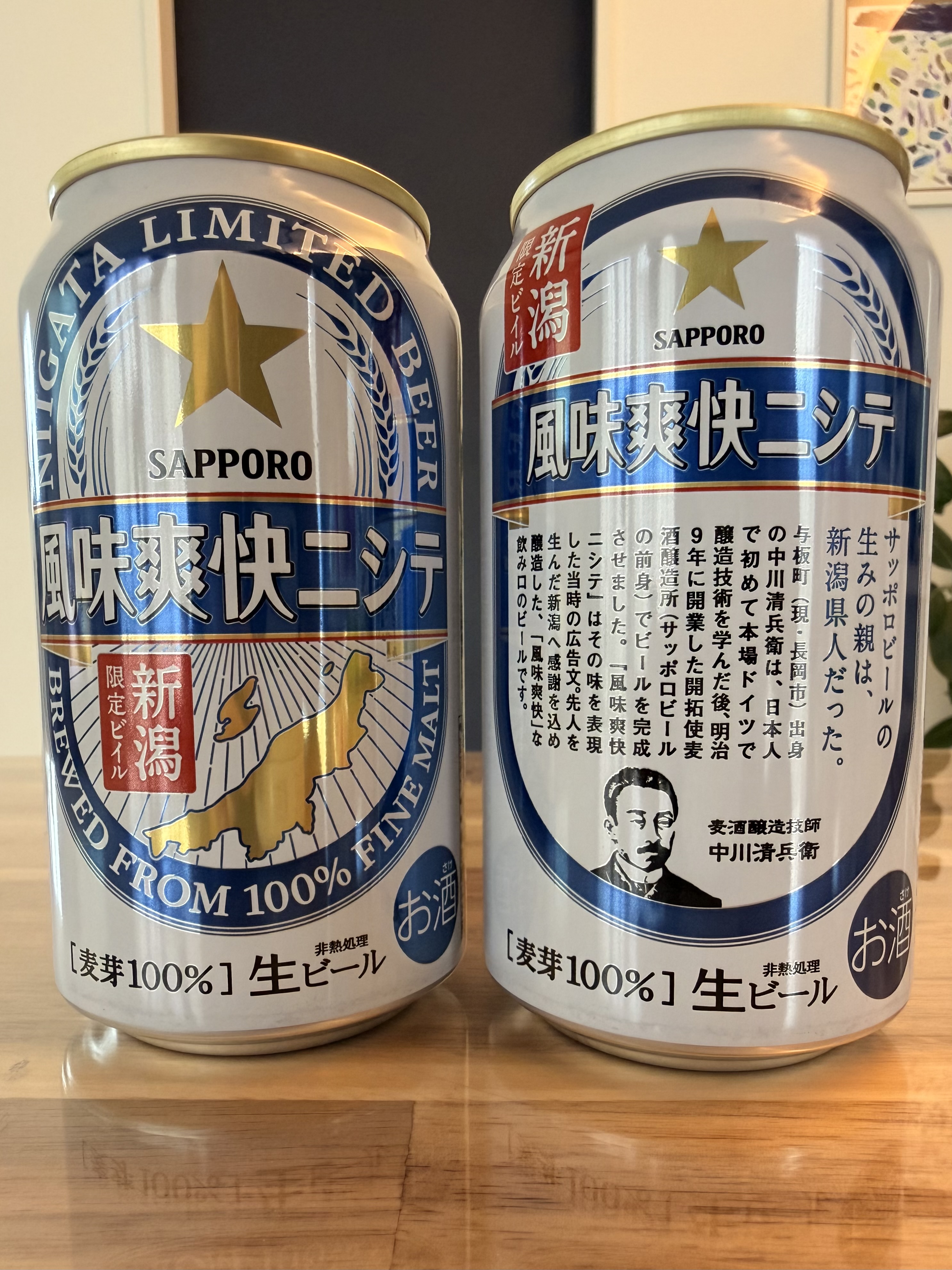
The "father of Sapporo Beer," Nakagawa Seibei, was from Yoita (now part of Nagaoka) in Niigata. He went to Europe at 19 and learned beer brewing at the Tivoli brewery in Berlin — Japan's first qualified beer engineer. In 1876 (Meiji 9) he was appointed first head brewer of the Kaitakushi Brewery in Sapporo, the direct ancestor of today's Sapporo Beer. "Fūmi-Sōkai Nishite" — roughly "of fresh and bracing flavor" — is the literal Meiji-era praise once given to the beer Seibei brewed in Sapporo, now used as the name of this Niigata-only can. The can has his story printed densely along the side; reading it while drinking is half the fun.
Inside it's a straightforward pilsner — clear malt aroma, restrained bitterness. Plain in the best sense; restrained in the worst. But knowing it sits in the lineage of the "proper beer" Seibei learned in Germany and brought back, that plainness suddenly tastes deeper.
Tenryōhai Tokubetsu Honjōzō 1.8 L
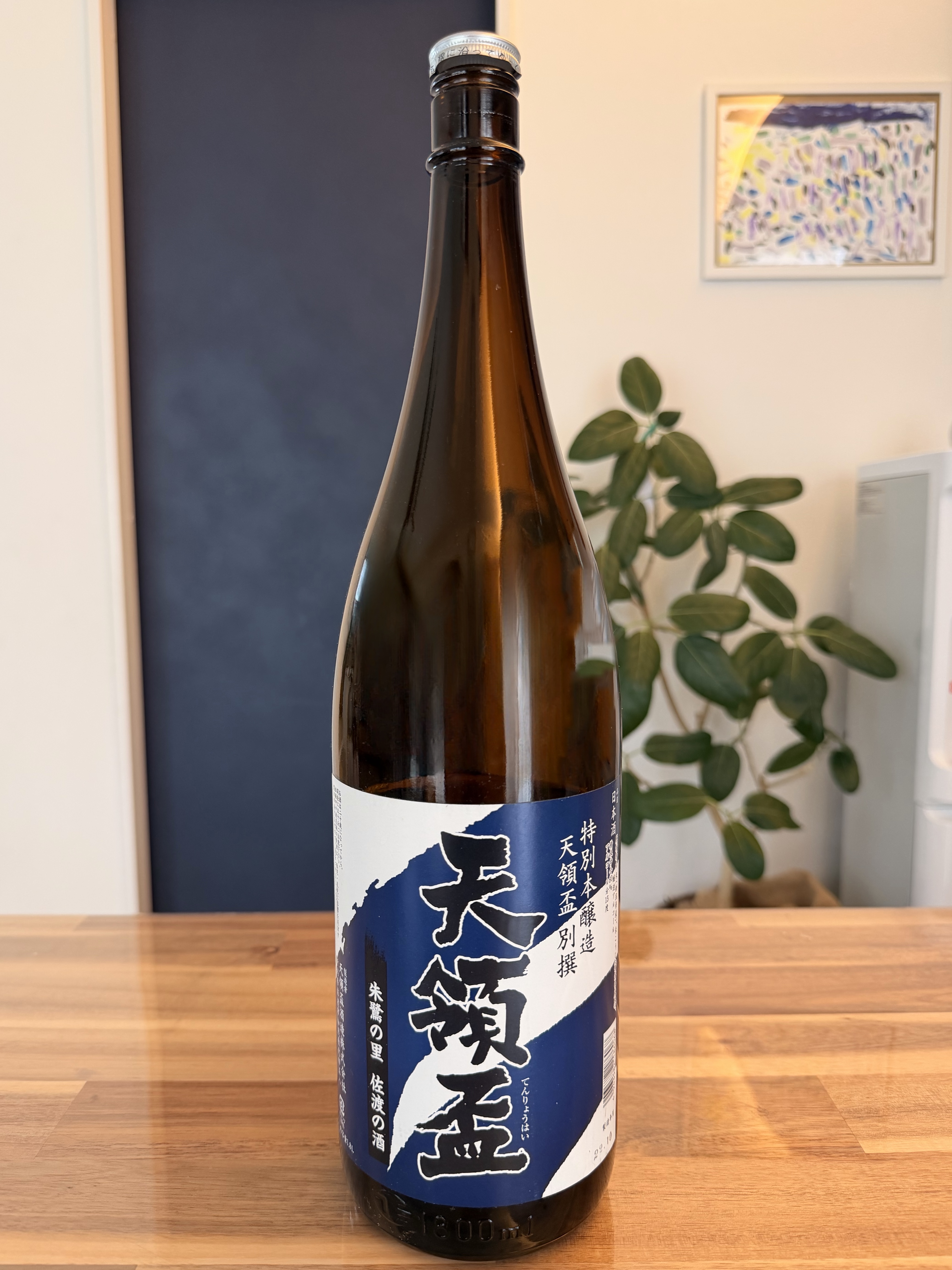
A tokubetsu honjōzō from Tenryōhai Shuzō on Sado Island. Sado was tenryō — directly governed shogunal land — in the Edo period, and the brewery name still carries that. As you'd expect from a tokubetsu honjōzō, it leans dry with a clean cut; price-wise it's just over ¥2,000 for an isshōbin (1.8 L), which is excellent value. The right kind of bottle for a casual evening at home, or as the bottle that goes around the table when a group gathers around the hot pot.
Warmed up, the sweetness of the rice unfolds quietly. Not chilled too hard — body temperature to nuru-kan is my preference. You don't have to actually go to Sado for it; you'll find it in souvenir shops at Niigata Station or in regional Aeon supermarkets.
Niigata sake gets lumped together as "tanrei karakuchi" — clean and dry — but line them up and the breweries clearly differ in personality. Kagetora is sharp, Yahiko is round, Tenryōhai is honest, Seibei's beer is a little earnest. Drinking the story of the place along with the bottle is, I think, the right way to enjoy Niigata.
Niigata Sake — Background
※ This section combines public information with the author's notes; please confirm the latest details on the official sites.
Why Niigata is a "Sake Country"
Niigata has a rare combination of the four ingredients sake-making needs — rice, water, climate, and people (tōji master brewers). The prefecture has more than 90 breweries, and the Echigo tōji guild stands alongside Nanbu and Tanba as one of Japan's three great schools. The long cold winter is well suited to slow parallel multiple fermentation.
The Roots of Tanrei Karakuchi
In the postwar decades, when the dominant style under the liquor tax law was rich and heavy sake, breweries like Hakkaisan, Kubota, and Shimeharitsuru pushed a "clean-drinking honjōzō and ginjō" style that spread nationally. That's what cemented the "Niigata = tanrei karakuchi" image.
Nakagawa Seibei and Japanese Beer
Nakagawa Seibei (1848–1916), born in Yoita, Niigata, was the first Japanese person to study proper German-style brewing. He served as the first head brewer at the Kaitakushi Brewery in Sapporo, laying the foundation of today's Sapporo Beer.
Of the four, the easiest to find online are Koshino Kagetora, Tenryōhai, and Sapporo Fūmi-Sōkai Nishite. For the Yahiko Cup, picking it up locally is the way to go.