I had seen the ruins of Panamá Viejo and the giant ships of the canal. On this day I decided not to set any particular destination and simply walk Panama City. January in Panama is the dry season, and the sky is a deep, cloudless blue. It is also relentlessly hot. This is the record of a day spent walking from the waterfront to the old town under a sun that felt like it was piercing my skin.
The Cinta Costera — a Promenade Along the Bay
My first stop was the Cinta Costera, the park strip that runs along the Bay of Panama. It's a landscaped promenade on the seaward side of Avenida Balboa, where lawns and rows of palm trees stretch out with the high-rises of the new city towering behind them.
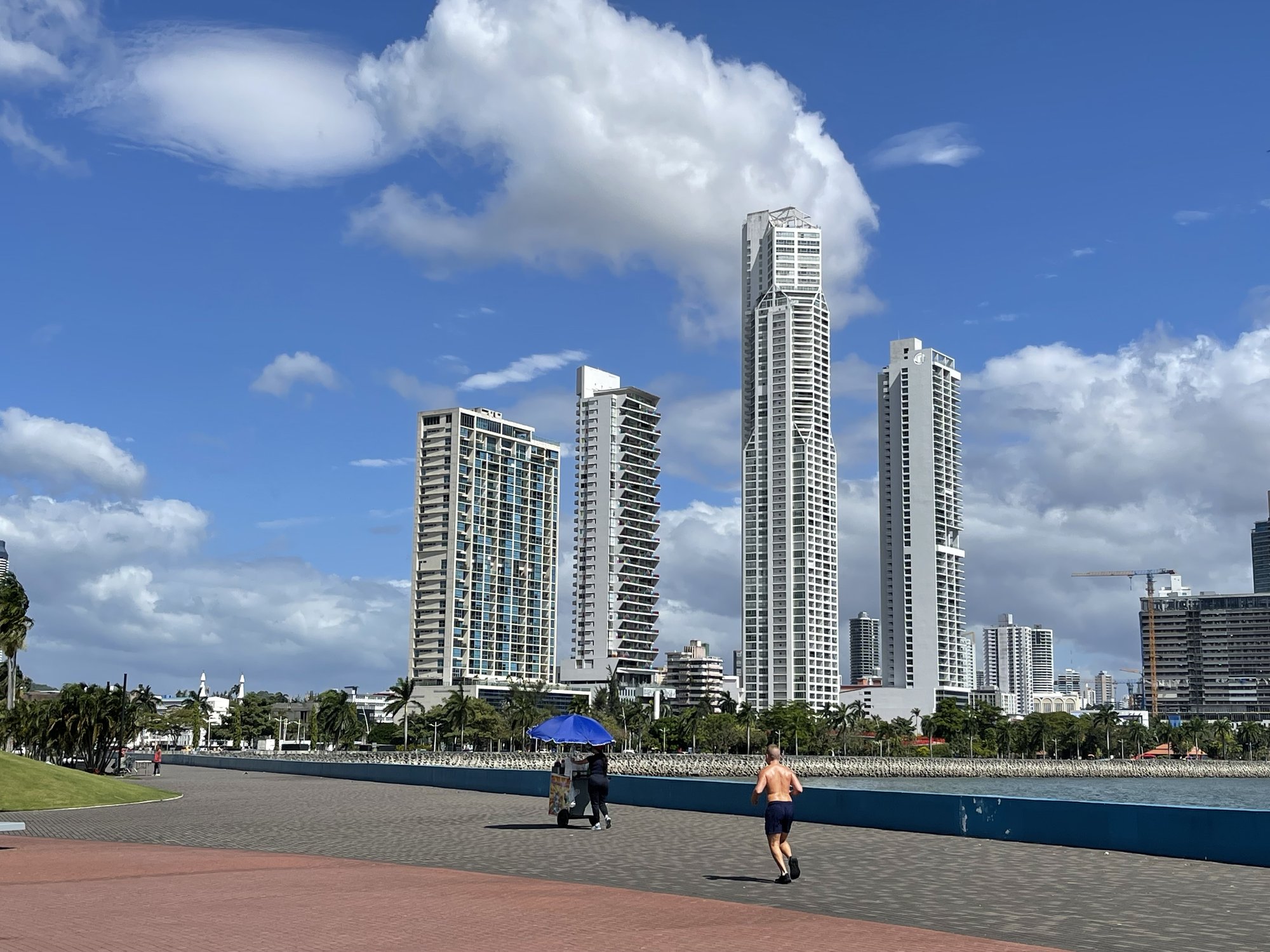
It was still morning, but the sun was already fierce. Even so, people were out jogging, and a food cart under a blue parasol rolled slowly by. Families strolling, people resting on benches. A seaside park set against a skyline of towers — it felt less like Central America than a big North American city. The view of the skyline from here has a different kind of impact from the Panama City I saw from the water on day two.
Into Casco Viejo
Walking southwest along the Cinta Costera, you eventually enter a world that could not contrast more with the high-rises: the UNESCO-listed old town of Casco Viejo. I wrote about its charms in Part 2 of this series, but this time I wandered the alleys with no goal at all. I ran into the murals again, too — women in polleras (Panama's traditional dress) and Indigenous women painted across the walls of colonial-era buildings.
Defeated by the Heat: Iced Coffee from Boquete
By late morning the heat had won. I took refuge in Kotowa Coffee House in the old town. Kotowa is a long-established coffee producer founded in 1918, with farms in Boquete, the highland region of western Panama. Panama is also home to the world-famous Geisha variety, and the overall standard of its coffee is remarkably high.
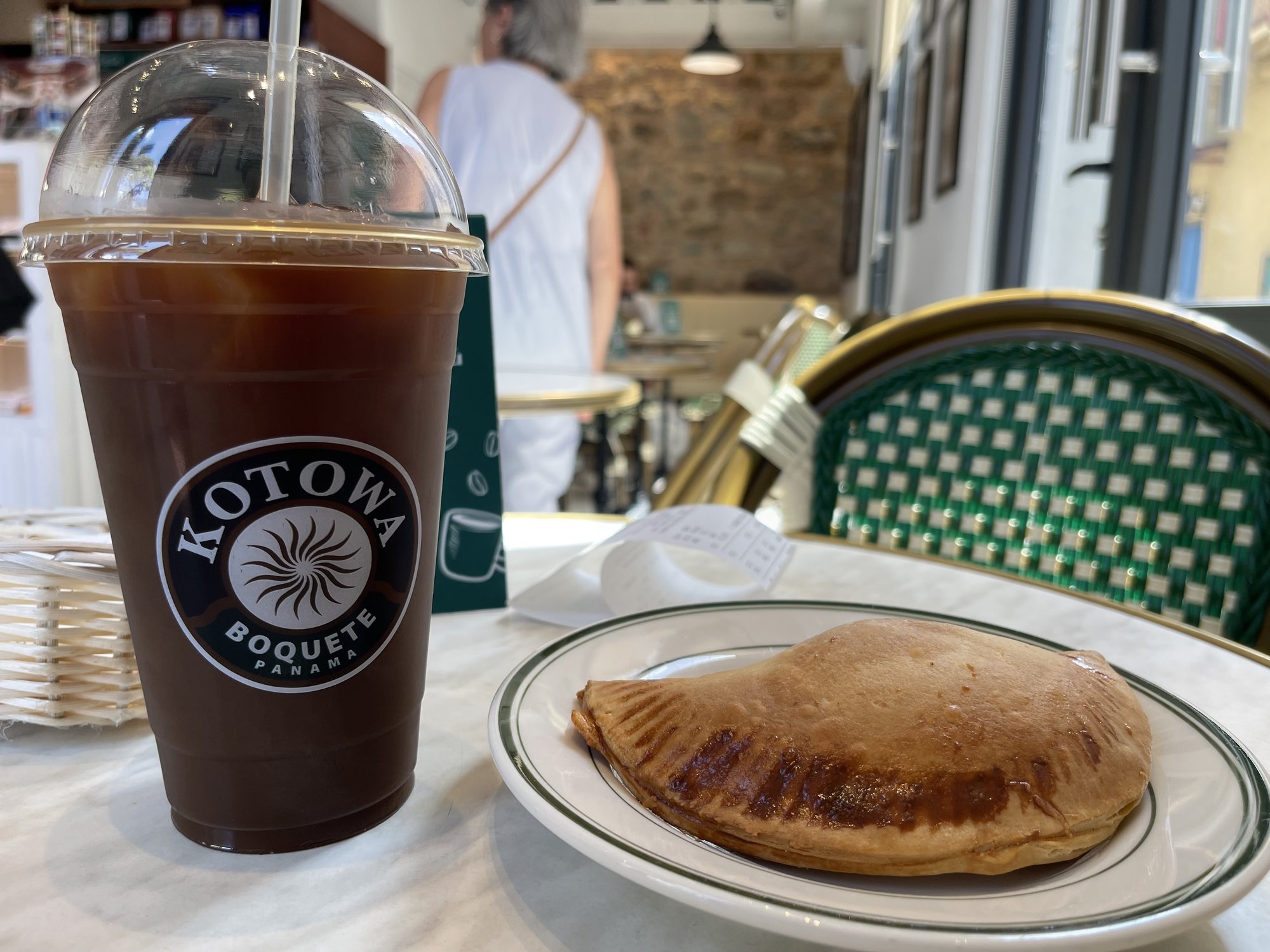
I ordered an iced coffee and an empanada. The stone-walled interior was cool, and I sank into a bistro-style chair to catch my breath. As the sweat faded, the clean, crisp bitterness of the coffee sank in. Beans grown in the highlands of Boquete, drunk in the country that grew them — that alone felt like a luxury.
The Ruins of Santo Domingo
In the afternoon I visited the ruins of the Church and Convent of Santo Domingo (Iglesia y Convento de Santo Domingo), tucked into a corner of the old town. Built in the 17th century, the church burned down in repeated fires, and today its brick facade and arches stand open to the blue sky.
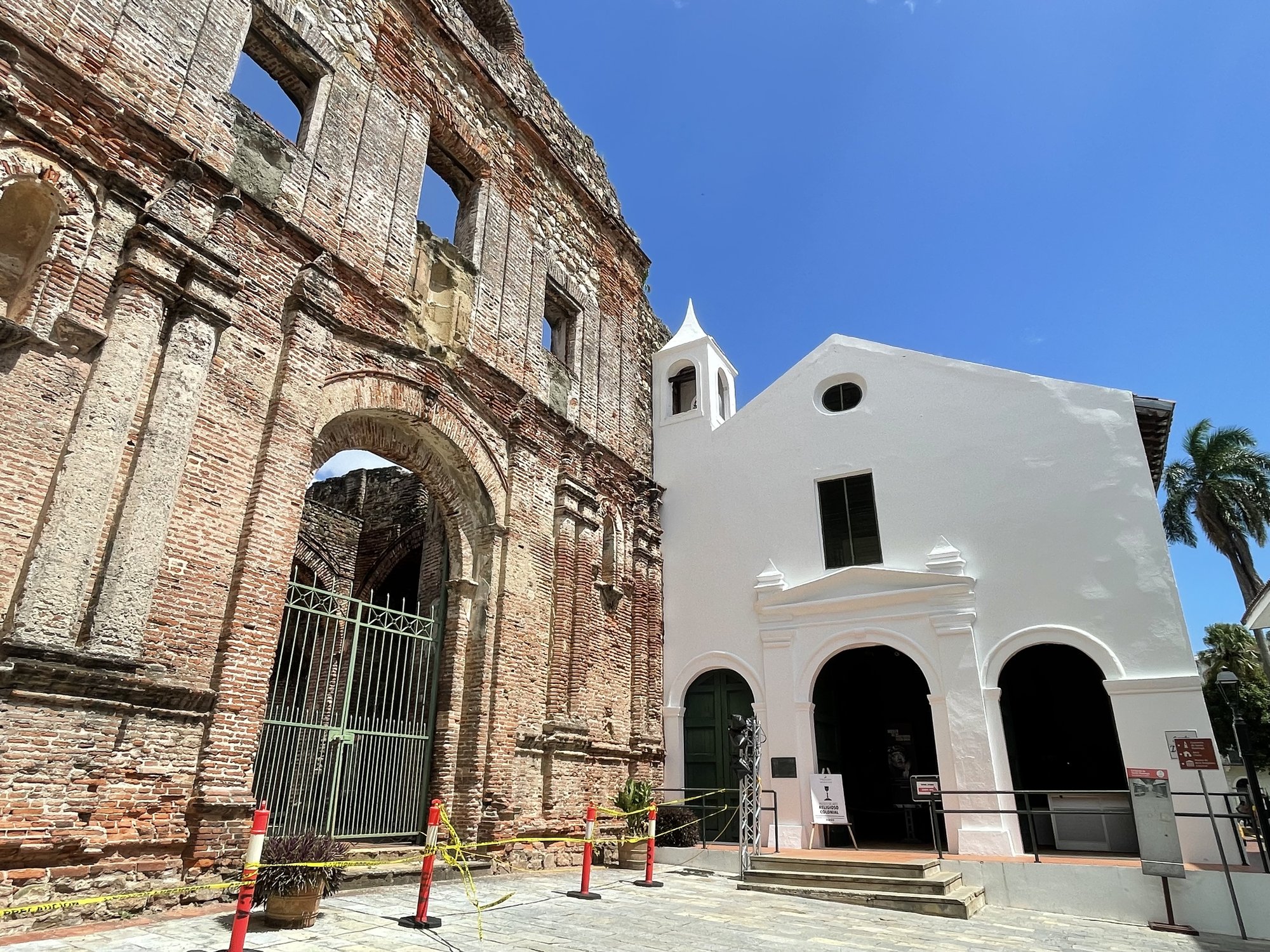
Within the ruins stands a low, unsupported arch known as the "Arco Chato" (the flat arch). Because it survived the fires and kept standing for centuries, the story goes that it was cited as evidence that "Panama has few earthquakes" during the debates over where to build the canal — or so it is said. The contrast between the weathered brick of the ruins and the gleaming white chapel next door (now a museum of colonial religious art) was beautiful.
The Next Day: a Blue Milkshake and "GOOD LUCK, TODAY"
The next day I walked the old town again. On a cobblestone street I bought a milkshake swirled in blue and white marble. On the cup, someone had handwritten "GOOD LUCK, TODAY ★" — apparently a small message from the staff to whoever placed the order.
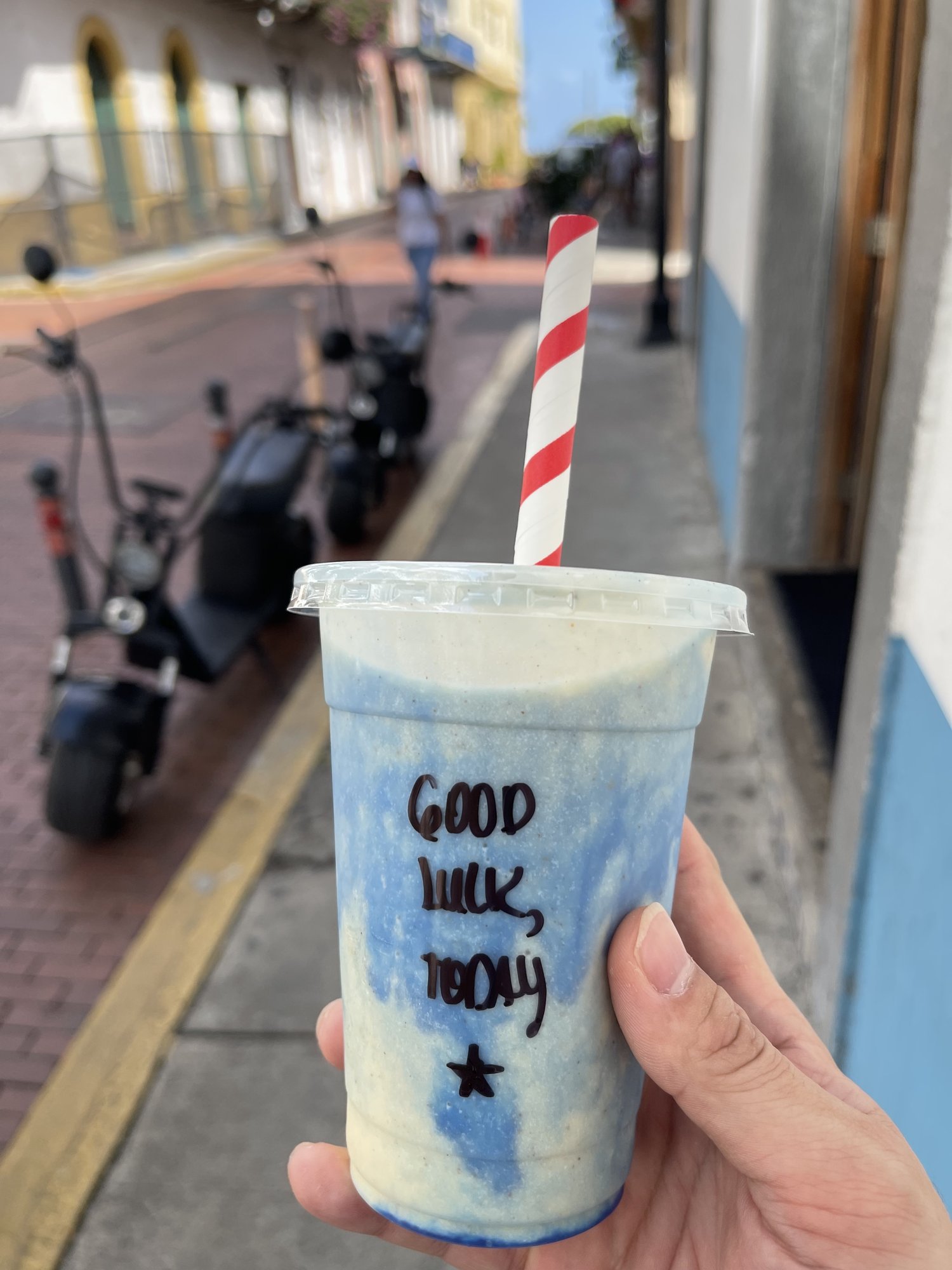
It was banana-based and gently sweet, the blue part faintly milky. The cold and the sugar cut straight through a head gone fuzzy with heat. It was such a small gesture, but a "GOOD LUCK" handed to you on the road makes you strangely happy.
There are things you never see by hopping between famous sights, and walking a city reveals them. A jogger on the waterfront, a white van passing in front of a mural, a handwritten message on a cup. It was these fragments of everyday Panama City that ended up shaping my impression of the place.
Travel guide (general info)
※ This section combines public information with the author's notes; please confirm the latest entry, safety, and operating details on the official sites.
Cinta Costera
- A waterfront park and promenade built on reclaimed land along Avenida Balboa, facing the Bay of Panama. It stretches roughly between the new city and the old town.
- There are jogging and cycling paths, playgrounds, and food carts; in the mornings and evenings it becomes a popular exercise spot for locals. Shade is scarce at midday, so a hat and plenty of water are essential.
- You can walk along the water to Casco Viejo, but during the hottest hours a ride-hailing app is a realistic alternative.
Exploring Casco Viejo
- The old town was inscribed as a UNESCO World Heritage site in 1997 (as the Archaeological Site of Panamá Viejo and Historic District of Panamá). Cafes, galleries, and churches all sit within walking distance.
- The Santo Domingo site preserves the ruins of a 17th-century church and convent. The adjoining chapel is open as a museum of colonial-era religious art (check on-site notices for opening hours).
- January to around April is the dry season, with mostly clear skies. Daytime temperatures exceed 30°C, so take frequent breaks and stay hydrated.
Panamanian coffee
- The main growing region is the Boquete highlands in the western province of Chiriquí. Its volcanic soils and range of elevations produce beans known for bright acidity, and the Geisha variety keeps breaking price records at international auctions.
- Kotowa is a long-established Boquete farm founded in 1918. It runs its own cafes in Panama City, where you can drink coffee brewed from the farm's beans or buy them to take home.
- Specialty coffee shops are scattered across the old town and make convenient refuges during the midday heat.
References
Panama and Central America travel info in one volume — Chikyu no Arukikata: Central America covers seven Central American countries including Belize and Panama, the go-to Japanese-language guidebook.