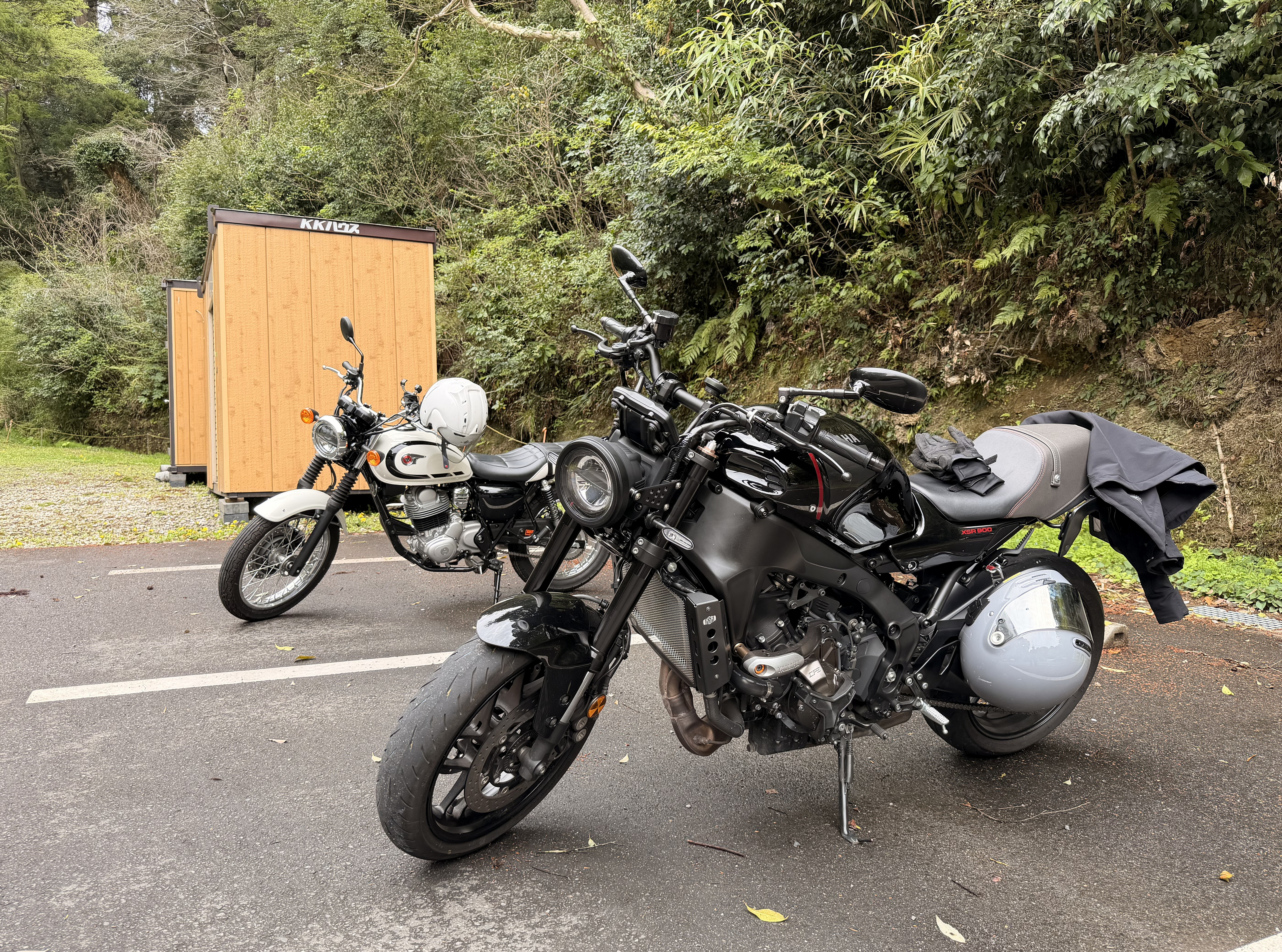
I rode through Chiba in spring on the XSR900. The destination: Kasamori Kannon, an old temple deep in the mountains of Chōnan Town. Its main hall is built directly on top of a rock outcrop in a structural style said to be the only one of its kind in Japan. Even living in Chiba, I'd never quite gotten around to visiting.
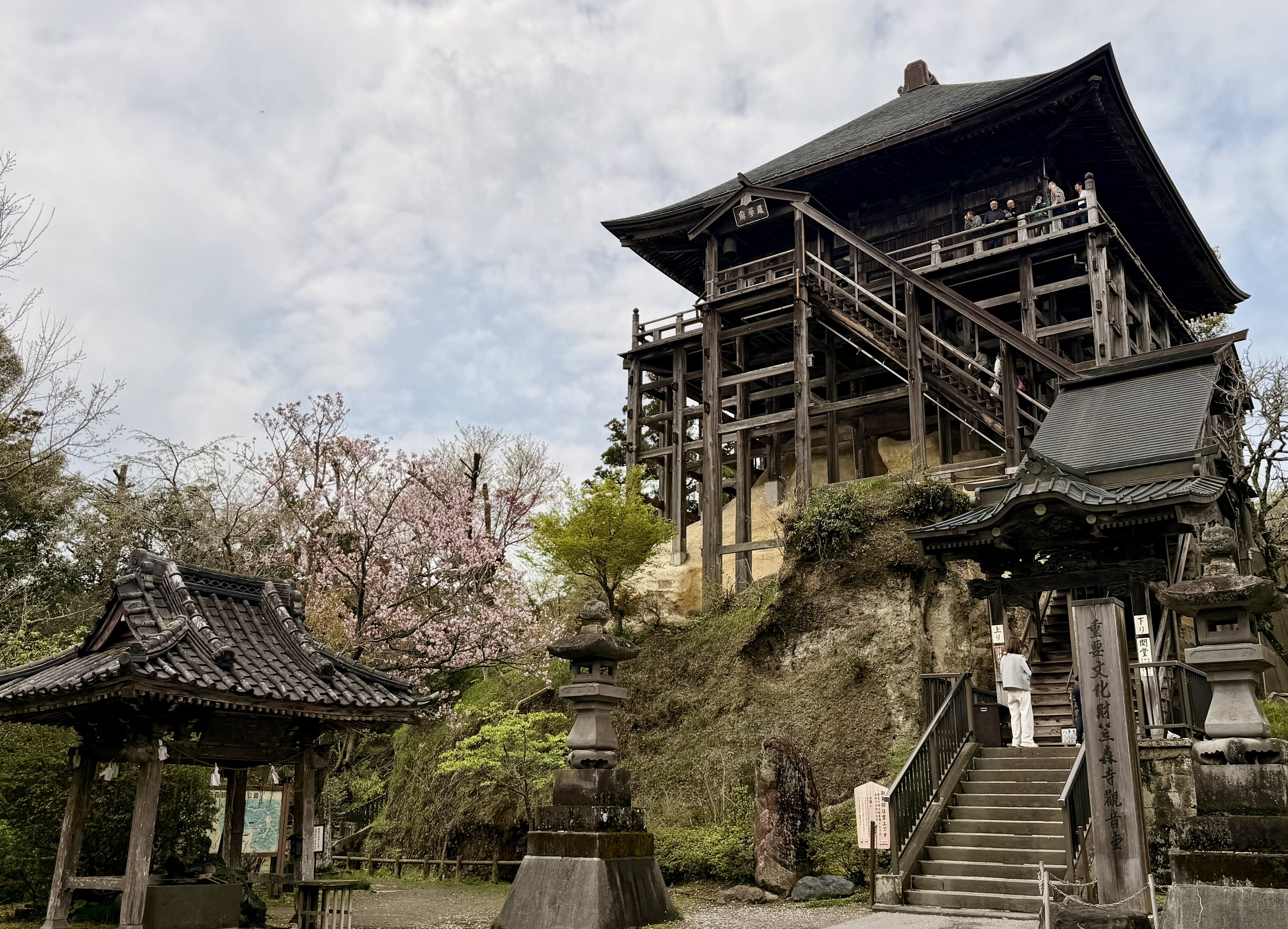
Kasamori Kannon
Officially known as Kasamori-dera, this Tendai-school temple is said to have been founded in the Heian period. The main hall stands on a natural rock outcrop, supported by 61 wooden columns in a structure called shihō-kakezukuri. It is considered the only example of this construction style in Japan and is designated a National Important Cultural Property.
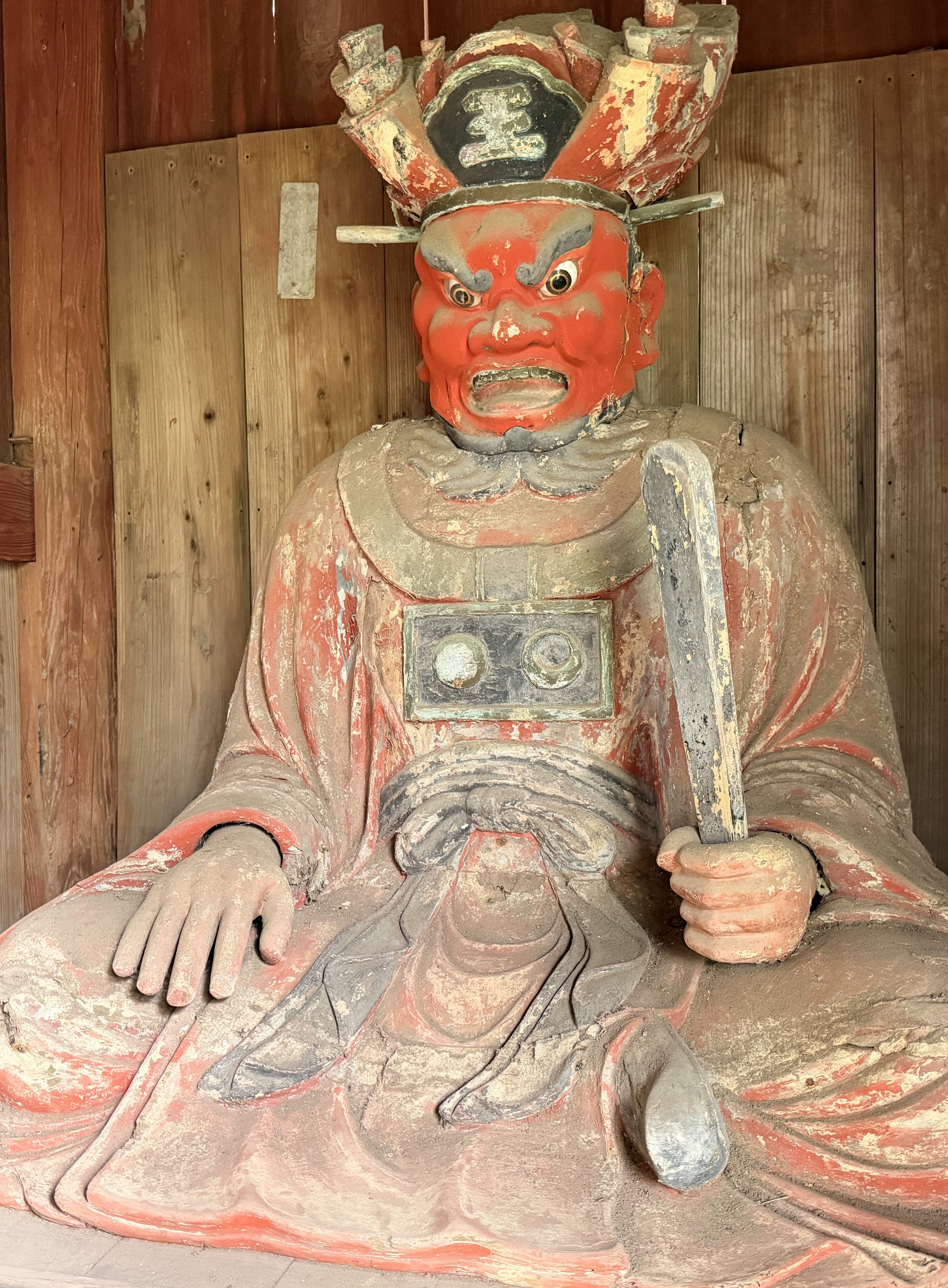
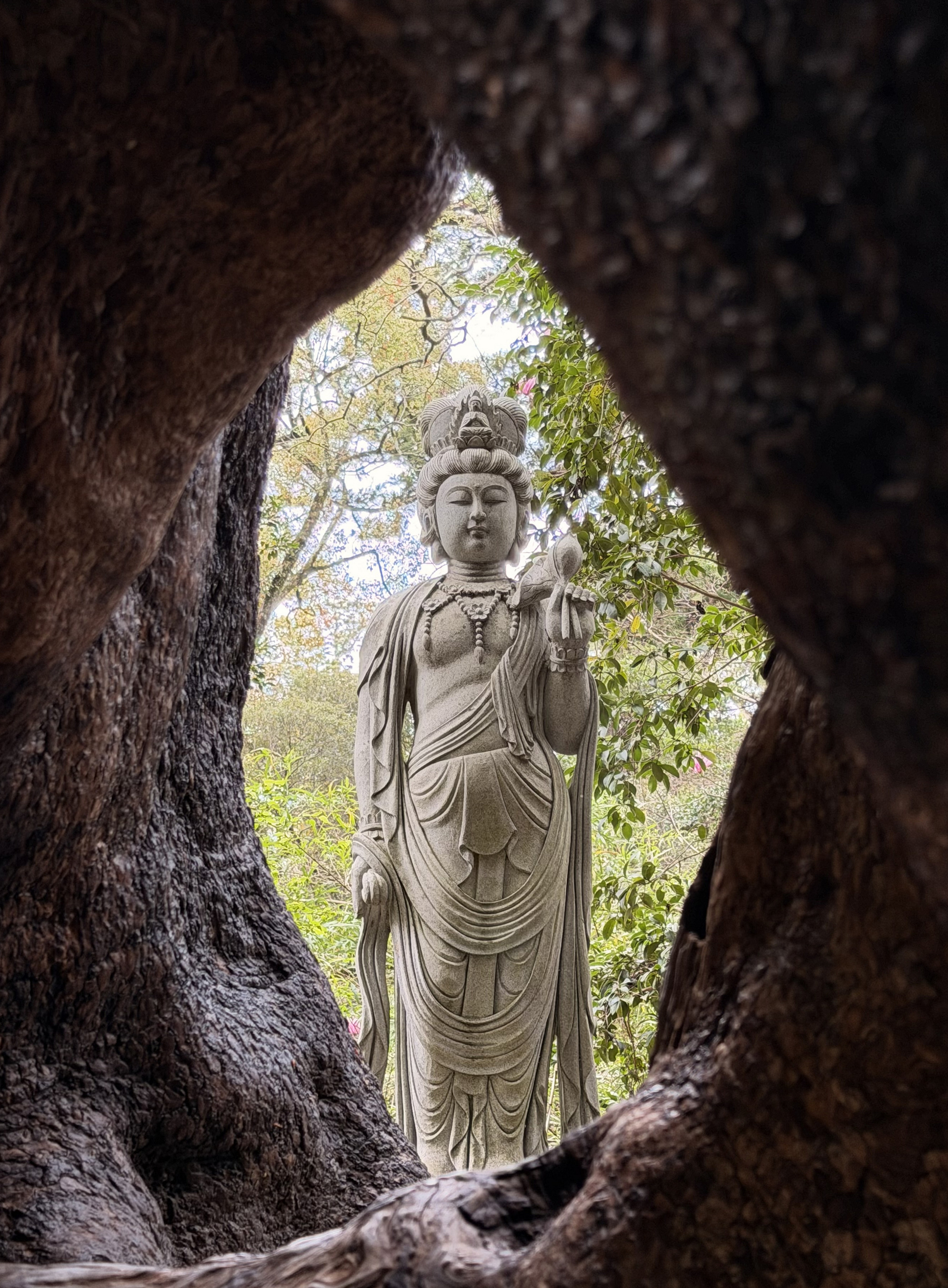
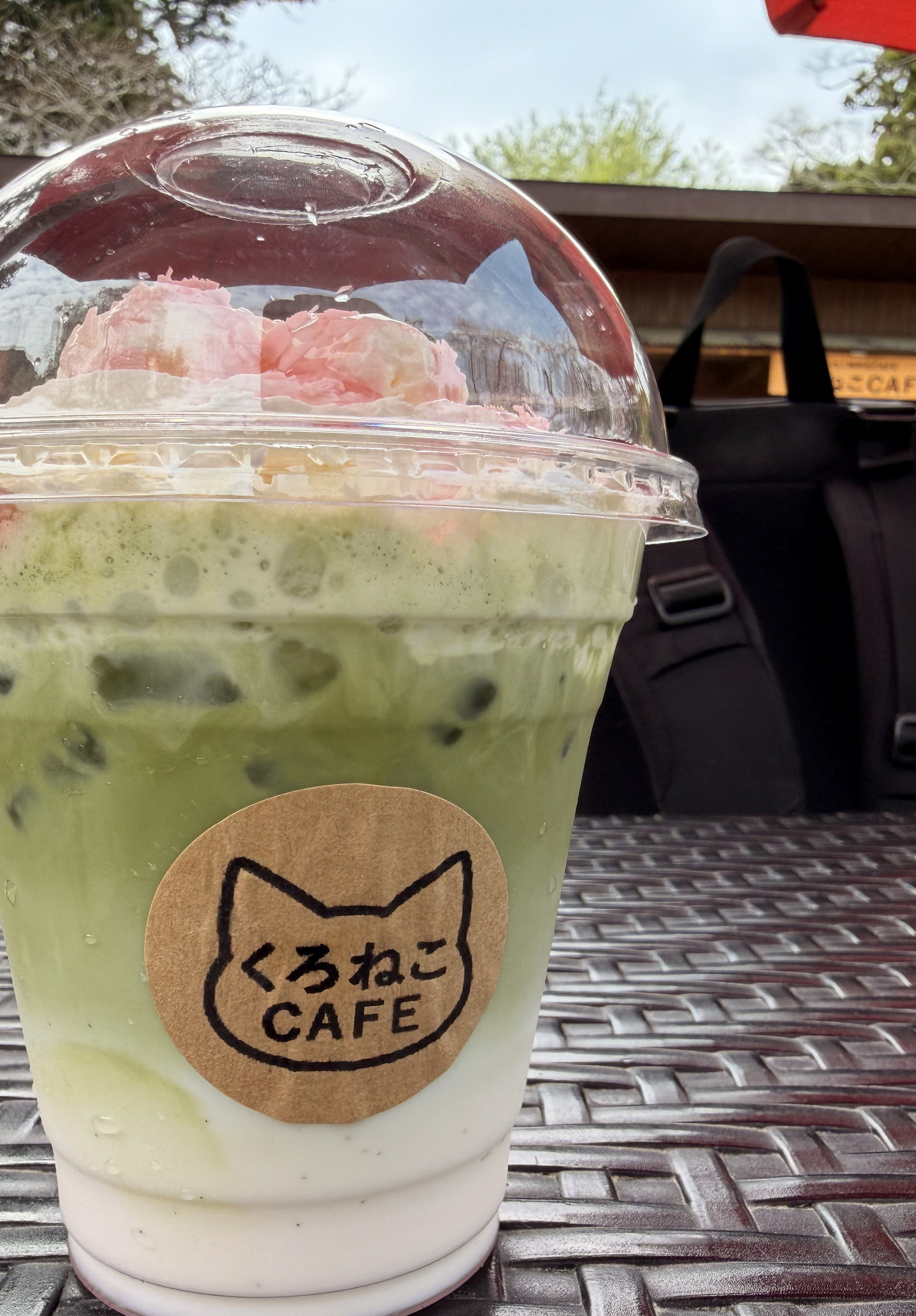
Left: Niō guardian statue on the temple grounds — an imposing face. Center: Kannon statue glimpsed through the hollow of an old tree. Right: matcha drink from Kuroneko Café on the temple grounds.
Eating Reeves's muntjac and wild boar
After the visit, I had some game (jibie) at a shop near the temple. The menu had skewers of Reeves's muntjac (kyon) and wild boar.
Kyon is a small deer native to Taiwan and southern China. In Chiba, animals that escaped from a now-closed zoo went feral, and tens of thousands now live mostly in southern Bōsō. Designated as an Invasive Alien Species causing serious agricultural damage, they are sometimes used in jibie cuisine as part of culling and utilization efforts.
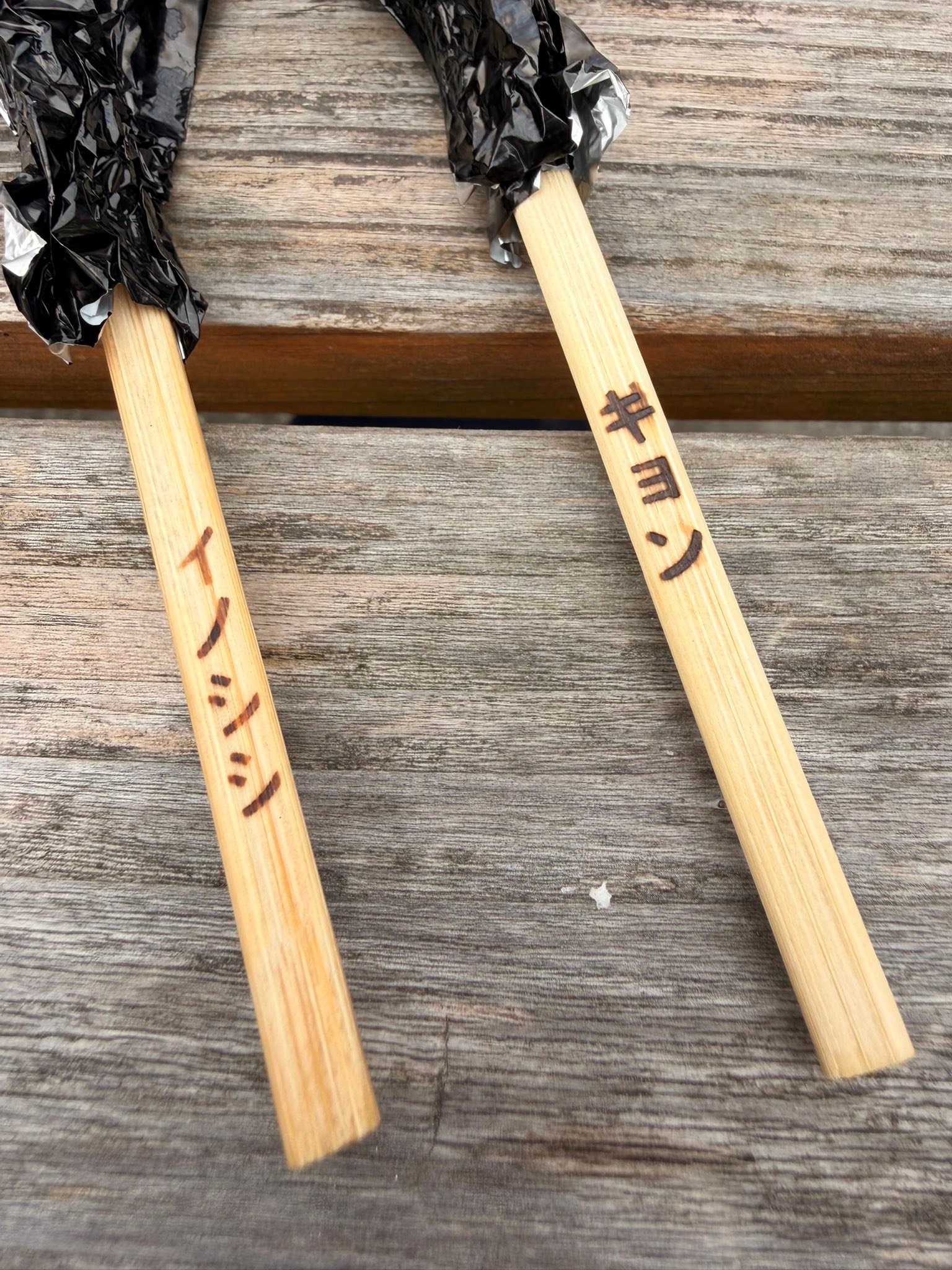
The chopsticks had the animals' names burned into them. That alone made the meal fun before I'd even eaten. Rain had been on and off, but it had just stopped at the right moment.
The kyon meat had little gaminess and was light. The boar, in contrast, had strong flavor with a wild, earthy edge. Both are flavors you can really only get by coming to Chiba.
Lunch — tantanmen at Ezawa
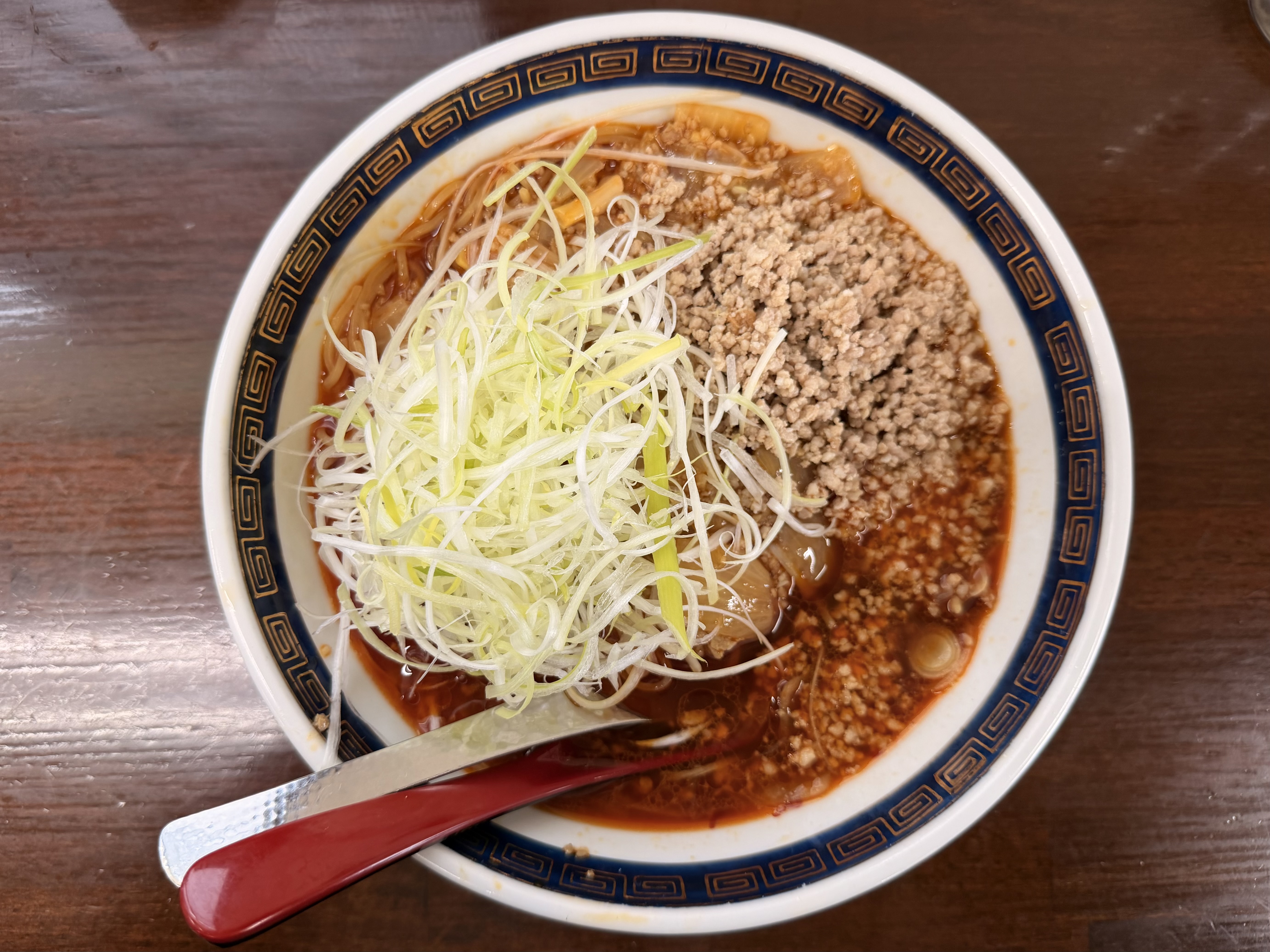
On the way home I stopped at Ezawa, known for tantanmen with a rich, sesame-spicy depth. It's popular with locals. Just like the heaping pile of green onion on top suggests, the broth has real depth. After a ride, the spicy and umami-loaded bowl hit perfectly on an empty stomach.
Riding Chiba's mountain roads on the XSR900
The interior of the Bōsō Peninsula has light traffic and lots of pleasant roads winding through green. There's no big elevation change like in true mountain country, but in exchange you can keep a steady pace and ride on and on. The XSR900's handling is light, and even on twisting mountain roads I didn't get tired.
It's been a while since I switched from the SR400, and I'm still impressed every time by the smoothness and pull of three cylinders. There are moments I miss the SR's pulse, but for long-distance comfort the XSR900 is in another league.
I'd thought of Chiba — my home base — as a place where I'd ridden every road, but places like Kasamori Kannon are still out there. Just picking one destination turns a familiar prefecture into an entirely different ride.
Travel guide (general info)
※ This section combines public information with the author's notes; please confirm the latest road, weather, and operating details on the official sites.
Highlights of Kasamori Kannon Temple (Kasamori-ji)
- Founding: 784 (Enryaku 3); a special head temple of the Tendai school. The principal image is an Eleven-Faced Kannon said to have been carved by Saichō (Dengyō Daishi).
- Shihō-kakezukuri (cantilever-on-stilts): A construction style unique in Japan — the main hall sits on 61 pillars rising from the bedrock.
- Important Cultural Property: The main hall was designated a former National Treasure in 1908 (Meiji 41); now an Important Cultural Property of Japan.
- Bandō Sanjūsankasho: The 31st of the 33 Bandō Kannon pilgrimage temples — long a destination for pilgrims.
Bōsō game cuisine and Reeves's muntjac
- Reeves's muntjac (kyon): A small deer native to Taiwan and southern China; in Chiba, animals that escaped from a zoo in the 1980s went feral.
- Population: Estimated tens of thousands in the prefecture; designated an invasive species, with serious agricultural damage.
- Game-meat use: Culled animals are processed for food and served as game cuisine at some Chiba restaurants.
- Wild boar: Concentrated in the southern Bōsō Peninsula; agricultural-damage control and game-meat use run in parallel.
Bōsō touring and seasons
- Best season: Late March to May (cherry blossom and fresh greenery), and October to November (autumn foliage). Mid-summer has long shaded-free stretches — watch for heat stroke.
- Main routes: Routes 410 and 465, the "Momiji Road" and the Yōrō Valley area.
- Access: Kasamori Kannon is about 10 minutes from Mobara-Chōnan IC on the Ken-Ō Expressway; doable as a day trip from Tokyo.
- Note: Gas stations are sparse in interior Bōsō — leave on a full tank.