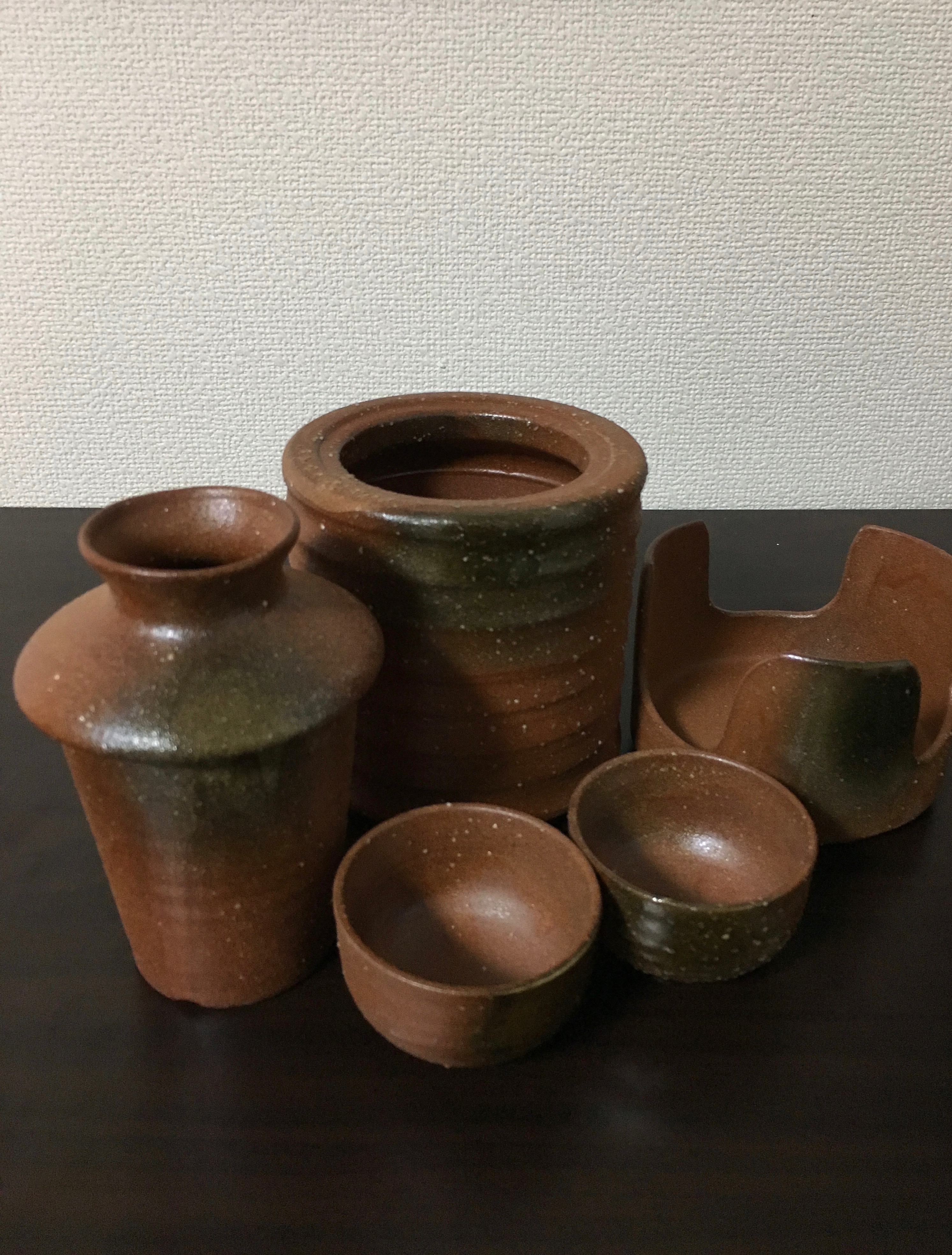
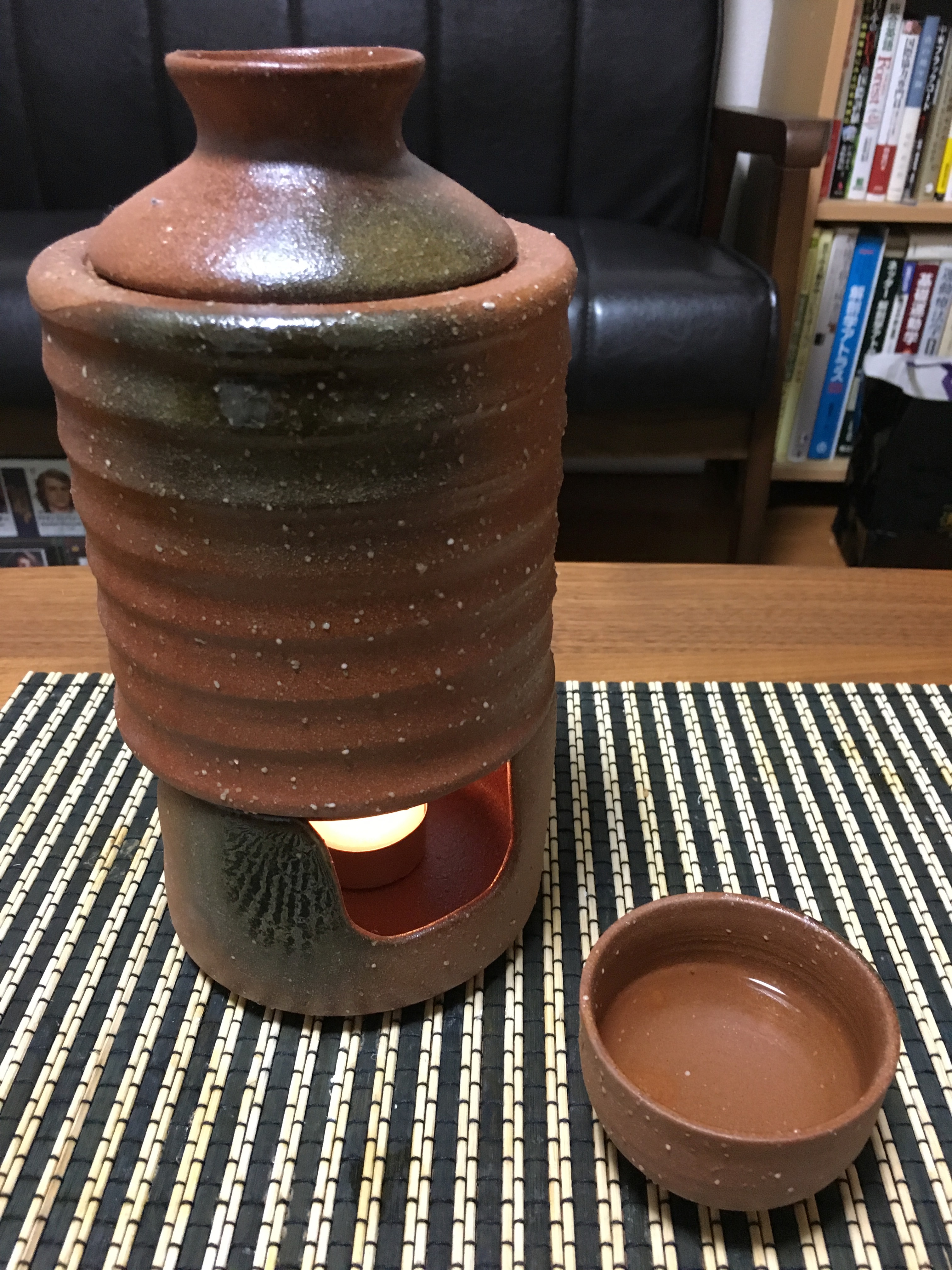
A cold front is in. The kind of night that calls for atsukan — hot sake. Not microwaved sloppily, but properly warmed up. With that in mind, I pulled out the gear in the photo. On the left, a tokkuri (sake flask) and ochoko (cups). On the right, a candle-style sake warmer. Pour the sake into the tokkuri, set it on the warmer, and let it heat slowly. It takes time, but the heat goes in evenly. Sake warmed this way is a different drink from one that came out of a microwave.
Since I was getting the gear out, I bought two bottles too.
F60 Manjukagami
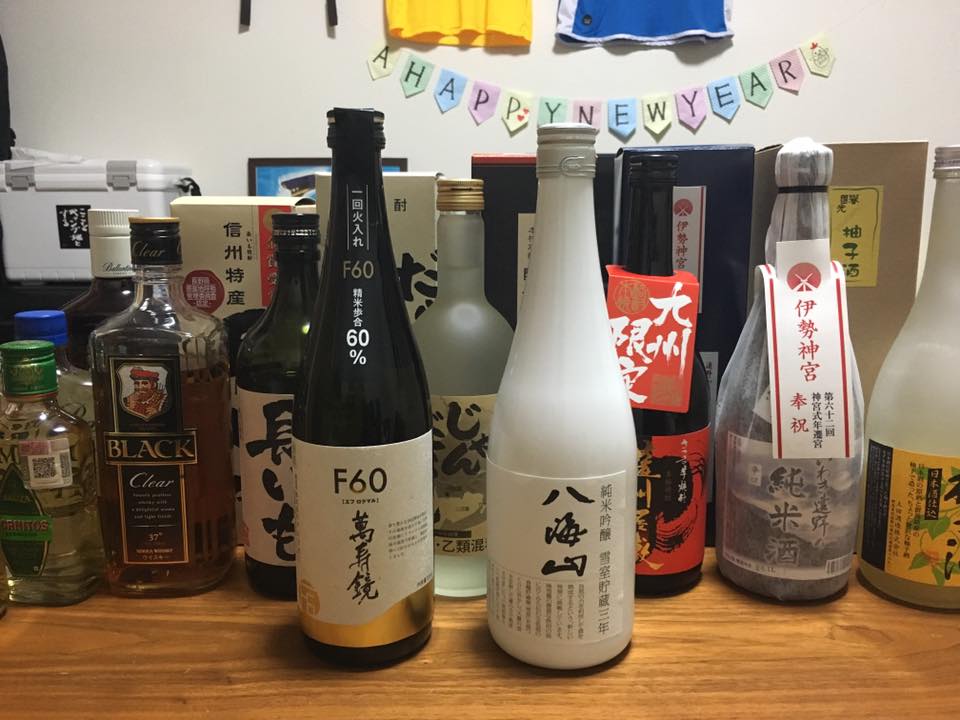
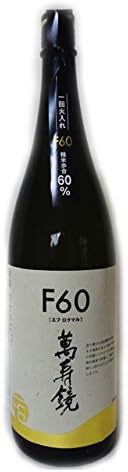
The first one: F60 Manjukagami. A futsū-shu (table-grade sake) from the Niigata brewery Manjukagami — but the interesting bit is that it's brewed with Association Yeast No. 1801, a yeast typically used for ginjō-class sake. It's a "raw-stored" (nama-chozō) sake: stored at −10 °C, then pasteurized only once, at bottling.
Drunk at warm-temperature (nuru-kan, around 40 °C), a soft fruity aroma from the ginjō-style yeast lifts off the cup. Push it to atsukan (around 50 °C) and the aroma jumps further; the dryness tightens and you get a clear sake-like outline. Easy to drink with food. Not too forceful in flavor, so it works alongside hot pot or grilled fish, sip after sip.
For a "table-grade" sake it warms surprisingly well. At around ¥2,000 for 1.8 L on Amazon, it's more than enough as an entry into hot sake.
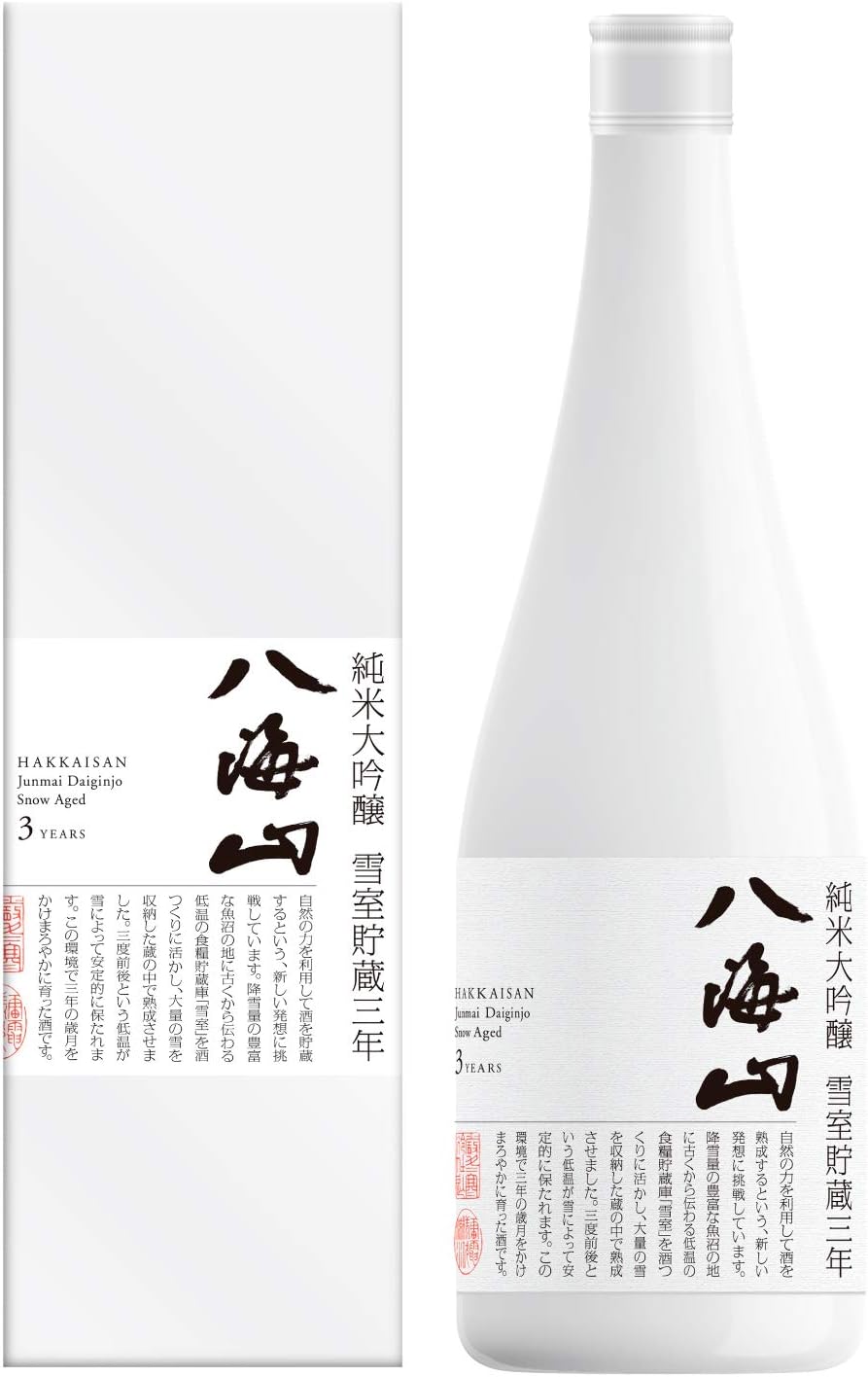
Junmai Daiginjō Hakkaisan, Yukimuro 3-Year
The second: Junmai Daiginjō Hakkaisan, Yukimuro 3-Year Aged. A limited release aged for three years in a traditional yukimuro snow-room cellar in Uonuma. Slow maturation in that stable cold-and-humid environment rounds the edges off into a softer mouthfeel.
The drinking is gentle, with a quiet aged umami. Cool (room-temperature) or hana-bie (around 10 °C) and the ginjō aroma comes through cleanly. Warmed up, the aroma pulls back, and in its place sweetness and depth come forward — a different face of the same bottle. I'd cap it at warm-kan and not push it to atsukan; the character stays clearer that way.
Around ¥3,000–3,500 for 720 mL — about 1.5× the F60, but for good reason. Works well for a quiet evening drink at home, or as a gift for a sake fan.
Warmed sake shows entirely different faces depending on the temperature. Nuru-kan (~40 °C), jōkan (~45 °C), atsukan (~50 °C) — the same sake changes. Just having a thermometer raises the ceiling on home drinking. F60 takes well to atsukan; Hakkaisan is best capped at nuru-kan.
The two bottles in this article — both available on Amazon.co.jp. The F60 is an unbeatable-value entry into hot sake; the Yukimuro 3-Year is a gift, or a treat for yourself.
References
※ This section combines public information with the author's notes; please confirm the latest details on the official sites.
- Japan Sake and Shochu Makers Association — Temperature ranges for warmed sake
- Masukagami (萬寿鏡) — Brewery official site
- Hakkaisan — Yukimuro 3-Year Aged product page
- National Research Institute of Brewing (NRIB) — Sake science and yeast (incl. Kyokai 1801)
- Encyclopædia Britannica — Sake (history and brewing)