I'd only come to relax by the sea for the weekend. I hadn't done any research. Honestly, I didn't even know there was a national park here.
A Town Called Uvita
Uvita is a small town on Costa Rica's southern Pacific coast — a few hours south of San José by bus, down along the sea. I got off the bus, dropped my bags at the hotel, and went to head for the beach when I realized something right away: the beach was far.
From the hotel to the shore was about 15 minutes by bike. Too far to walk, just right by bike — except the way back was a dull uphill that left me drenched in sweat by the time I got home. Having looked nothing up beforehand, I learned even that distance on the spot.
The "Sea of Whales" National Park
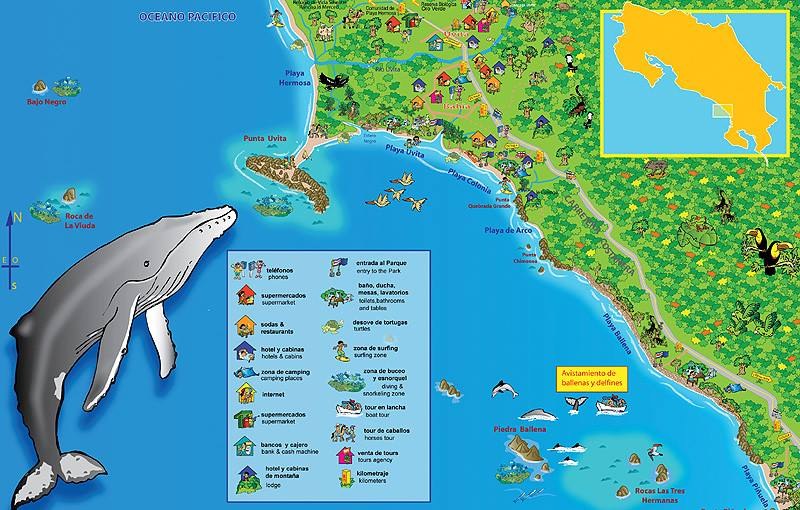
It was only after reaching the beach that I learned this was Parque Nacional Marino Ballena (Marino Ballena National Park). Literally, the "Whale Marine National Park." True to the name, it's a spot where you can see dolphins and whales year-round.
Looking it up later, I learned that humpback whales come here from both the southern and northern hemispheres — a rare stretch of sea where two populations of whales pass through. Knowing none of this, I'd happened to be standing right in front of that ocean.
At Low Tide, the Sand Becomes a Whale's Tail
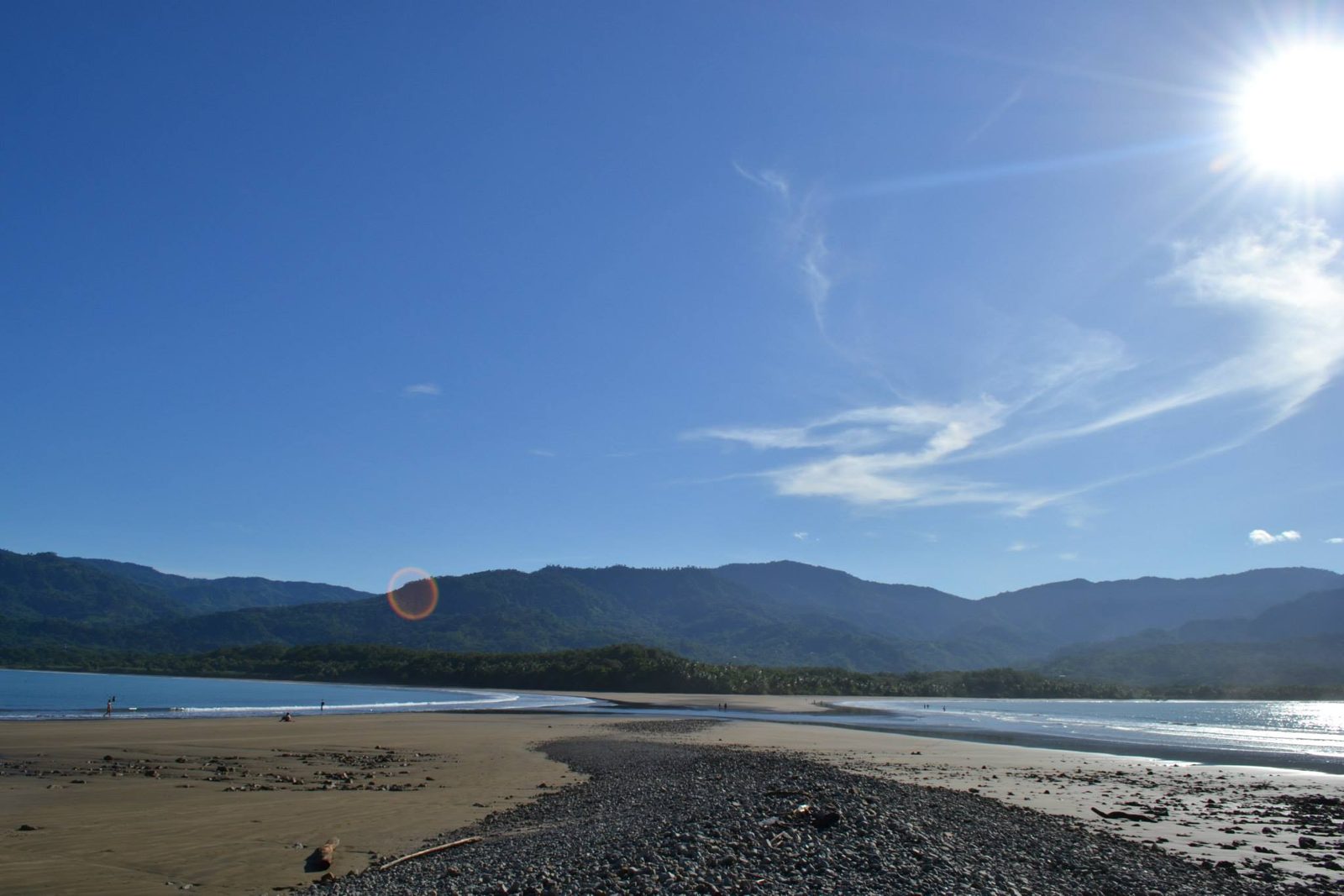
This beach's biggest sight appears when the tide goes out. The sand reaches straight out toward the sea, and its tip spreads to the left and right — seen from above, it takes the shape of a whale's tail. In Spanish and English alike, it's simply called the "Whale's Tail" (Cola de Ballena).
At high tide it's just sea. But when the tide drops, a path of sand extends out into the water, and at its tip the waves break in from both sides at once. Standing where the swells meet from either side of the sandbar was a strange feeling. You lose track of which way is "out to sea."
Beware of Crocodiles — Managed by a Single Sign
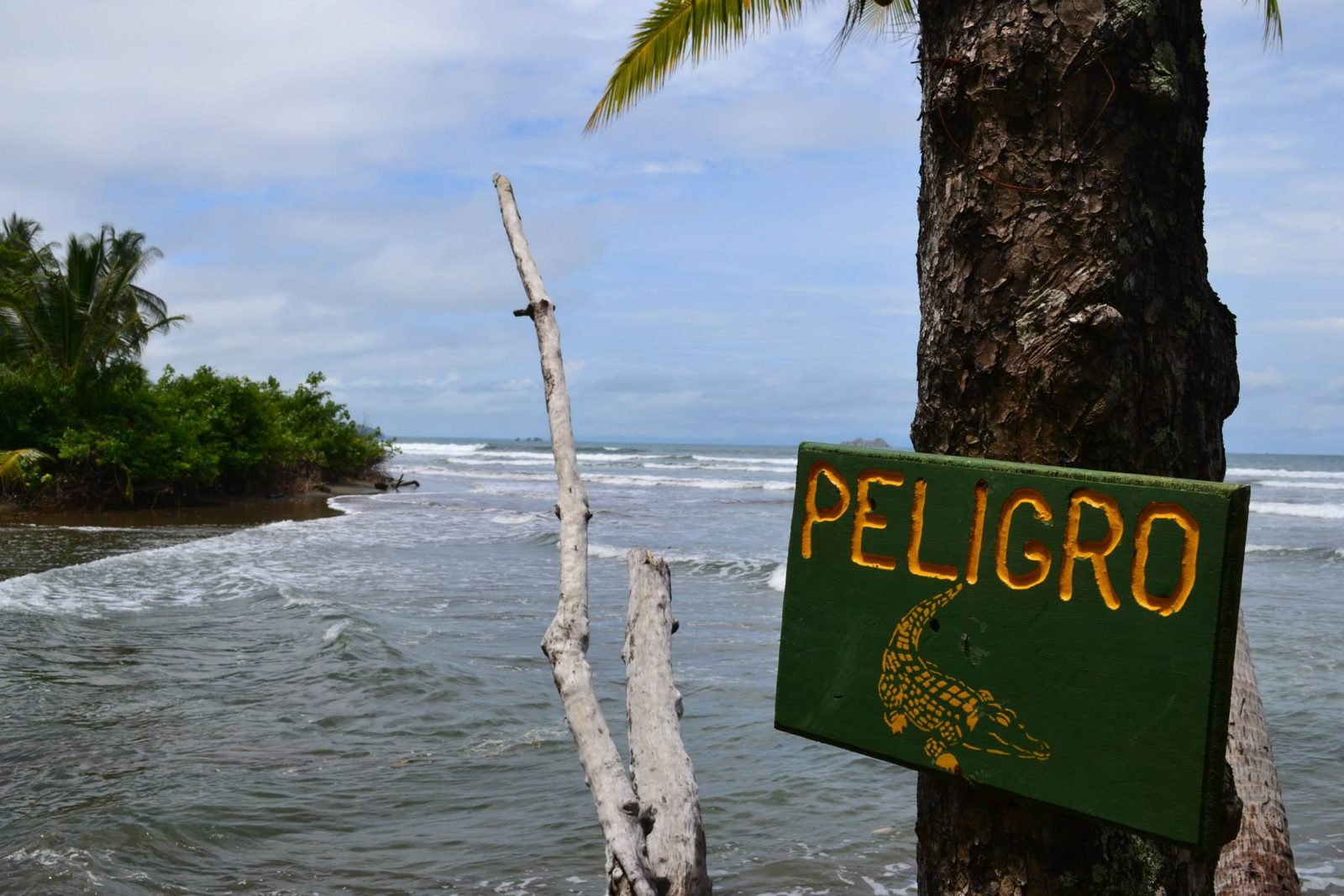
Crocodiles apparently show up near the river mouth. I say "apparently" because the safety management was essentially a single sign reading "PELIGRO" (Danger). No fence, no ranger. Believe the sign, keep your distance — that was the only countermeasure.
By Japanese standards it makes you nervous, but come to think of it, maybe that's just the right distance to nature. The danger isn't on the other side; it's on the side that steps in.
Surfing Is for People With a Car
The waves were good. I'd thought I might as well surf. But the good spots were a bit far off, not a distance you can reach by bike with a board under your arm. If you want to surf, this is a place you come to by car.
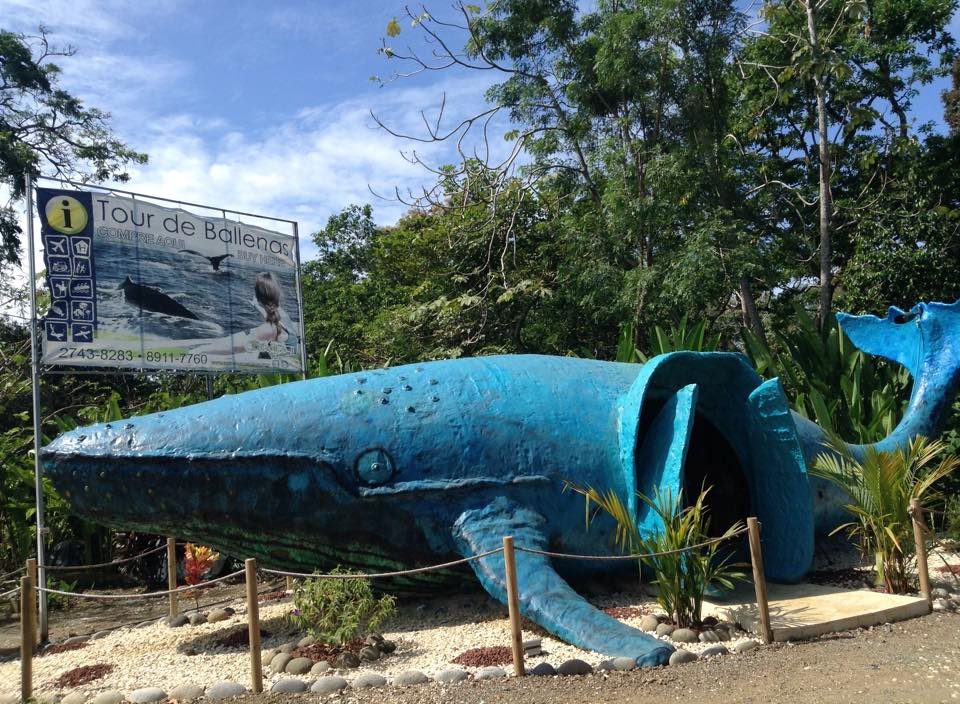
With just one bicycle, dipping my feet at the water's edge was about right for me. At the entrance to the sea stood a blue whale monument — the town's symbol, I suppose.
Doing "Nothing," With Full Commitment
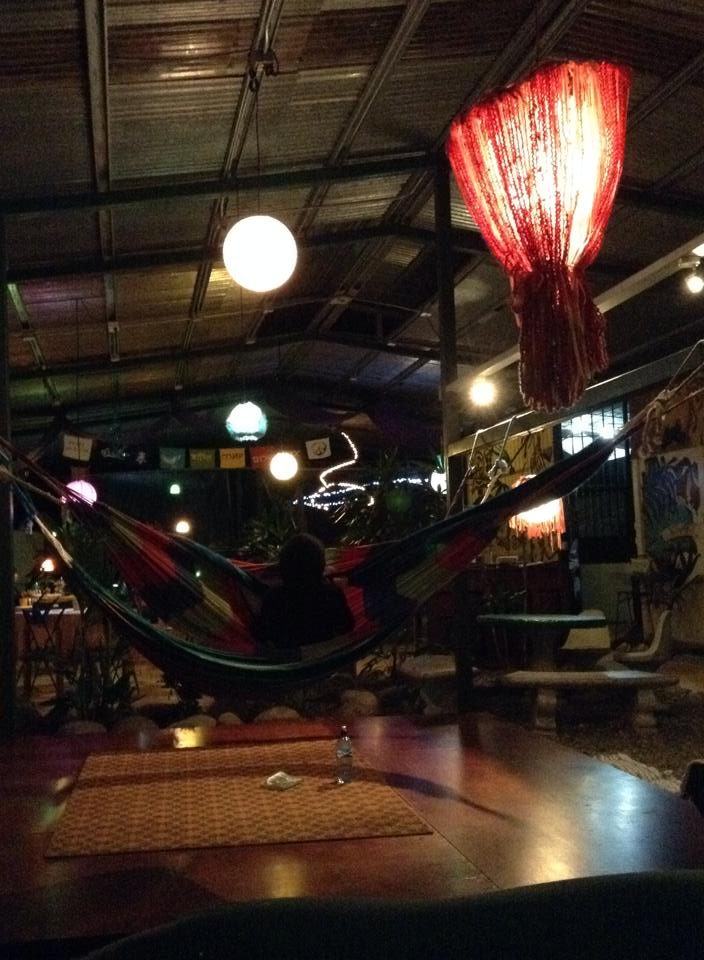
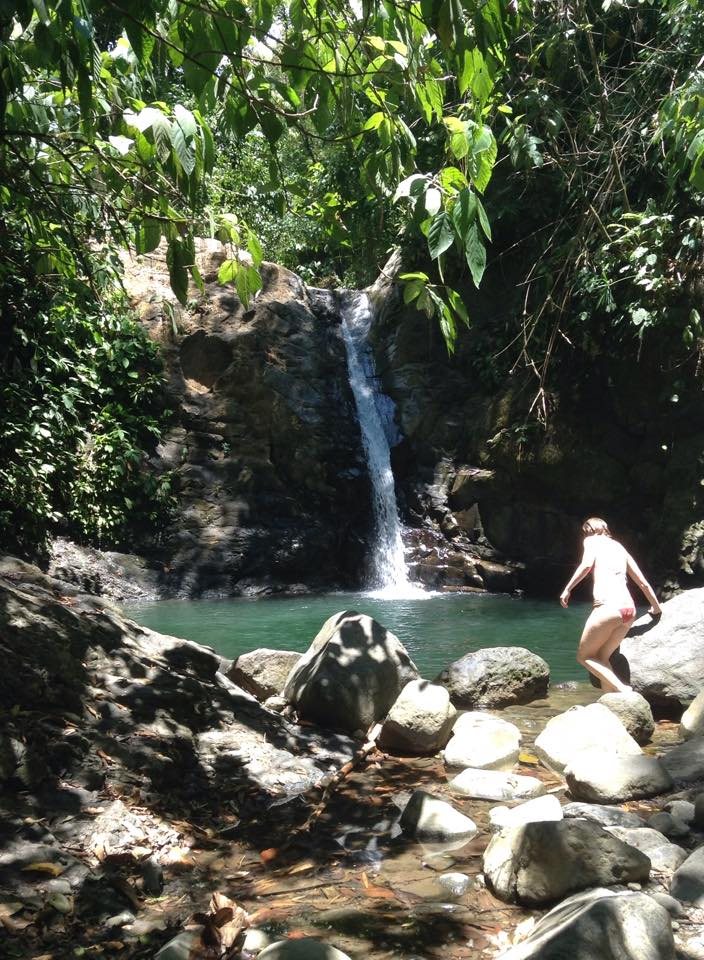
In the end I did almost nothing this weekend. Walk the beach, watch the tide go out, have lunch, laze around at the hotel. Climb down to a river pool and dip my feet in the cold water. That was it.
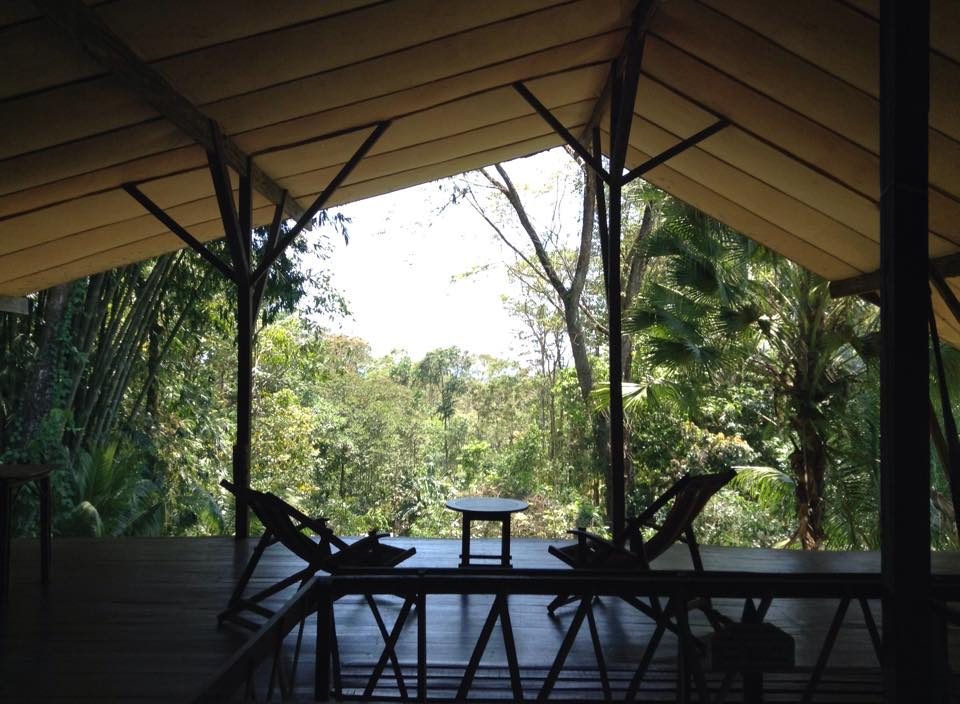
Some trips make you feel you've lost out unless you cram the schedule full — this was the opposite. Precisely because I'd planned nothing, I could just keep watching the sea in front of me, the retreating tide, the waves colliding.
Someday I want to go diving and meet a whale beneath the sea.
On a weekend I came to with no research at all, just finding an ocean that could make me think that was enough.
Travel Guide (general information)
※ This section combines public information with the author's notes; please confirm the latest park rules and viewing guidelines on site and on official sources.
Marino Ballena National Park (Parque Nacional Marino Ballena)
- Location: Uvita, Puntarenas, on the southern Pacific "Costa Ballena." About 4 hours by car from San José.
- Meaning: "Ballena" is Spanish for whale. It was established in the 1990s as Costa Rica's first marine national park.
- The Whale's Tail (Cola de Ballena): A sandbar (a tombolo) that appears at low tide. Shaped like a whale's tail from above, with waves breaking in from both sides at its tip. Walkable only around low tide.
Whales, dolphins, and whale-watching
- Humpback whales: Both a southern-hemisphere population (roughly July–October) and a northern one (roughly December–April) visit — a globally unusual stretch of sea.
- Dolphins: Spinner and bottlenose dolphins can be seen year-round.
- Tours: Boat-based whale- and dolphin-watching is popular. There's even a whale festival in September.
Things to know before going
- Check the tides: You can only walk the "Whale's Tail" around low tide; it's underwater at high tide. Check a tide table.
- Getting to the beach: There's distance between the town center and the beach / surf spots. A rental car makes it easier.
- Crocodiles: They live near the river mouth. Swim in designated areas and heed the warning signs.
- Entry fee: As a national park, there's a fee at the entry gate (with a foreigner rate).