Travel memories are, in the end, memories of what you ate. This time I want to write down the food I met during my stay in Santo Domingo — an empanada specialist, the green-bottled national beer, rice cooked with beans, and the stew they call the national dish. None of it is fine dining. It's all food that people here eat every single day.
An Empanada Specialist on Calle El Conde
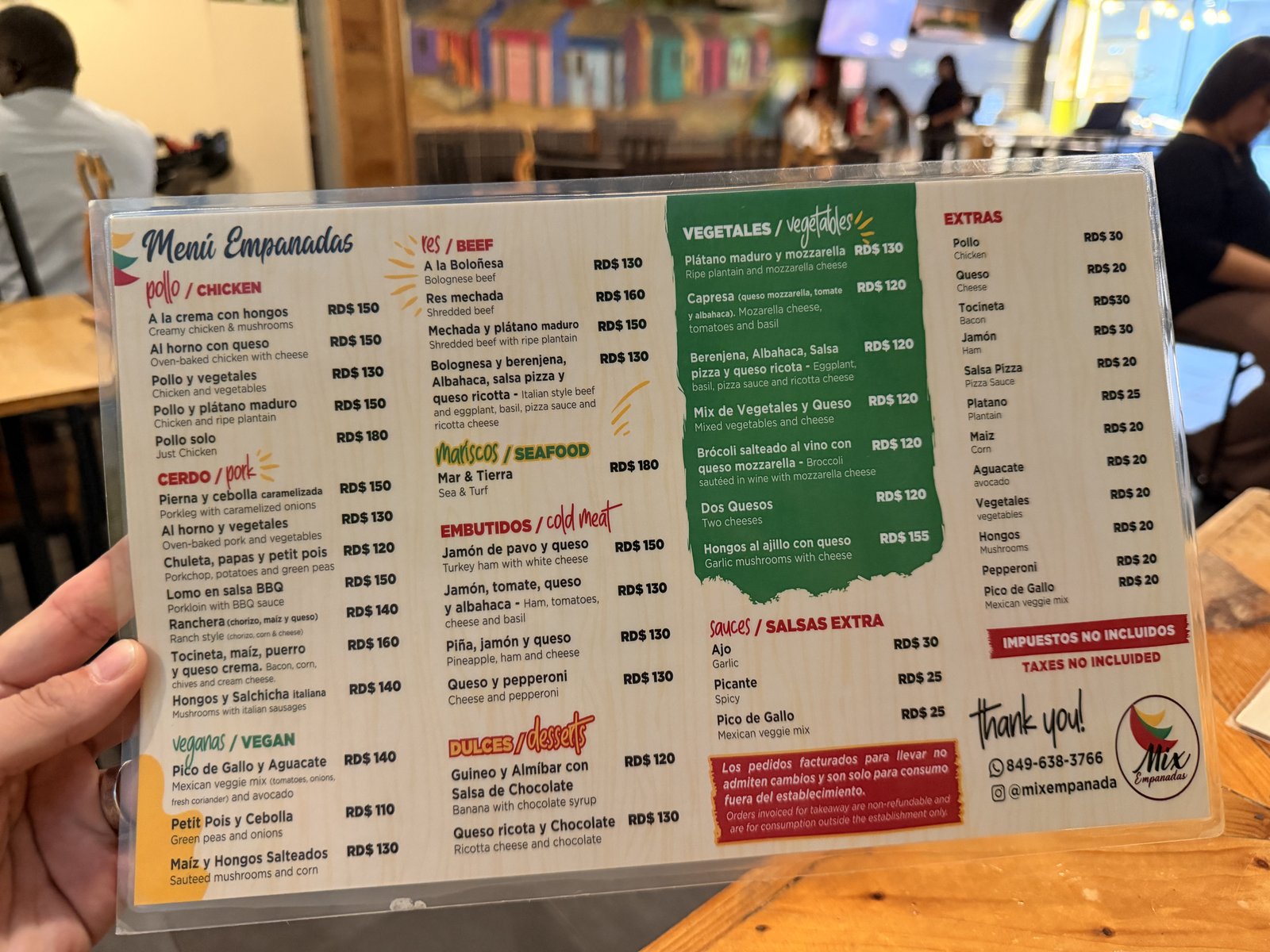
El Conde is the pedestrian street that runs east–west through the Zona Colonial, and on it sits an empanada specialist called Mix Empanadas. Empanadas — filled pies, fried or baked — are eaten all over Latin America, and the dough and fillings change with every country and every shop. Here, the menu made me blink: five kinds of chicken alone, then pork, beef, seafood, vegetarian, and even dessert numbers like banana with chocolate syrup — close to thirty varieties in all, at RD$110–180 apiece, just a few dollars.
One bite and chunks of stewed meat came tumbling out of the crisply fried shell. The inside of the dough, soaked in the juices, is the best part. This was no street snack — it was a proper meal that quietly exceeded every expectation. Watching locals stream in and out with takeout, you understand: this is everyday fast food here.
Presidente, the National Beer in the Green Bottle
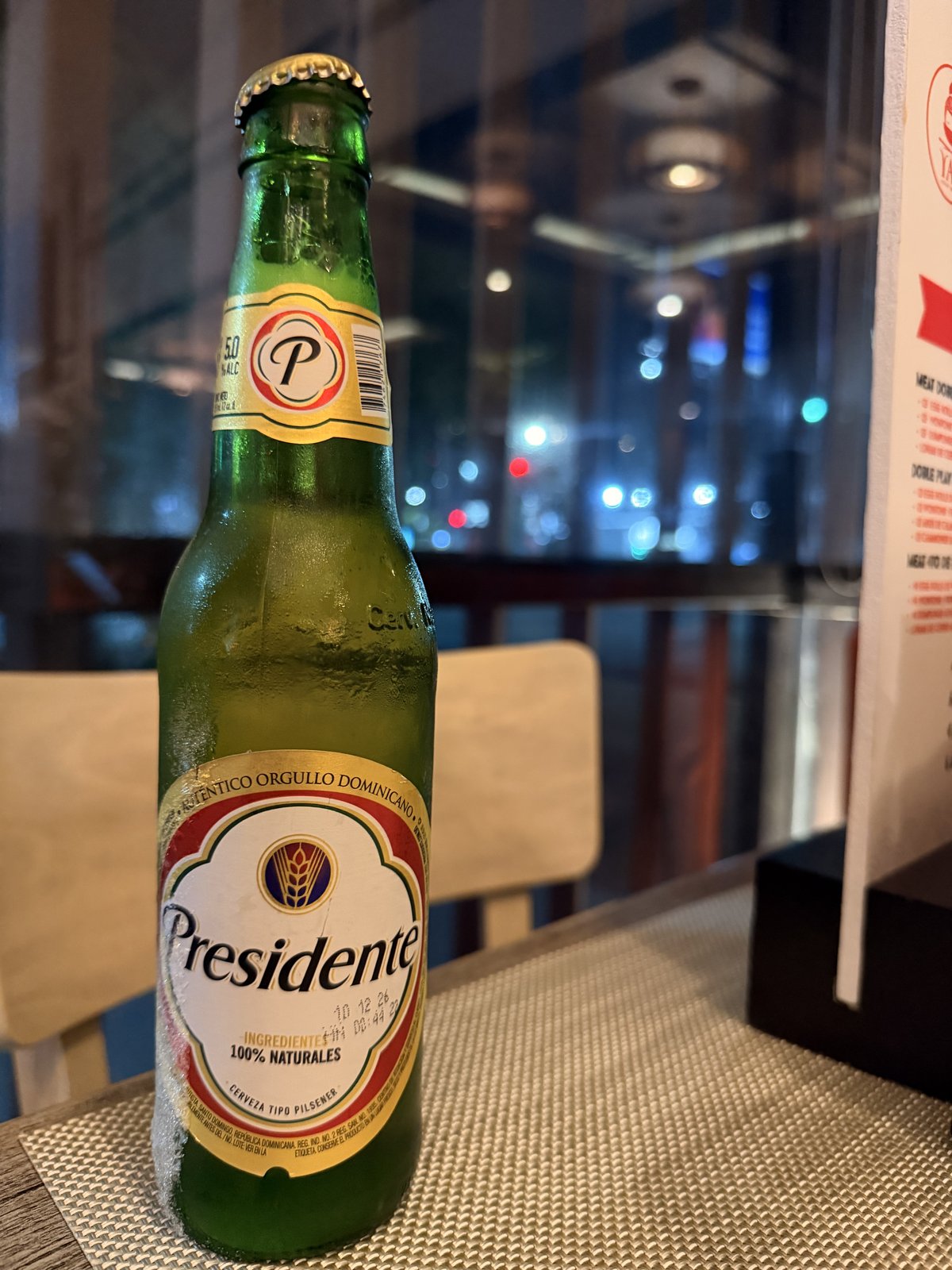
I had introduced Presidente from a supermarket shelf last time; now I finally drank it properly at a restaurant. Green bottle, white label, a 5.0% pilsner-style lager. Born in 1935, it's the Dominican national beer, and the label says so: "Auténtico orgullo dominicano" — authentic Dominican pride. The taste is light and clean, and in the Caribbean heat that lightness is exactly right. Dominicans drink their beer ice-cold, and a bottle frosted white is said to be "vestida de novia" — dressed as a bride. Looking at the sweating green bottle, the phrase fits perfectly.
Moro — the Bean Rice at the Heart of the Dominican Plate
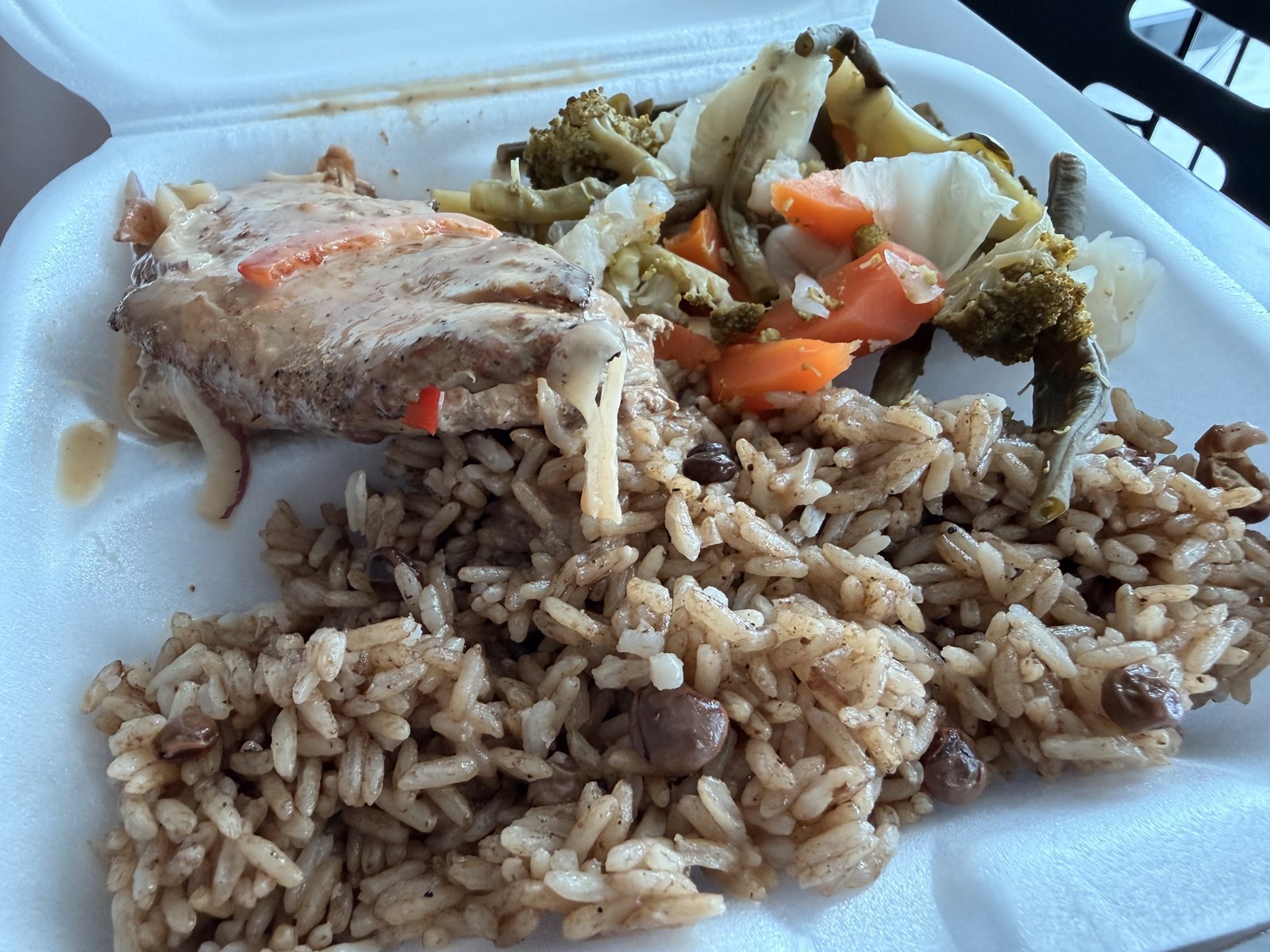
The bean rice whose name I could never remember turned out to be moro: rice cooked together with beans and aromatics, a fixture of the Dominican table. The one in the photo is moro de guandules, made with small pigeon peas; make it with red kidney beans and it becomes moro de habichuelas. Because the rice cooks in the bean broth, every grain turns lightly brown and takes on the flavor of the beans. A takeout box with stewed chicken and vegetables — zero frills, which is exactly why you could eat it every day.
The classic Dominican lunch, by the way, is "la bandera" — the flag: white rice, stewed beans, meat and salad. Think of moro as the version where the rice and beans are cooked together. Rice and beans are the backbone of eating in this country.
Sancocho, the National Stew
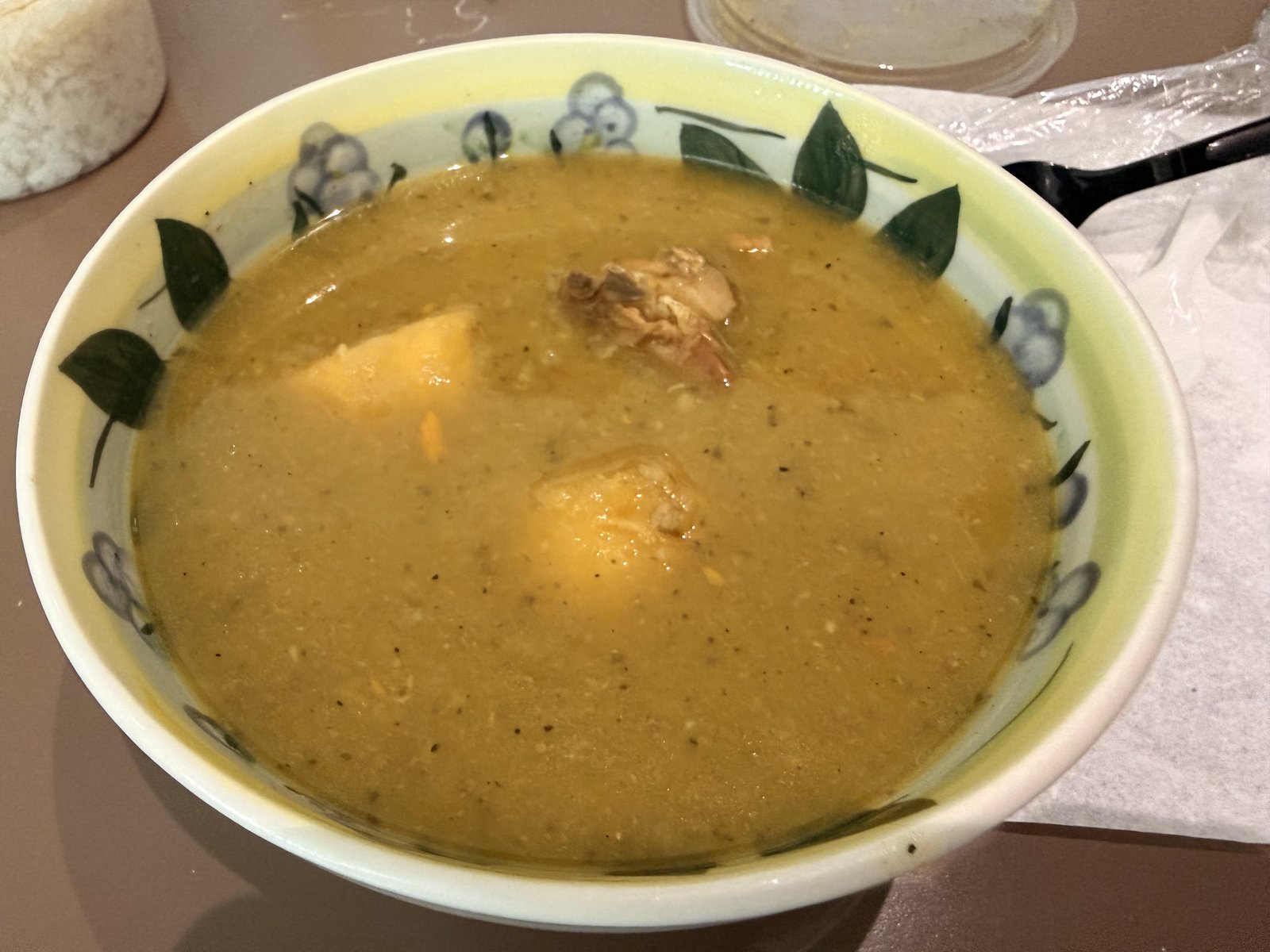
And then the soup they call the national dish of the Dominican Republic: sancocho. Meat simmered long and slow with plantains, yuca (cassava), ñame (yam) and auyama (squash), until the broth turns thick as a potage. The body comes not from flour but from the root vegetables themselves, dissolving into the pot. The spoon brings up falling-apart chicken and golden chunks of tuber. Humble, deeply savory, the kind of flavor that settles into your bones. The local way is to serve it with white rice, spooning the stew over as you go.
Sancocho is everyday comfort food and celebration food at once. On New Year's Eve and at family gatherings it's made in giant pots, and the deluxe version — sancocho de siete carnes — uses seven kinds of meat, beef, pork and chicken among them. Rainy day? Sancocho, goes the Dominican reflex. There's something wonderful about a Caribbean island whose national dish is what elsewhere would be cold-weather stew.
The empanadas, the Presidente, the moro, the sancocho — every one of them an unpretentious, everyday flavor. Unlike larimar or a bottle of rum, you can't pack these to take home. Which is exactly why they're worth writing down.
A country's true flavor isn't on a restaurant's signature menu — it's on the everyday plate.
Travel Guide (General Information)
* This section was compiled from public sources as editorial context. Please check locally or officially for the latest information.
A Dominican Food Vocabulary
- La bandera: the standard lunch — white rice, beans, meat and salad. Means "the flag"
- Moro: rice cooked with beans — pigeon peas (guandules) or red kidney beans
- Sancocho: meat-and-root-vegetable stew; the national dish, served with white rice and avocado
- Mangú: mashed boiled plantains, the national breakfast (see Part 3)
- Empanada: filled fried or baked pie; the street-corner snack of choice
Practical Notes
- Budget: empanadas run RD$110–180 each; a set lunch at a local comedor starts at a few dollars
- Beer: Presidente is the default; order it bien fría — properly cold — like a local
- Spice: Dominican food is generally mild; heat is added at the table via hot sauce
- Water: stick to bottled water; ice at tourist-oriented places is usually purified, but skip it if in doubt