September 2014. I climbed Volcán Santa Ana (→ El Salvador Travel Notes #2). The base for that climb was the city that shares the volcano's name — Santa Ana. After San Salvador, it's El Salvador's second city, an old town that grew rich on coffee.
With the fatigue and the thrill of the climb still in me, I spent a day walking the town. Two things to see: the old churches clustered in the historic center, and one more — the elementary school where a fellow volunteer of mine was working.
The Churches of the "Central Cross"
I learned this only later: Santa Ana's old town has what's called the "Central Cross" (Cruz Céntrica) — four churches that, with the cathedral at the center, form a cross with El Carmen, San Lorenzo, and El Calvario. I actually stepped inside three of them.
Santa Ana Cathedral
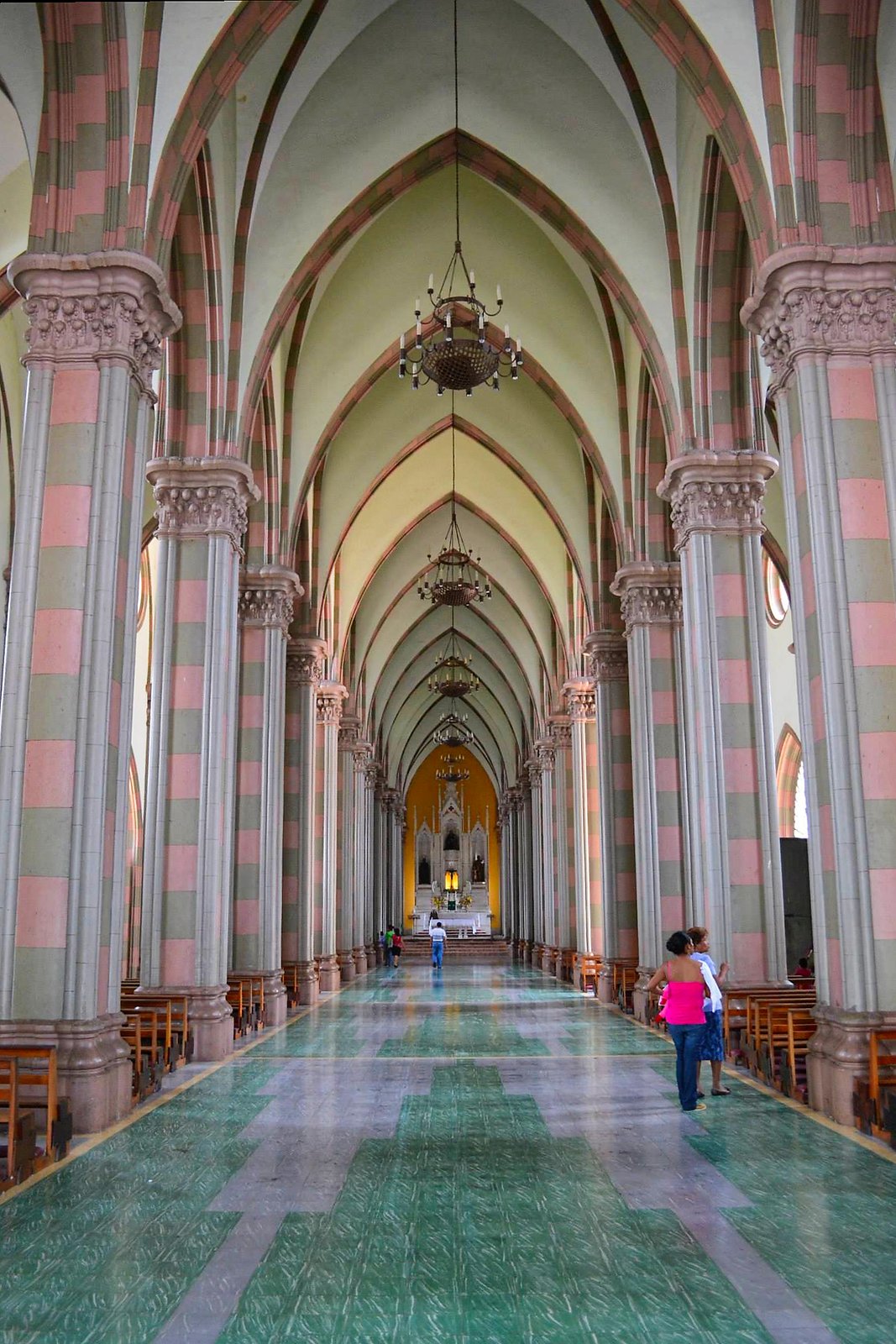
At the heart of the town stands the Cathedral of Santa Ana. White neo-Gothic twin spires reach for the sky — my first reaction was simply surprise that a provincial Central American city had a cathedral on this scale.
Inside, thick columns painted in pink and white run down the nave, and the pointed-arch ceiling rises high into the distance. The floor is a greenish stone, cool enough to make the heat outside feel unreal. There were almost no tourists; locals were praying quietly.
Iglesia El Carmen — A Building in Red Brick
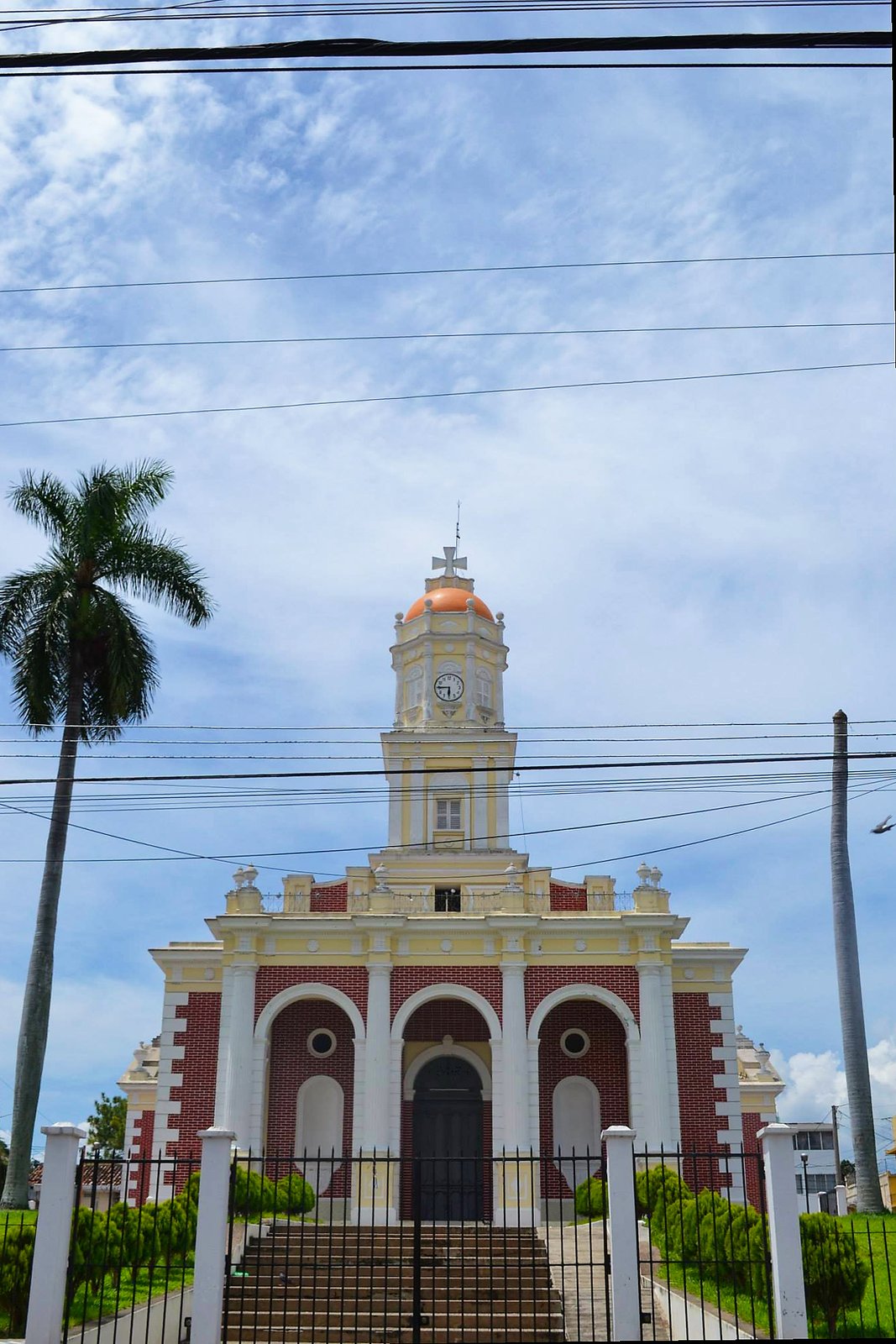
A short walk from the cathedral was the Iglesia El Carmen. This one is a little unusual: its exterior is clad in red brick. In a country full of white-plastered churches, that's a rare sight. Out front were the palm trees. In the photo in my guidebook, two of them framed the façade — but when I actually got there, one had lost its crown. It surprised me to see it looking different from the guidebook, though that was part of the fun. The one still standing suited the red-brick façade well.
Construction began in 1822. Work stalled for lack of funds, and the church was finally completed and consecrated in 1852. Since 1929 it has been run by the Dominican order. A church that took thirty years to build — hearing that slows your step, even on a rushed trip.
Iglesia El Calvario — A Turquoise Altar
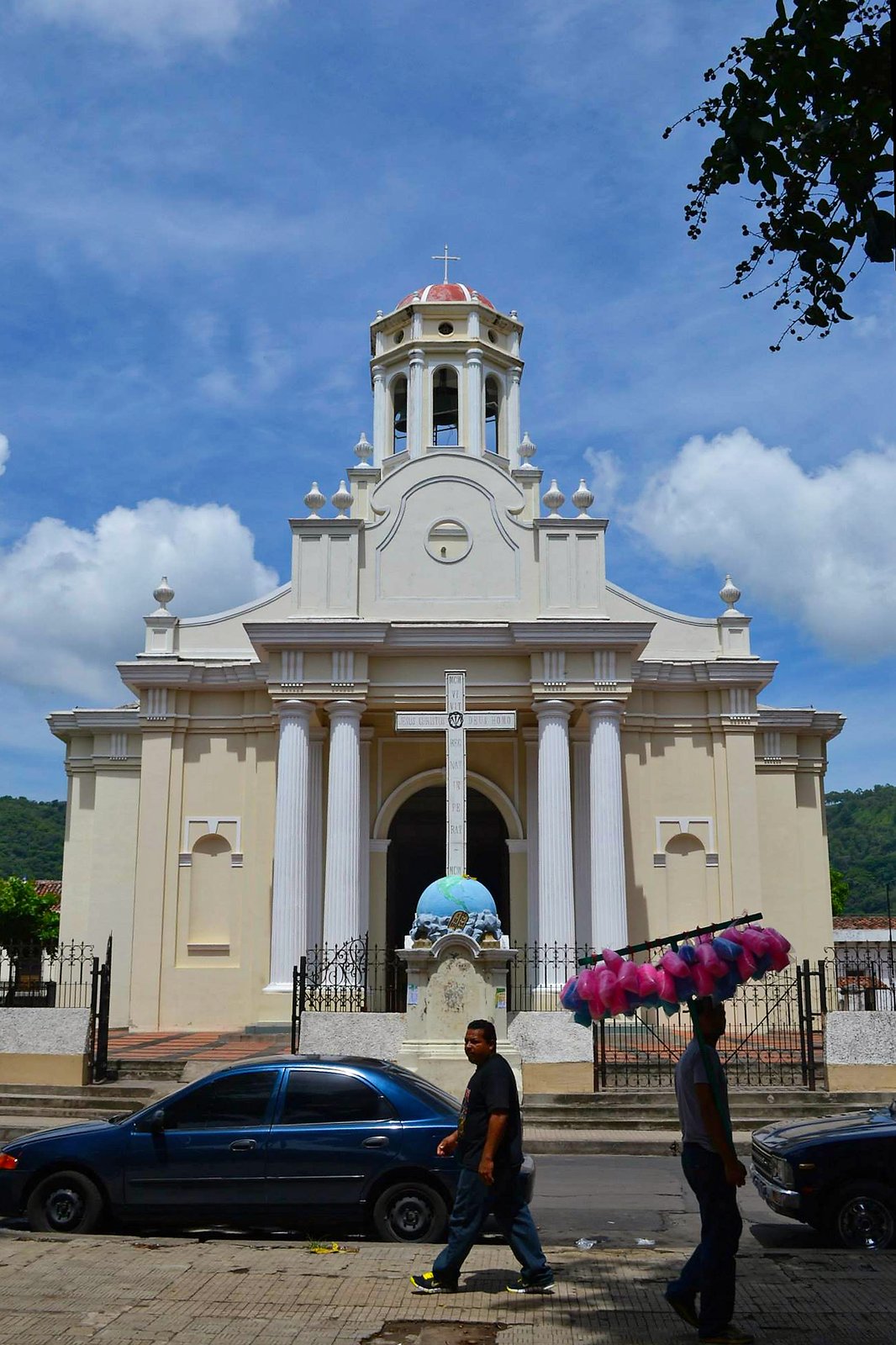
The third was the Iglesia El Calvario. In front of the gate stood a curious monument: a cross rising from a blue globe of the Earth. The cross is inscribed in Latin — "JESUS CHRISTUS DEUS HOMO" (Jesus Christ, God and Man).
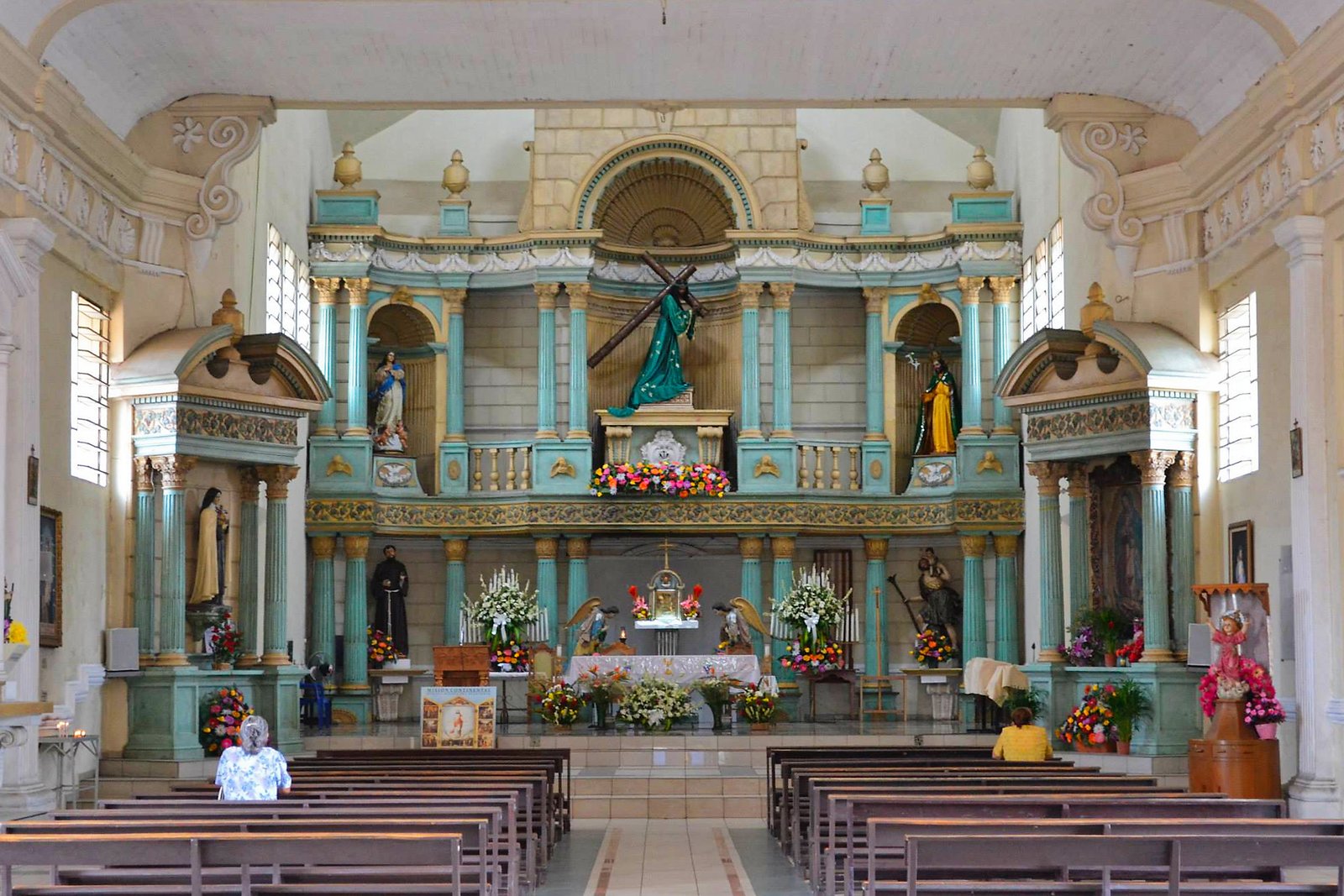
Inside, I stopped in my tracks. The whole altar was turquoise — painted a blue-green. White columns and gold trim, and at the center of the tiered retablo, an image of Jesus carrying the cross in a green robe (the Nazareno). For such a plain town church, this altar alone was oddly resplendent, and I stood looking up at it for a while.
The School Where a Friend Worked
After the churches, I visited the elementary school where a fellow volunteer was working — one of the friends who left Japan the same year I did and scattered across different countries of Central America.
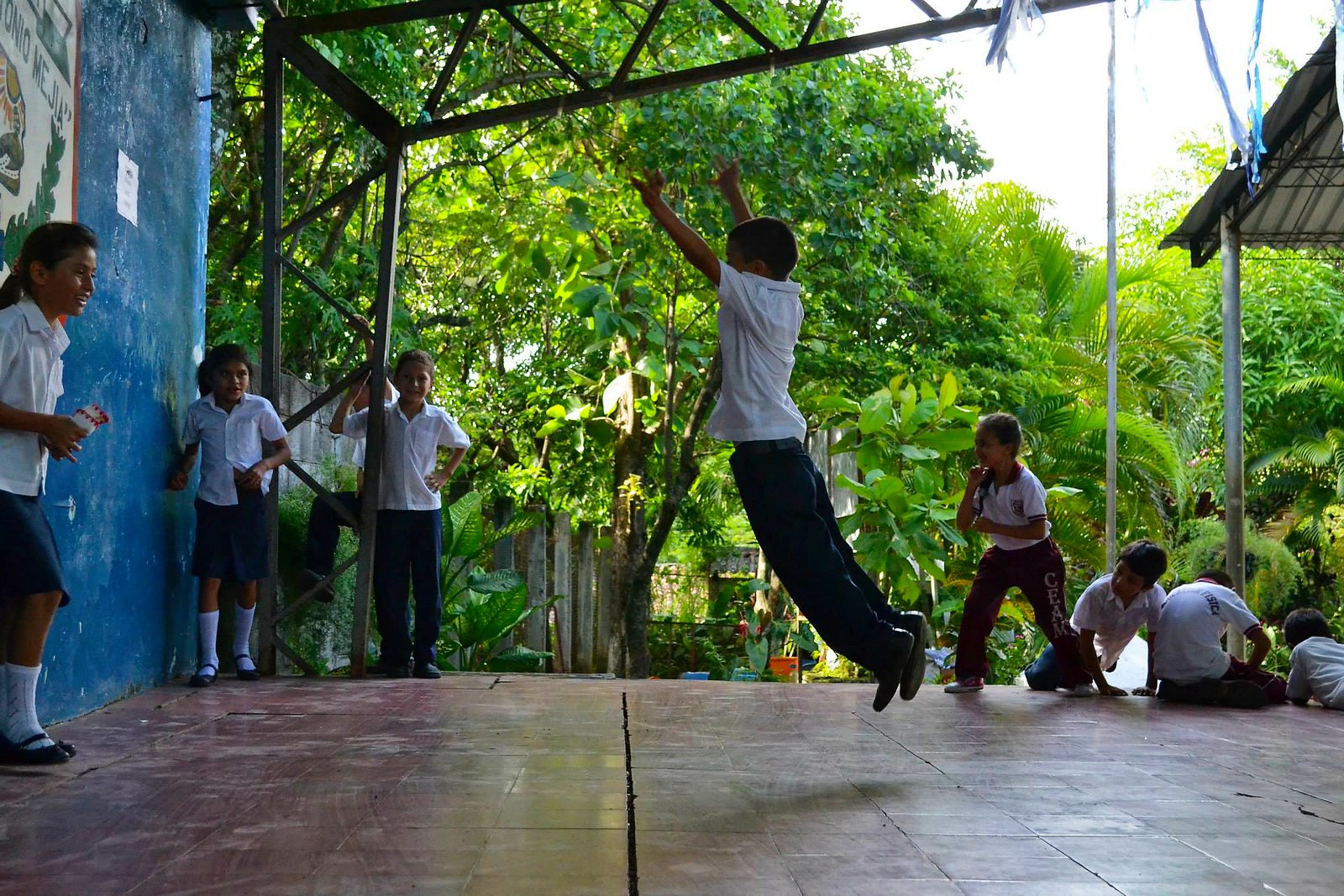
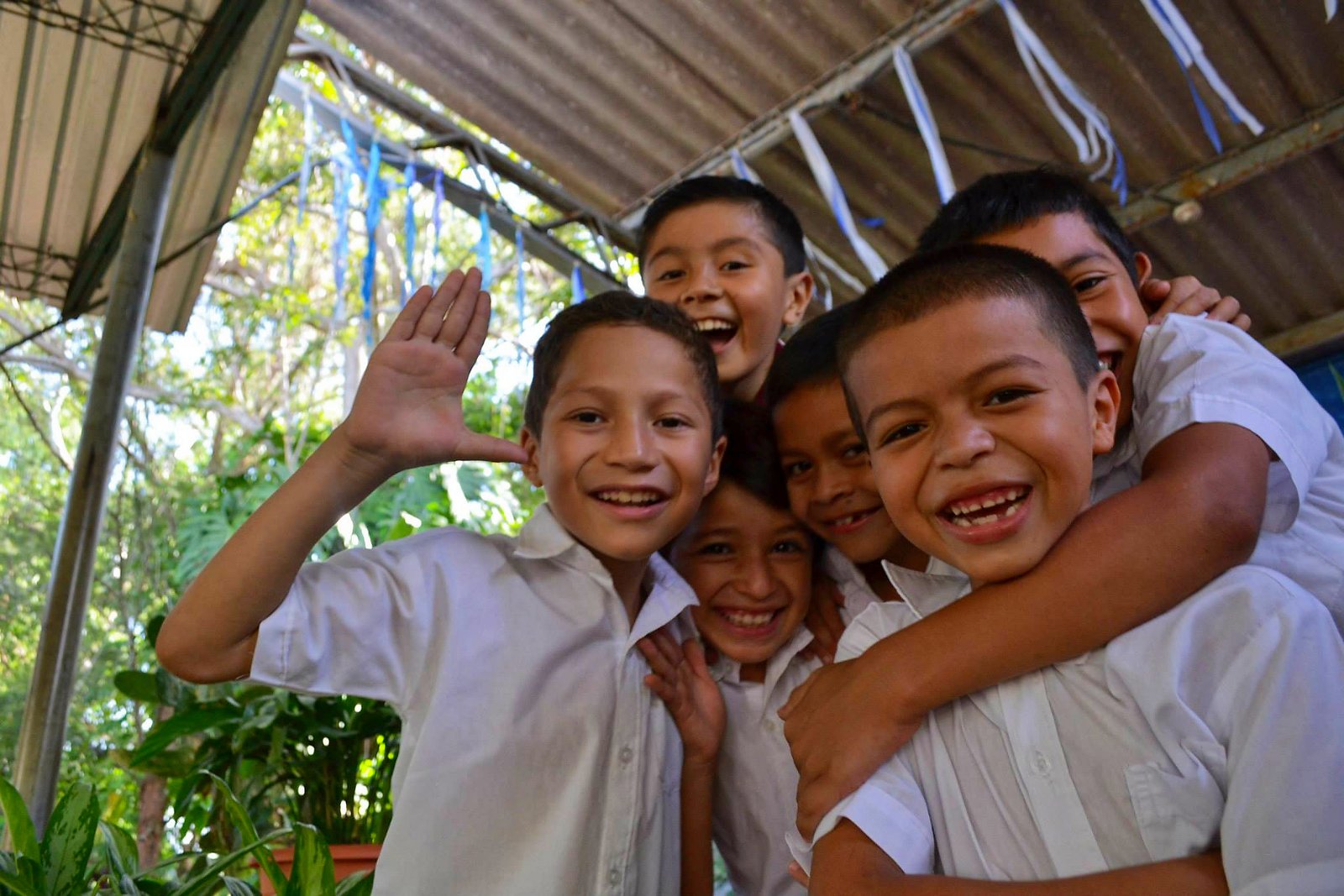
Under a roof decorated with blue-and-white paper streamers — the colors of El Salvador's flag — children in white uniforms were jumping and running around. When I pointed the camera, they crowded in front of it, all smiles. One sprang high off the ground, both arms stretched up toward the sky.
When someone shouts "¡Lluvia! (Rain!)," the kids all scramble up off the ground — onto the steps, under the roof — as if getting wet means you lose. The boy who'd jumped so high a moment earlier was part of that game too.
A friend who'd gone through the same training was here, in a different country, facing these children day after day. Just getting to see that made the trip out to this town worth it.
I climbed a volcano, walked the churches, and met the children of a fellow volunteer. It wasn't a day off any guidebook's list.
Of all the towns I walked in El Salvador, it's this one — Santa Ana — that I remember best.
Travel guide (general info)
※ This section combines public information with the author's notes; please confirm the latest entry, safety, and operating details on the official sites.
The city of Santa Ana
- Capital of Santa Ana Department in western El Salvador. The country's second city after San Salvador, it flourished on coffee from the 19th century onward.
- About 1–1.5 hours by car or bus from San Salvador. It's the base for Santa Ana Volcano (Cerro Verde National Park) and Lake Coatepeque.
The "Central Cross" and three churches
- Santa Ana Cathedral: marked by its white neo-Gothic twin spires. One of El Salvador's signature cathedral buildings.
- Iglesia El Carmen: notable for its rare red-brick exterior. Begun in 1822, consecrated in 1852, and run by the Dominican order since 1929.
- Iglesia El Calvario: known for the globe-and-cross monument out front and a turquoise-painted altar.
- The cathedral, El Carmen, San Lorenzo, and El Calvario form a cross (Cruz Céntrica) across the old town.
Notes for walking
- The churches all sit in the central old town and can be visited on foot. Be considerate and avoid sightseeing during Mass or services.
- Photography rules inside vary. Follow the signs and staff, and don't point a lens at people who are praying.
- Safety varies by time and neighborhood. Stick to the central area during daylight and check the latest advisories before you go.
References
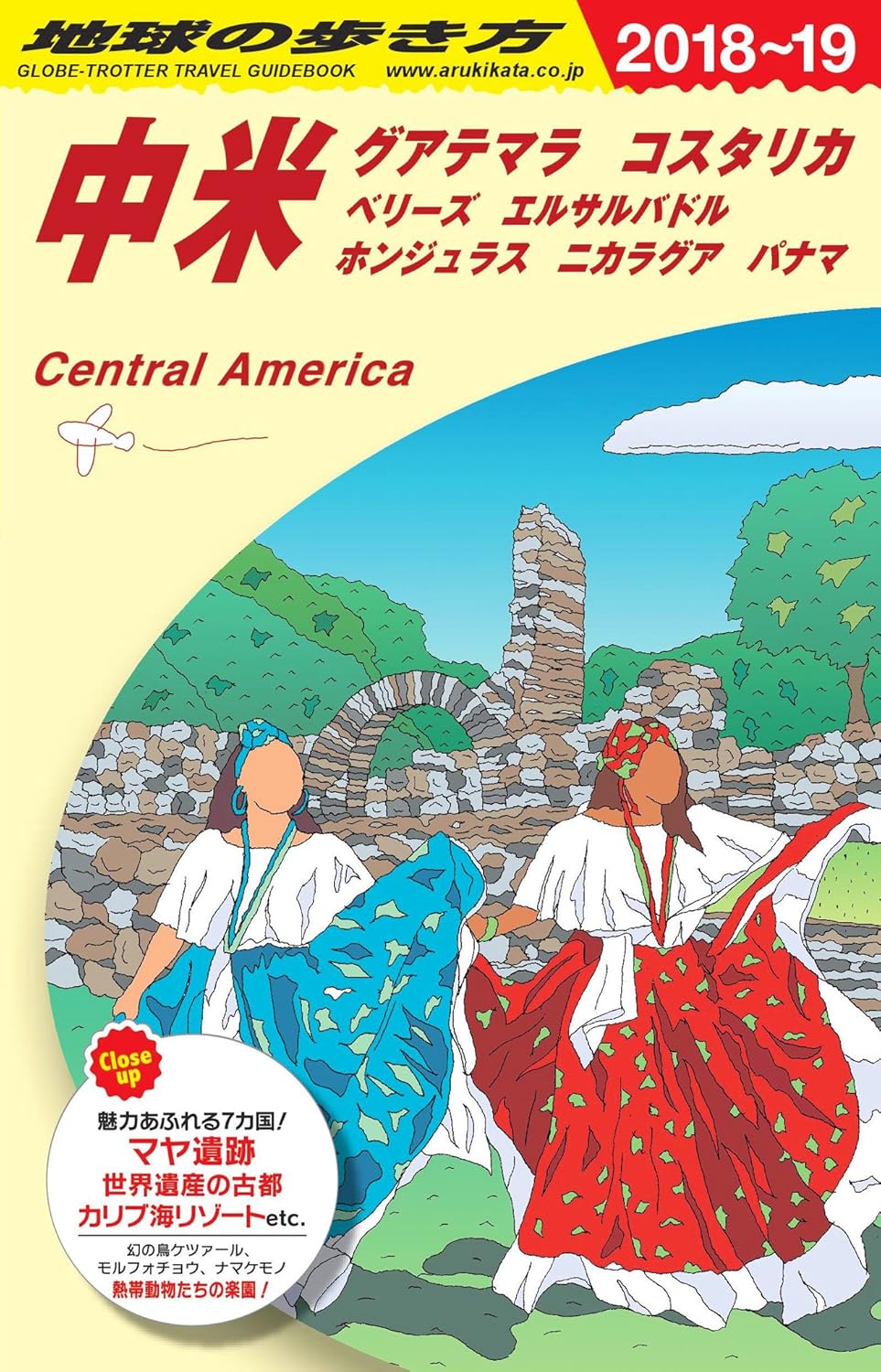
Planning a trip to El Salvador? — If you're mapping out volcanoes, ruins, and a tour of the old colonial towns (or a wider Central America loop), one good guidebook goes a long way.