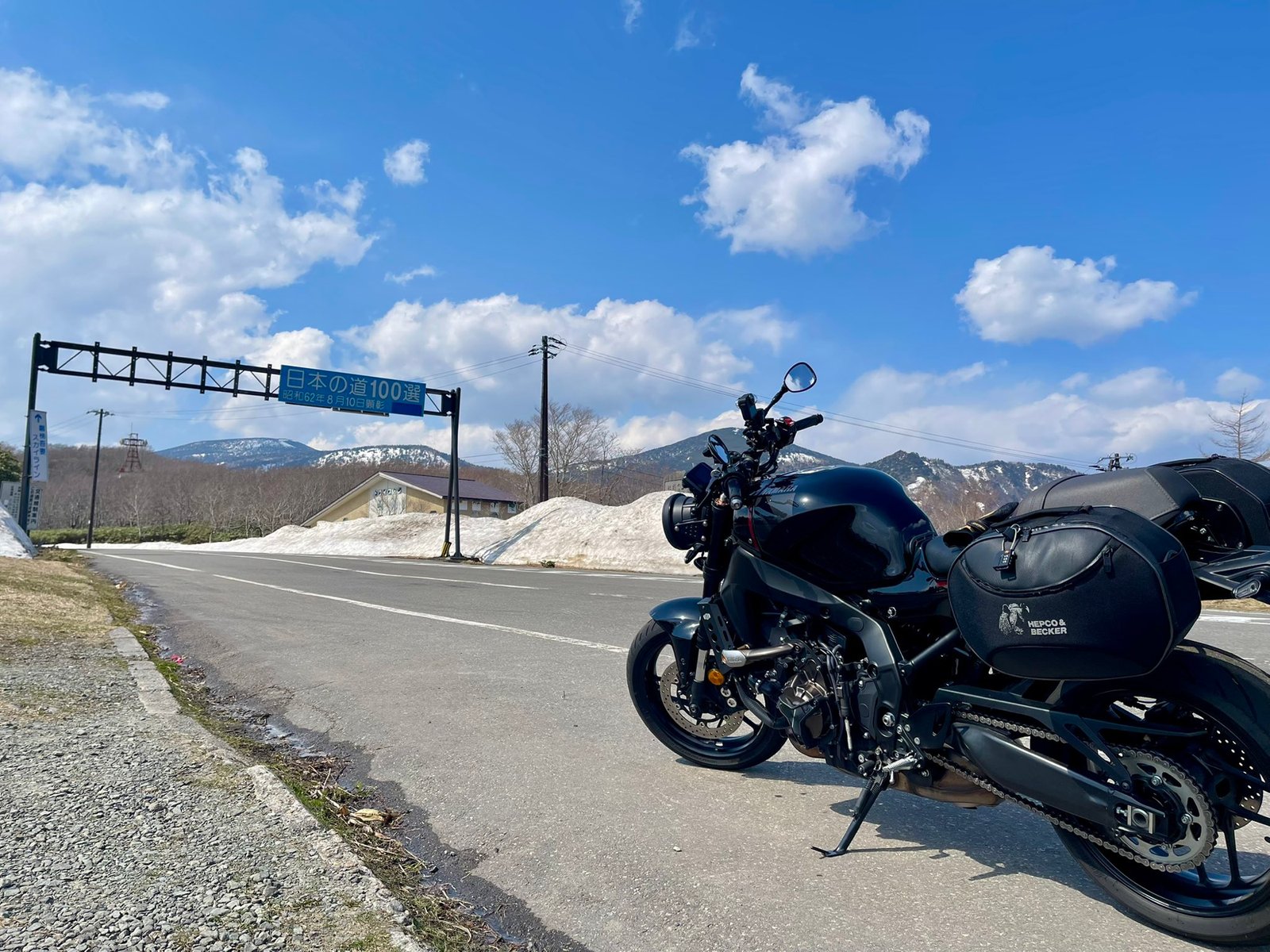
On April 26, 2025, I rode the Bandai-Azuma Skyline — its road still walled in by snow — and headed for Ishinomaki, in Miyagi. It was partway through a tour of Tōhoku on my XSR900. I had learned that Ishinomaki kept a shinsai ikō, a preserved ruin of the 2011 disaster, and I wanted to see it once with my own eyes.
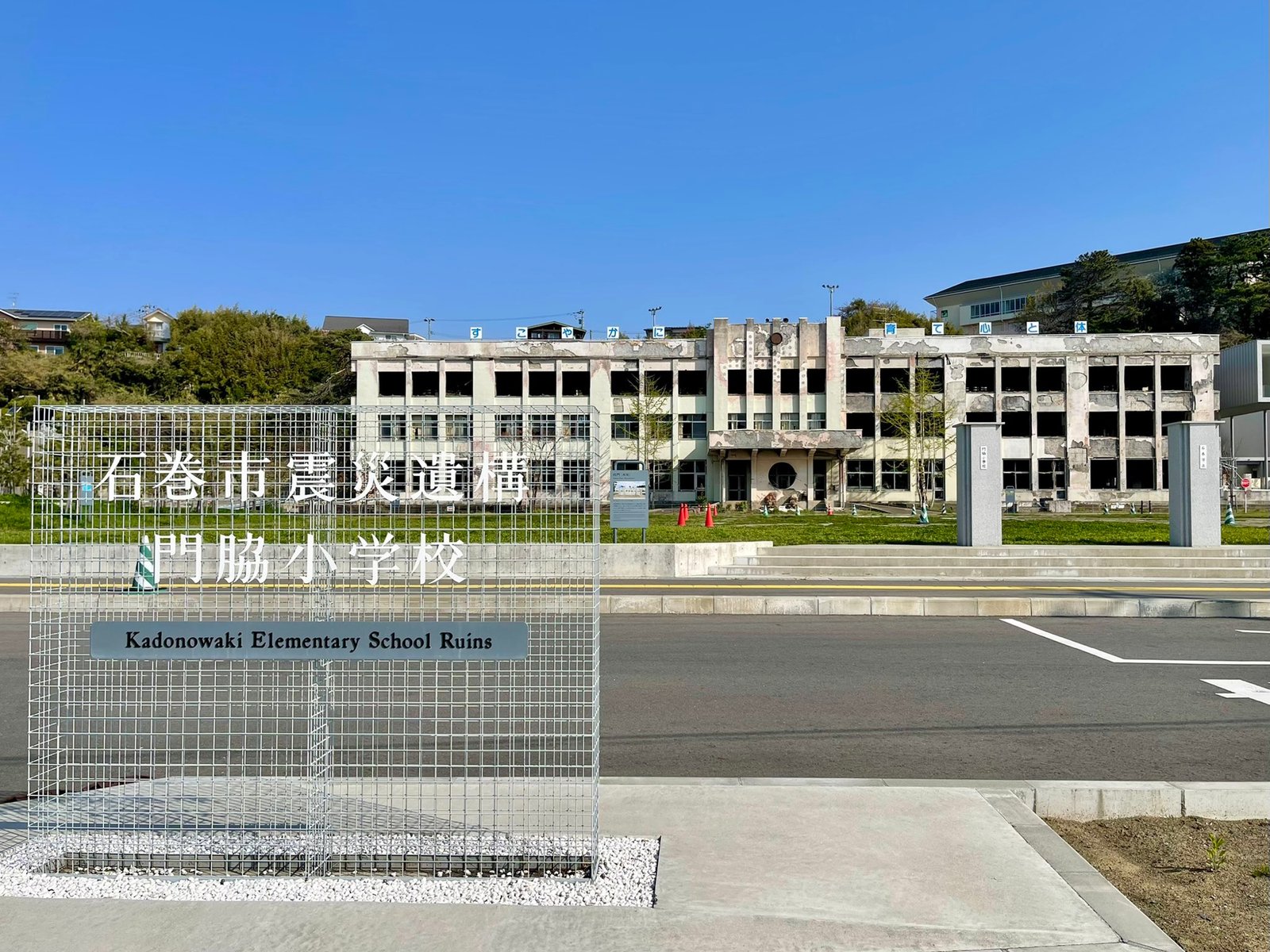
The Kadonowaki Elementary School Ruins
After a night in Ishinomaki, the next morning I stood in front of Kadonowaki Elementary School.
Ishinomaki Municipal Kadonowaki Elementary School is the only disaster ruin that preserves the traces of a tsunami-driven fire. Its outer walls are scorched, its windows blackened and empty — and still the building stands.
On March 11, 2011, after the quake, the children inside were led by their teachers and evacuated at once up the hill behind the school, Hiyoriyama. Including those who had gone home and returned, 275 children climbed the hill and survived. The building itself burned — from debris the tsunami drove in, and from fire that spread off drifting cars. In April 2022, the site opened to the public as a disaster ruin.
The man I met on the hill
After looking at the building, I found myself walking up the road to the hill behind it — a quiet hill, with a cemetery. There, I ended up talking with an older man.
The first thing he spoke of was a slope.
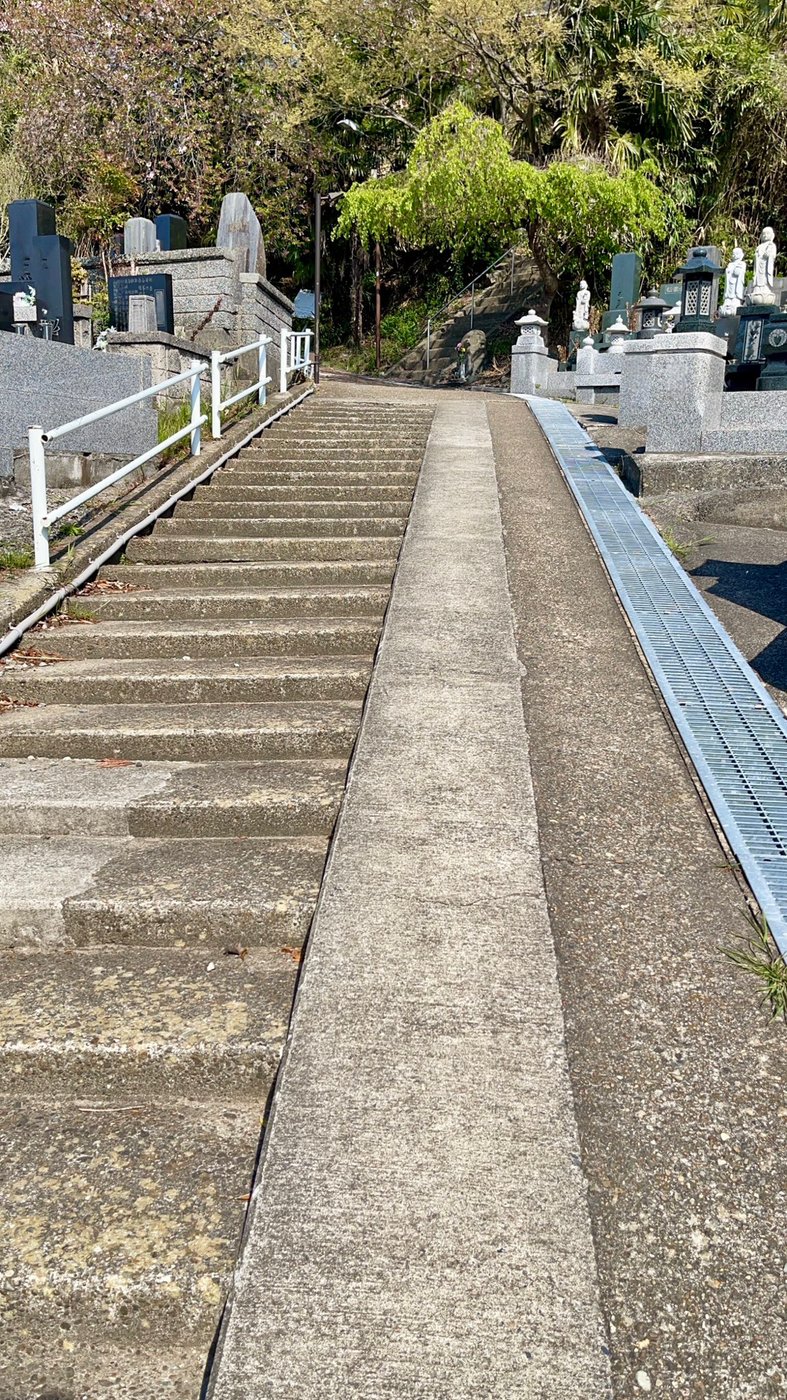
"Pushing an elderly woman in a wheelchair all the way up this hill was truly hard. So after the disaster, they widened the slope for us."
Beside the steps, there was indeed a slope that looked added on later. — I work in assistive devices and accessibility. So that one sentence went straight in. Evacuation and accessibility are one continuous thing: the safety of high ground reaches only those who can climb to it.
What he told me
The man's account was quiet, but it did not stop.
"The shaking settled, and everyone went home once. — That is when the tsunami came."
It carried in a terrible volume of debris, lodging it right into the school — "enough that you'd think we'd not run short of firewood for centuries," he said. But fire broke out. It caught the gasoline of the cars people had tried to flee in, and spread. An east wind blew that day, so the building's east side — its right side — burned worst.
"Because of a tax change, everyone had just bought new cars. So that's what they tried to flee in. — But they were all swept away. A car carrying a junior-high and an elementary-school child, too."
The children who evacuated up the hill survived. The townspeople who tried to flee by car did not. The same town, the same day — a different ending.
For three days no one could go in to help: the timber, burned to charcoal, was still smouldering. On the third day the Self-Defense Forces finally entered the schoolyard. So we can go in now, the man thought.
The soldiers checked the drifted cars one by one, and the words they exchanged at that work he still remembers clearly.
"Look carefully inside the cars — there's a femur left."
That was the kind of situation it was, he said — plainly. The very plainness of his voice carried the weight of that day.
On being forgotten
He told me that kataribe — storytellers — speak here, on this hill. And the one cutting back the overgrown bamboo, so they could speak a little more easily, was him.
Looking down at the town from the hill, he said:
The view from here has come to look just like the scenery of my childhood. Nothing there, see. They've put up all sorts of buildings, but those are like a theme park — they get forgotten. … You need some device to keep drawing people in.
A disaster ruin, simply standing, will one day blend into the scenery and cease to be seen. Not forgetting takes a mechanism that keeps people coming. My writing this is meant as one very small piece of that device.
The sea was quietly beautiful
Leaving Kadonowaki, I rode the Sanriku ria coast east of Ishinomaki on the XSR900. In the deeply indented inlets, aquaculture rafts floated quietly. The sea was astonishingly calm, and beautiful.
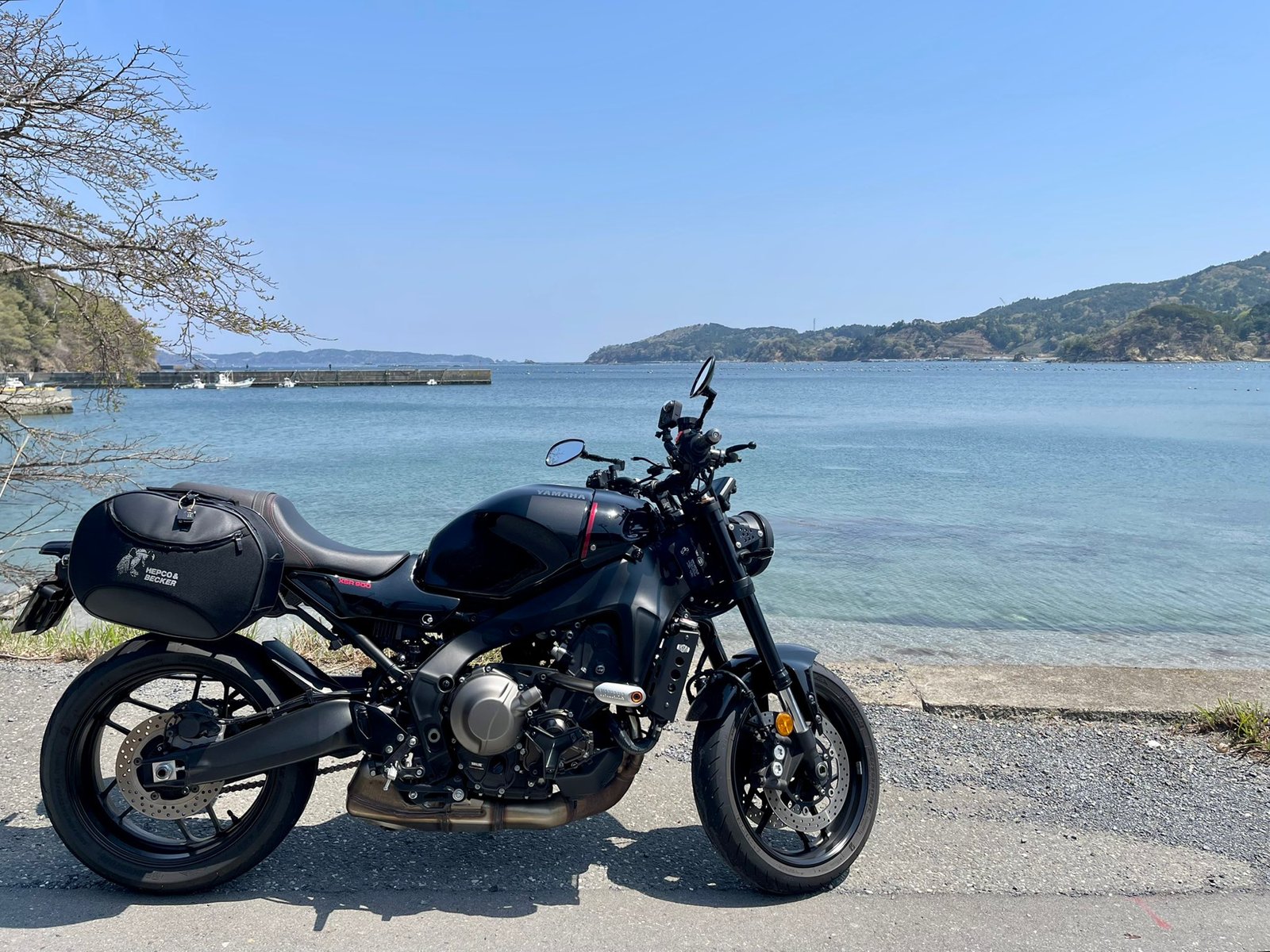
Fourteen years ago, this sea swallowed the town. The same sea now shines this quietly. Whether I may call it "beautiful," I hesitate a little. But it was. The man's account and this sea — both are true.
The slope on the hill, the man's bamboo-cutting, the storytellers' voices: each is a small act of upkeep against forgetting. If you tour Tōhoku, it is worth having one such hill among the beautiful roads.
Ishinomaki has another disaster ruin. About Ōkawa Elementary School, which I visited that same afternoon, I have written in a separate story.