The Basílica de Nuestra Señora de Guadalupe is said to draw more than 20 million pilgrims a year, making it one of the most-visited Catholic shrines on Earth (a Vatican-recognized Marian shrine on the same scale as St. Peter's Basilica). After two years in Costa Rica I had grown curious about the way Catholic faith and Indigenous belief overlap throughout Latin America, so this was a place I had to come.
The old basilica and the new basilica
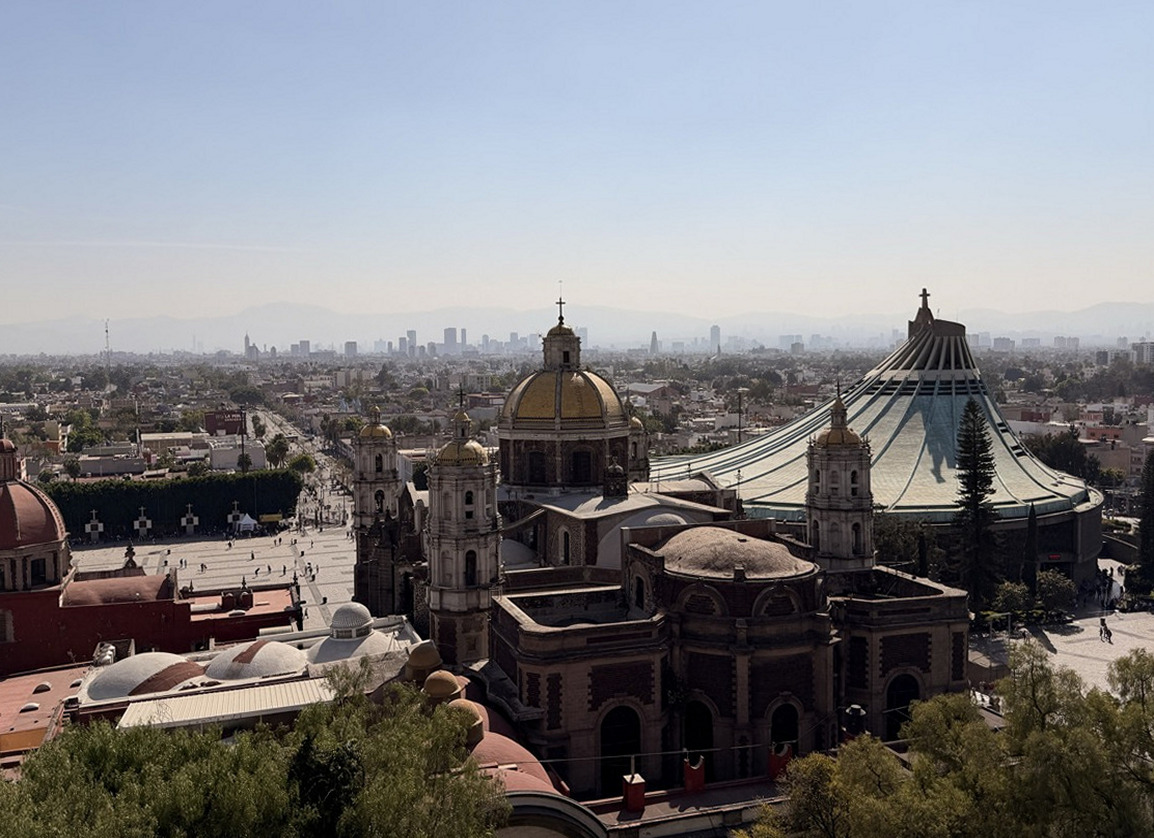
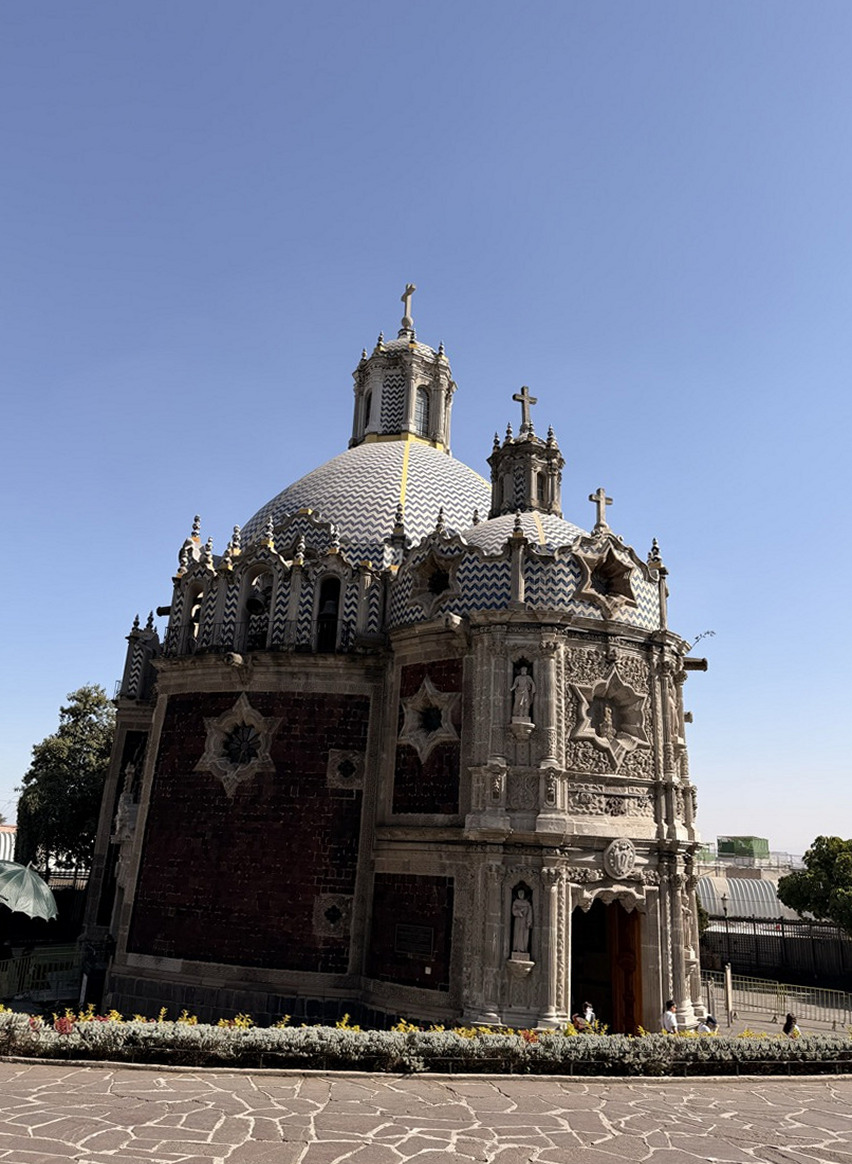
Two churches stand side by side on the grounds. The old basilica, completed in 1709, leans noticeably from foundation subsidence and is no longer used as the main place of worship. It still functions as a historical chapel within the Guadalupe complex, but the primary pilgrimage and liturgical role has been handed to the new basilica, completed in 1976 right next to it. Designed by Mexican architect Pedro Ramírez Vázquez (also responsible for the National Museum of Anthropology and Estadio Azteca), it has a circular column-free interior that can hold roughly 10,000 pilgrims at once.
The moving walkway and the Virgin's tilma
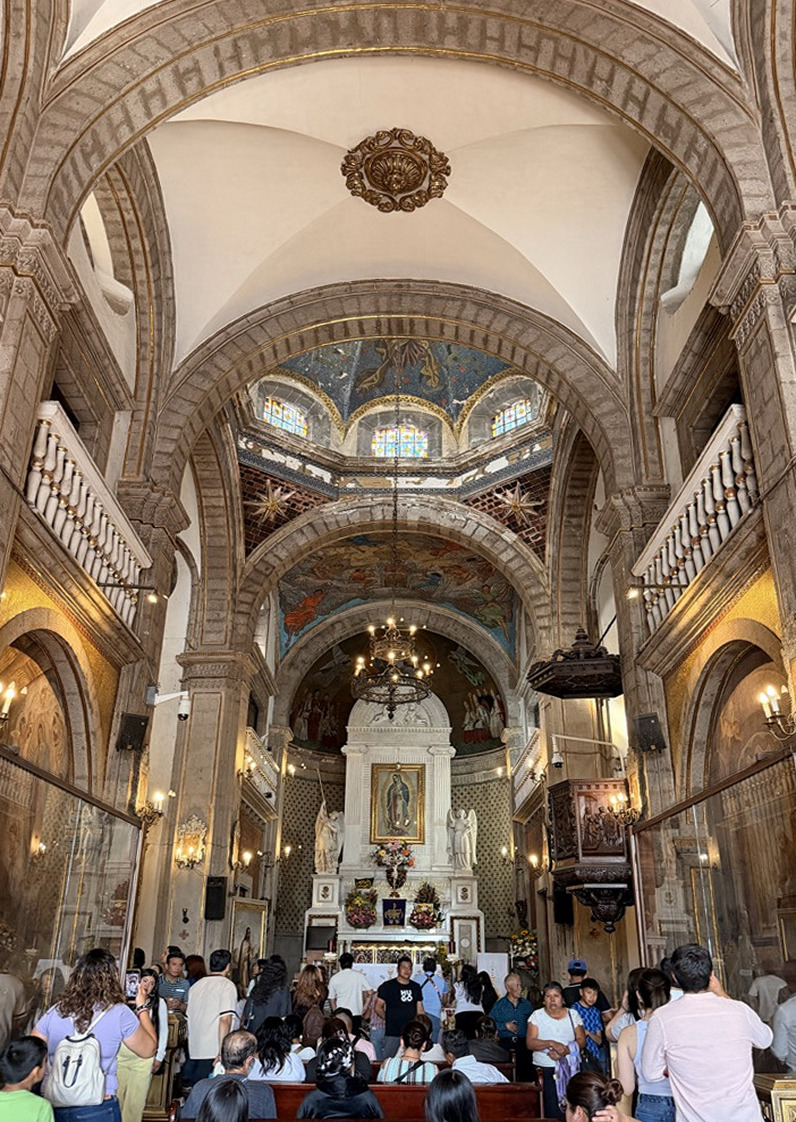
The centerpiece of the new basilica is the image of the Virgin of Guadalupe displayed behind the main altar. The image — said to have appeared on the tilma (cloak) of the Indigenous Juan Diego in the December 12, 1531 apparition — is shown here as the original cloth itself. The fabric is rough Indigenous maguey-fiber cloth (tela), the kind that would normally degrade in decades; the fact that it has survived nearly 500 years with its pigments intact is the central evidence cited for the faith. Pilgrims pass through endlessly, so the corridor in front of the altar is fitted with moving walkways to keep the human flow steady.
Up to Tepeyac Hill
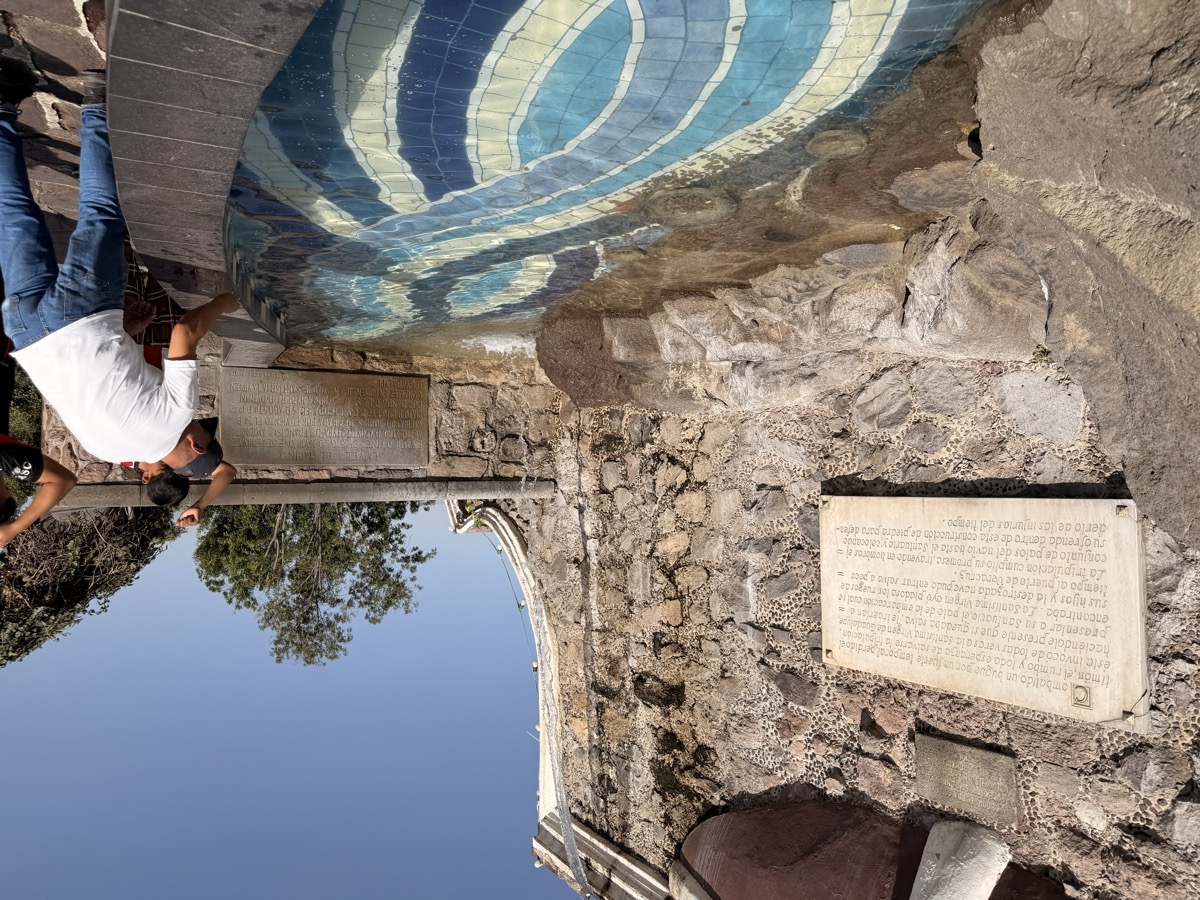
Behind the basilica rises Tepeyac Hill, where the apparition is said to have occurred. A small chapel — Capilla de El Pocito — and pedestrian paths reach the summit. From the top you can take in the entire Guadalupe complex and, beyond it, the spread of Mexico City. With the city's skyline at over 2,200 m of altitude, the haze above the streets gave the view a dreamlike quality.
What I felt in Costa Rica — that faith threaded into daily life — exists here in a much more concentrated form.
People crawling on their knees toward the altar, others in tears as they prayed: Guadalupe is not a tourist attraction, it's a sacred place still very much alive.
Places visited
Travel notes (general info)
※This section is editorial reference based on public information. Please confirm prices and operating details on official sites.
Getting there
- Metro: La Villa-Basílica station (Line 6), 5 min walk (closest); or Deportivo 18 de Marzo station (Line 3), 15 min walk
- Metrobús: Línea 6 La Villa station, 5 min walk
- Allow: 2–3 hours for old basilica + new basilica + Tepeyac Hill
- Free entry. Be respectful and quiet during mass
- Pilgrimage day (Dec 12): millions of pilgrims pack the site; all-night masses
Recommended nearby spots
- Teotihuacán — about 45 km northeast of Guadalupe, 1 hour by car. Easy combo for a one-day plan
- Plaza de las Tres Culturas (Tlatelolco) — a single square where Aztec, colonial, and modern eras coexist; 15 min by car
- Museo Soumaya — Carlos Slim Foundation in Polanco, mirrored landmark, free entry
- Mercado Jamaica — one of Mexico City's largest flower markets, easy detour on the way back
- Zócalo / Centro Histórico — Mexico City's downtown, walkable to the cathedral and Templo Mayor