January 2025, I arrived in Panama City. The first place I went was Panamá Viejo. On the east side of the city, facing the Pacific, this archaeological site is the original "first Panama City" that the Spanish founded in 1519.
Panamá Viejo is considered the first permanent European settlement on the Pacific coast of the Americas. It functioned as a hub for Spain's control of Latin America until 1671, when it was looted and burned by the pirate Henry Morgan's raiders. The city center we know today (Casco Viejo) was rebuilt afterwards on a different site.
Ticket Office and Entry
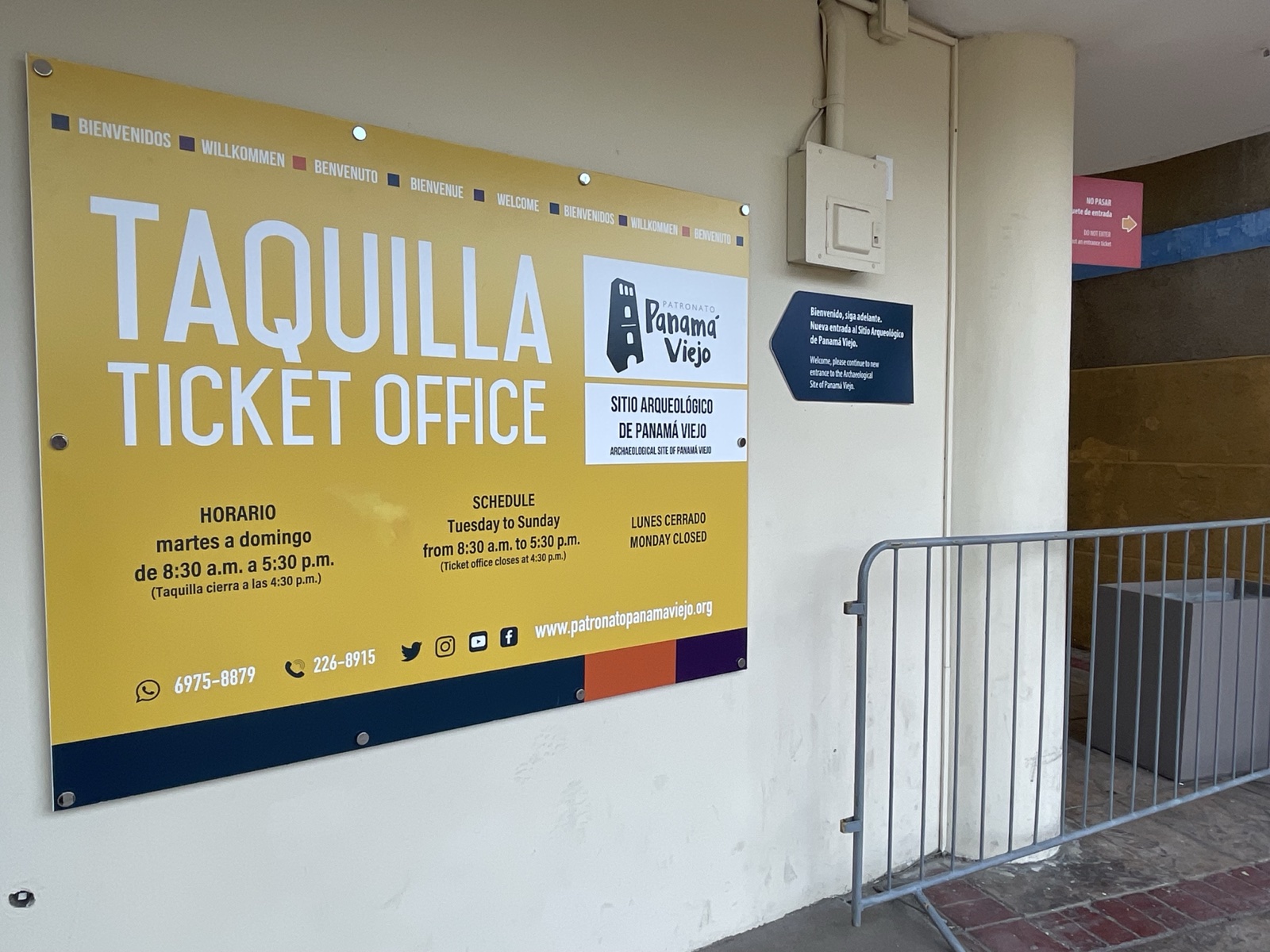
Tickets are bought at the Taquilla (ticket booth) at the entrance. The site is run by the Patronato Panamá Viejo foundation. Open Tuesday–Sunday, 8:30–17:30; closed Monday. Non-resident admission is around 15–17 balboas (the balboa is Panama's currency, at parity with the US dollar).
Ruins and Skyscrapers in the Same Frame
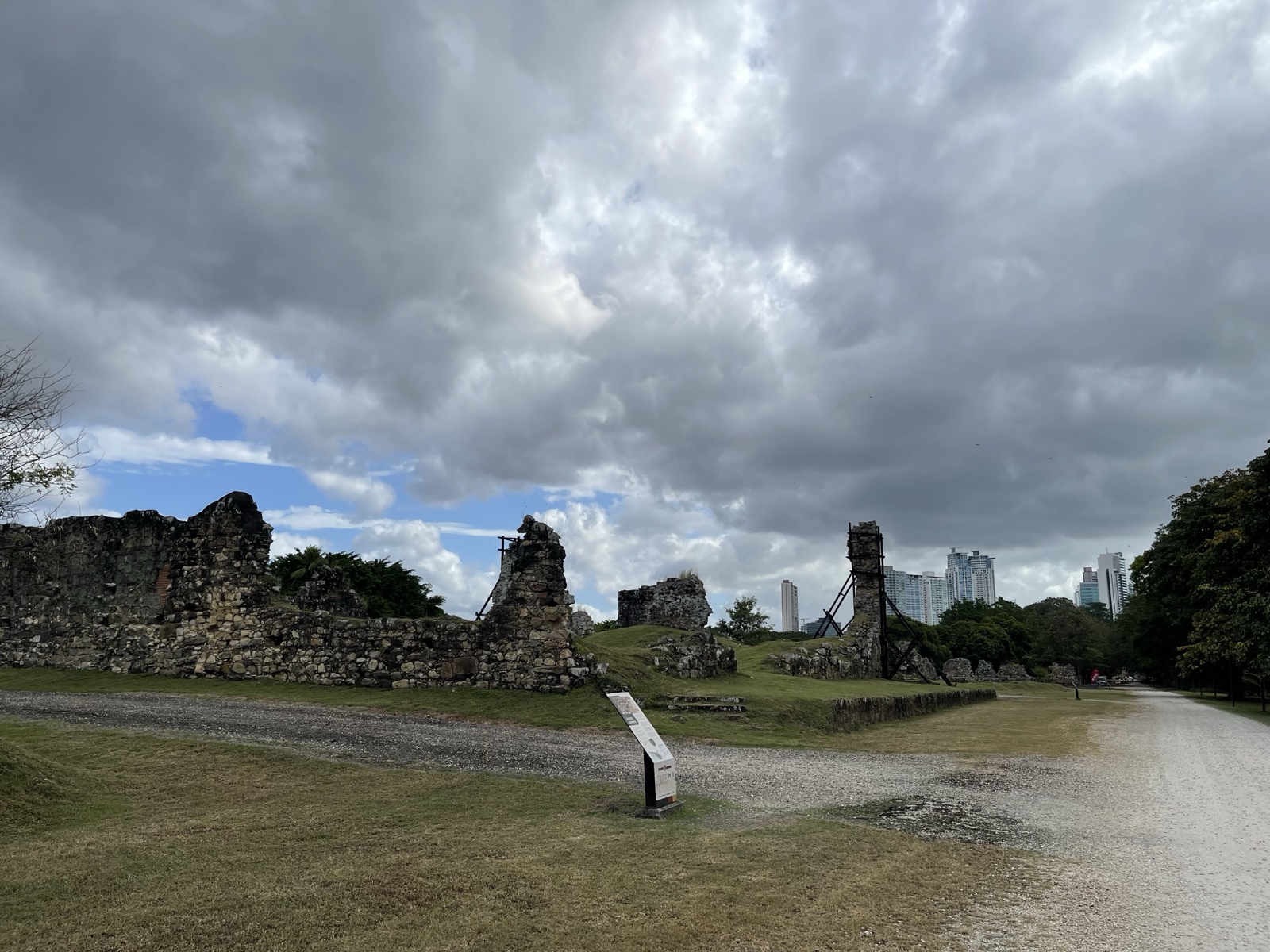
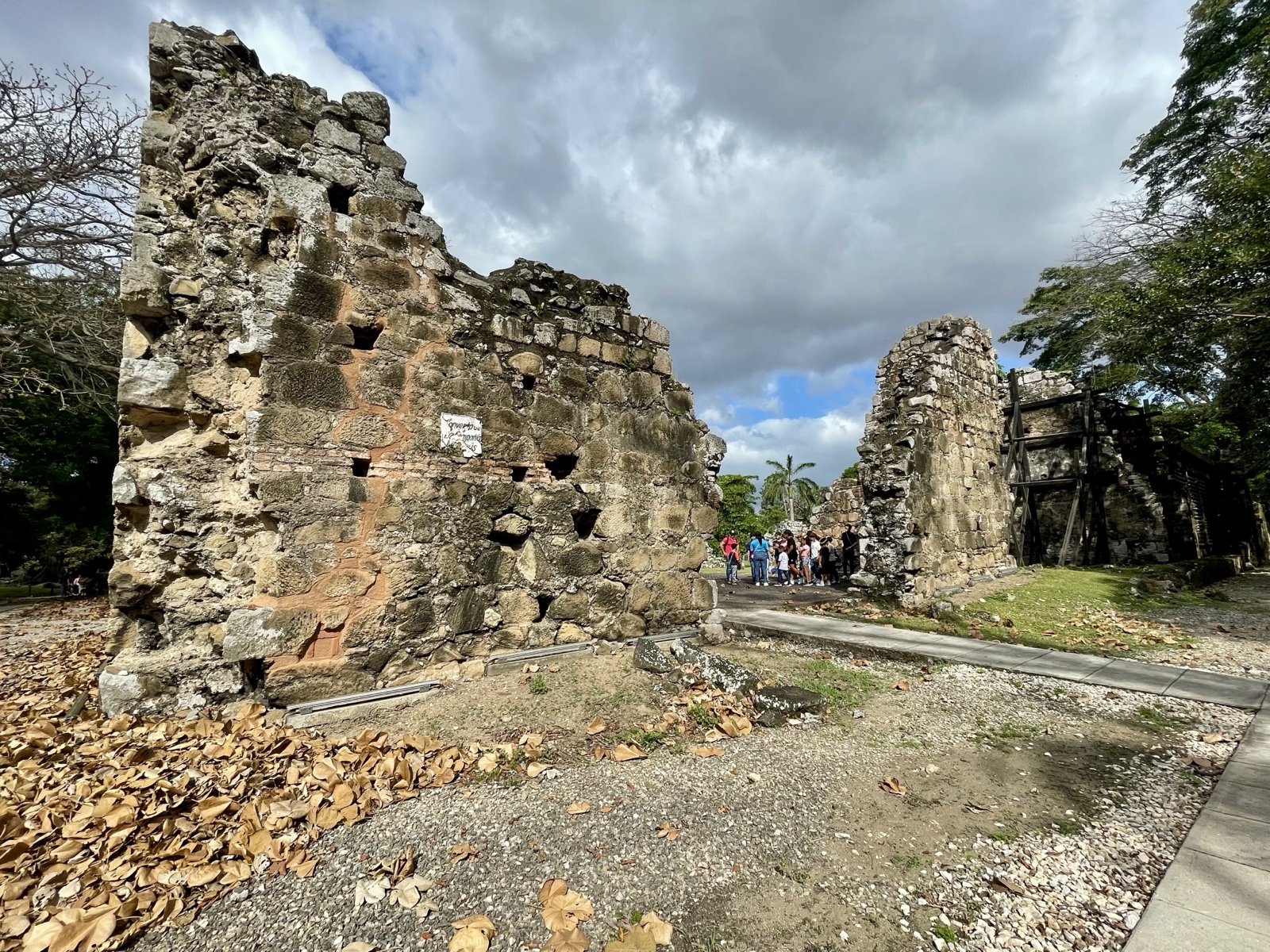
Inside, stone walls of ruins stretch out. The remains of the cathedral, monasteries, and city hall stand scattered, connected by tidy walking paths.
What stops you is that the modern Panama City skyline rises right behind the ruins. 500-year-old stonework and glass-walled skyscrapers in the same frame. The thought that colonization of Latin America started here gives a strange weight.
The Museum — Colonial Era and the Pirate Raid
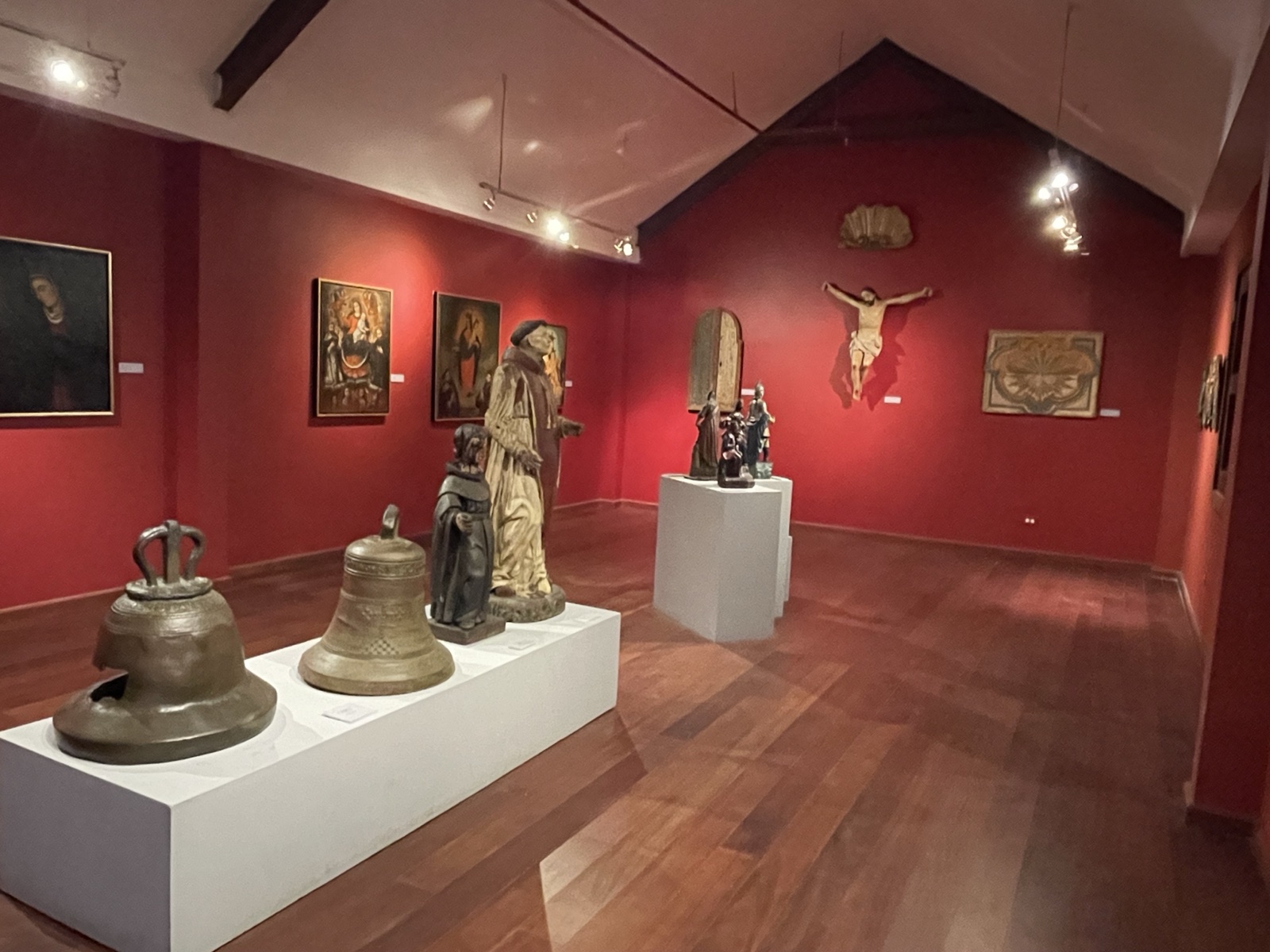
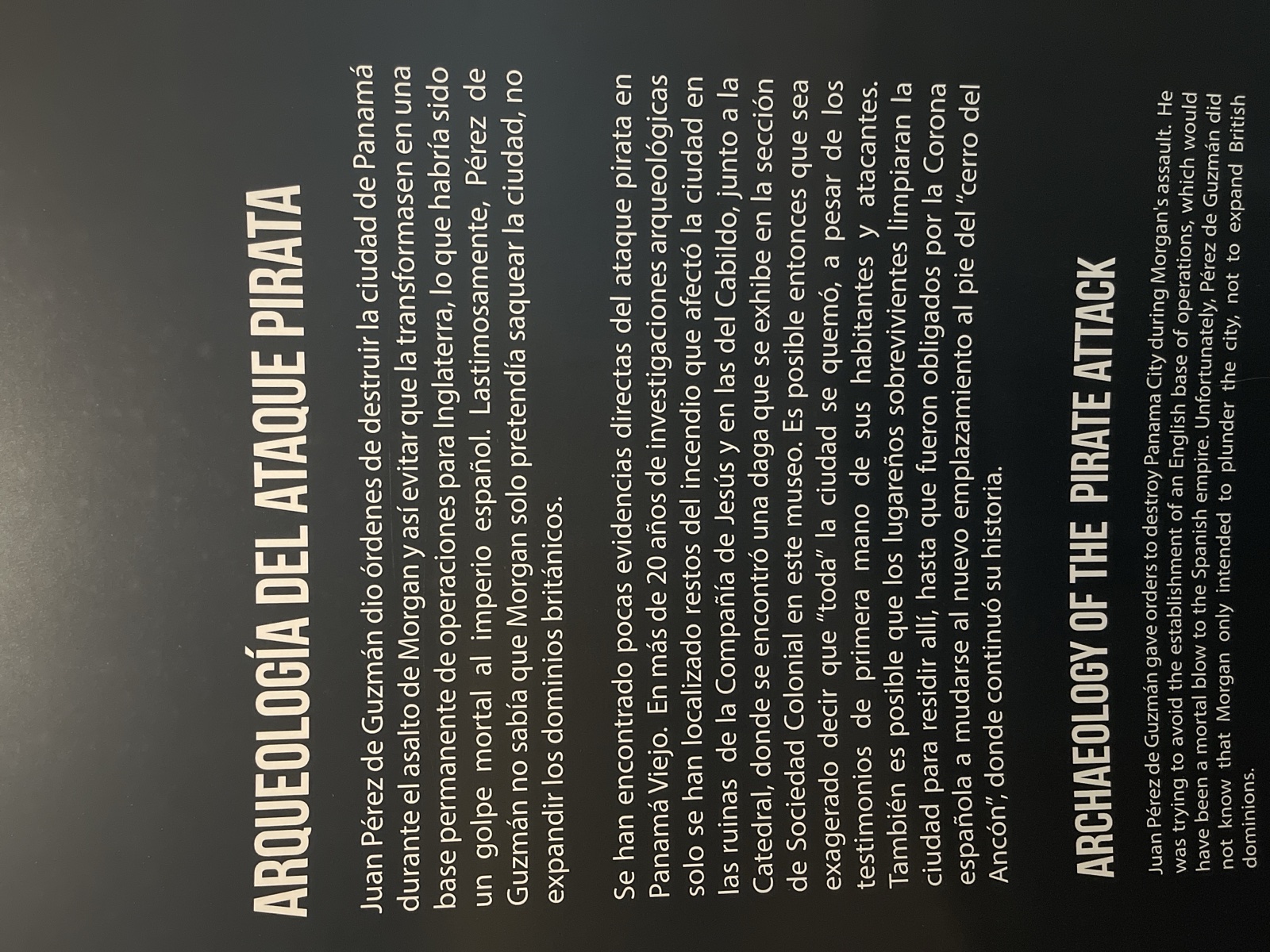
There's a museum on the site. The room with colonial religious art (bells, statues of saints, paintings, crucifixes) and the exhibit "Arqueología del Ataque Pirata" (Archaeology of the Pirate Attack) based on excavations were both striking.
The pirate-raid exhibit notes that the popular image of "Henry Morgan burning the city" has weak evidence — and that the Spanish themselves likely set the fire while retreating. A reminder that historical "common sense" is rarely simple.
Panamá Viejo isn't "just ruins." Latin America's colonization started here, the city was burned here, and the city moved.
With those modern towers behind the stones, I drifted into thinking about 500 years of time.
Travel guide (general info)
※ This section combines public information with the author's notes; please confirm the latest entry, safety, and operating details on the official sites.
Panamá Viejo in historical context
- Founded on 15 August 1519 by the conquistador Pedro Arias Dávila ("Pedrarias"). It is considered the first permanent European settlement on the Pacific coast of the Americas.
- From the 16th century onward it thrived as the embarkation port for gold and silver from the Viceroyalty of Peru, becoming a key node in Spain's Pacific trade.
- In January 1671, the city was burned in a raid led by the English privateer Henry Morgan. In 1673 it was rebuilt about 7 km west, at the present site of Casco Viejo.
Visiting the archaeological site
- Operated by the Patronato Panamá Viejo. Tue–Sun 8:30–17:30 (last tickets 16:30); closed Mondays.
- Non-resident entry runs around USD 15–18 as of 2025 (combined museum + ruins). Student discounts available.
- Highlights: the cathedral tower (La Torre), the ruins of the Santo Domingo convent, the Cabildo (former town hall), and the Puente del Rey. The site can be walked end-to-end on its boardwalks in 1–2 hours.
Access and what to know
- From central Panama City, 15–25 minutes by taxi or ride-hailing (Uber, inDrive); about USD 5–10. There is no nearby metro station.
- The site sits on the Pacific coast with little shade. Hat, sunscreen and water are recommended.
- In 1997 Panamá Viejo was inscribed by UNESCO together with Casco Viejo as the "Archaeological Site of Panamá Viejo and Historic District of Panamá."
References
Panama and Central America in one book — Globe-Trotter Travel Guide: Central America is the go-to Japanese guidebook covering seven Central American countries, including Belize and Panama.