If you come to Panama, you want to see ships go through the canal. Just knowing the canal is there isn't enough — I wanted to actually see one transit.
Researching ahead, the official Panama Canal site (visitcanaldepanama.com) has a page called "¿A qué hora pasan los barcos? (What time do the ships go through?)." The Miraflores Locks split into morning and afternoon transits; afternoon ships pass after 14:05. With that, I went in the afternoon.
To the Miraflores Locks
The Miraflores Locks, on the Panama Canal's Pacific side, are about 15–20 minutes by car from Panama City. There's a visitor center where you can watch ships transit step-by-step as the water level adjusts.
Admission is 17.22 balboas (US dollar equivalent) per non-resident. I went up to the viewing deck overlooking the locks and waited.
Empty Locks and Electric Mules
At first the lock was empty. Just a long rectangular channel with water in it. Small yellow trains running on rails — "mules," the canal's electric locomotives — moved along the sides. They run cables to the ship to keep it centered through the lock.
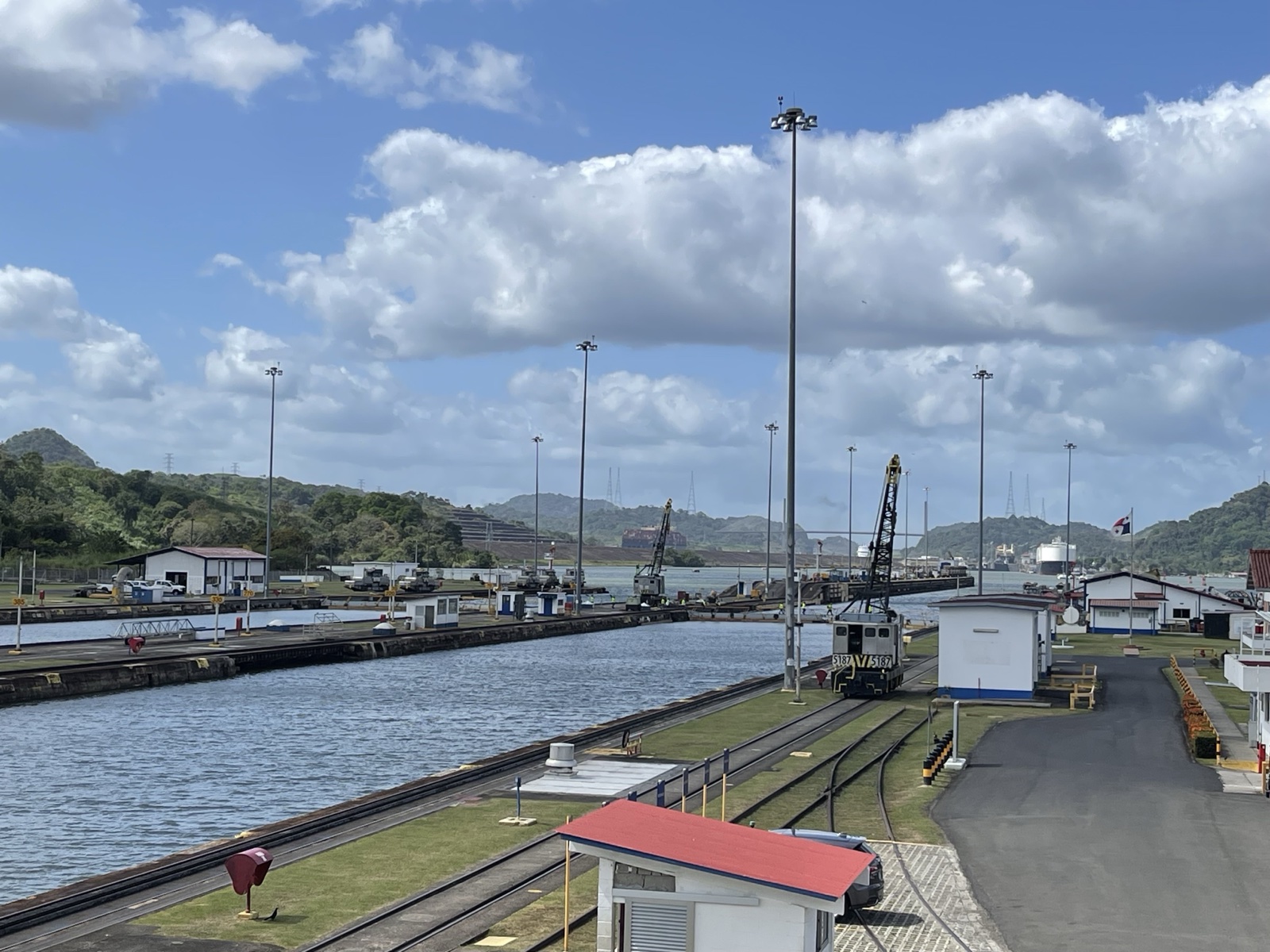
Here Comes the JIUYANG BLOSSOM
After waiting a while, a white hull appeared in the distance. The car carrier "JIUYANG BLOSSOM." A large RoRo ship operated by a Chinese logistics company, its boxy white hull just barely fitting the width of the lock as it slid in.
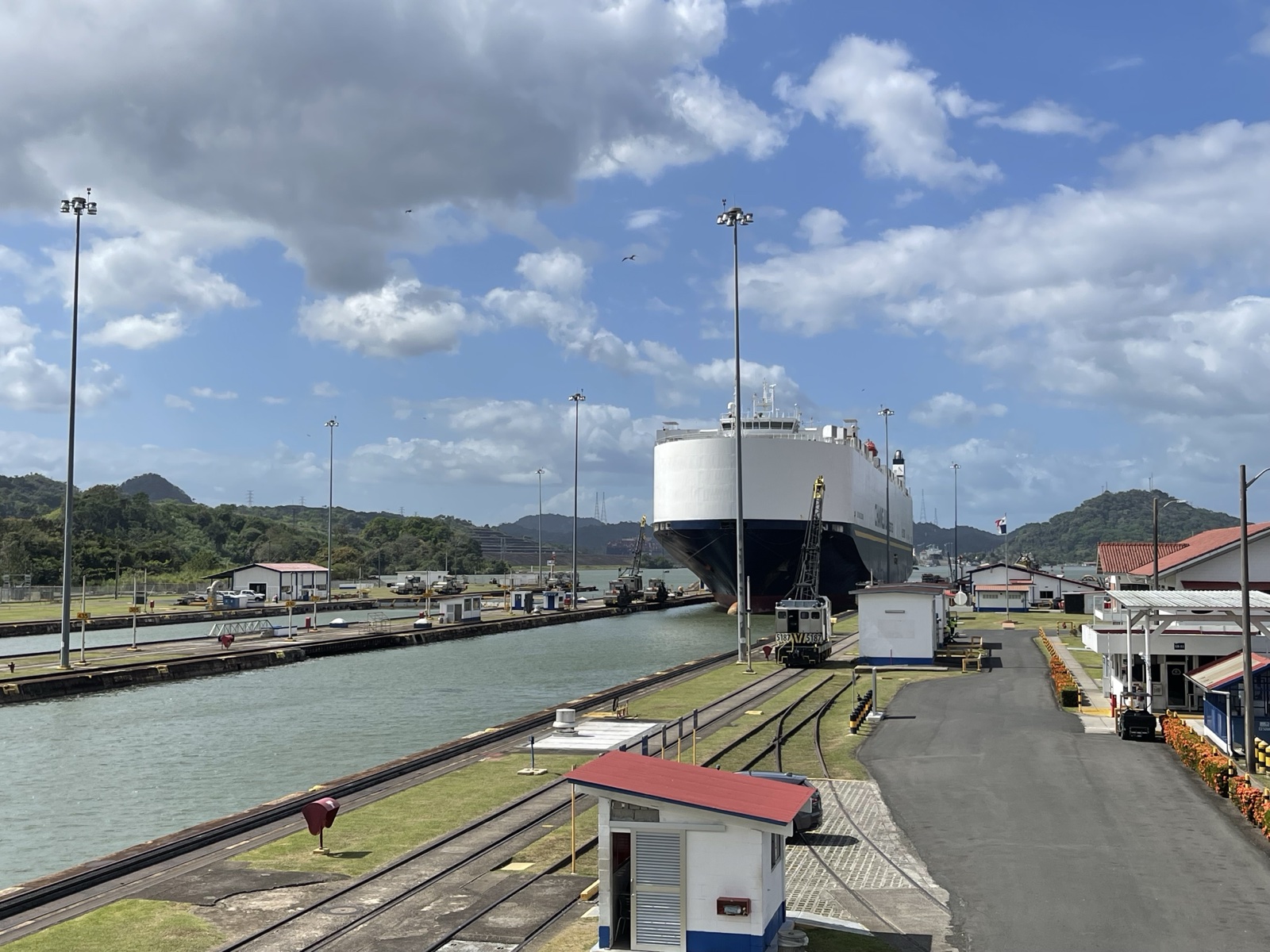
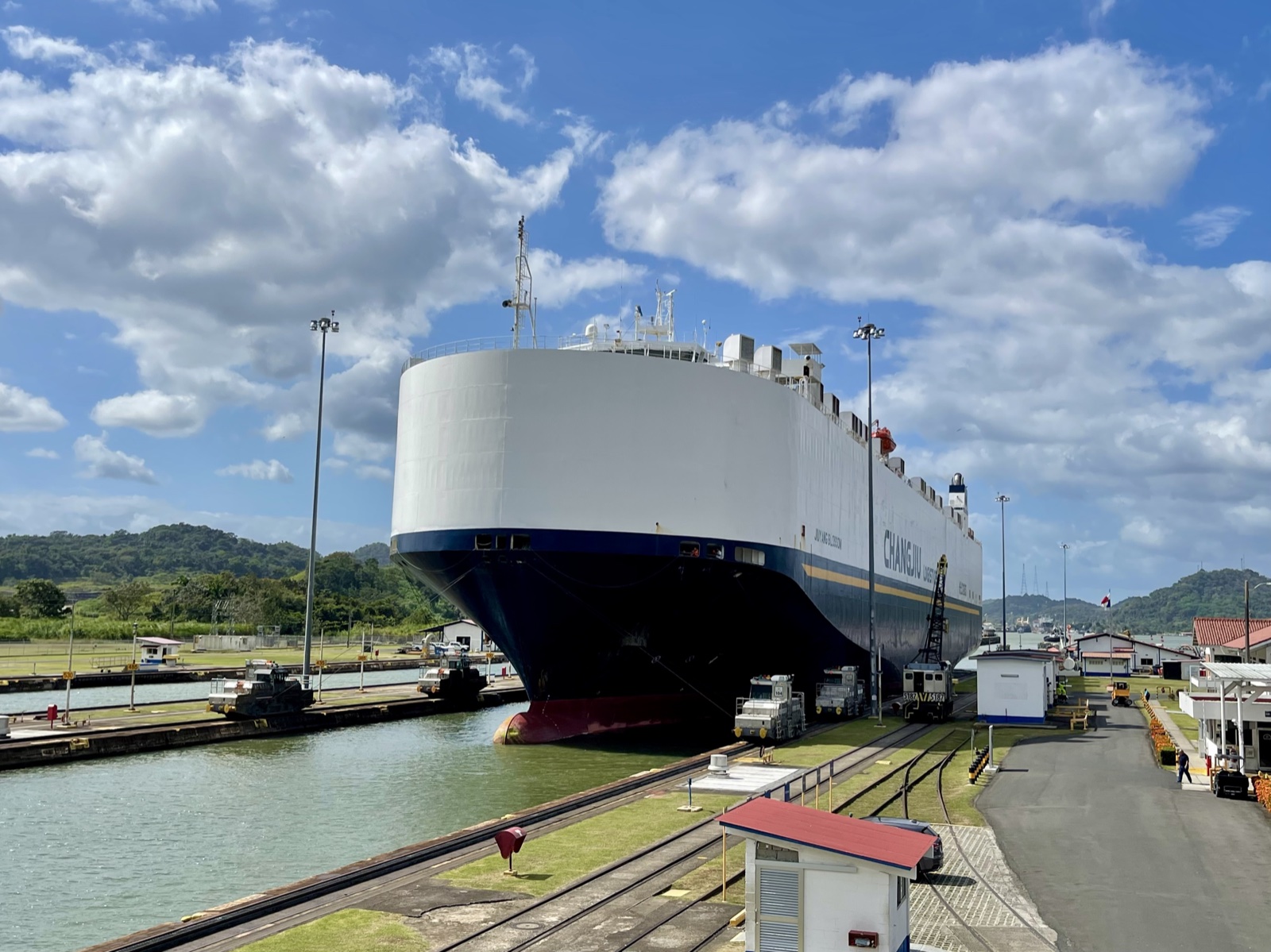
From the deck, the size was overwhelming. Almost no gap between the lock walls and the ship's sides. Controlling something that large to centimeter precision — the engineering is on a different level.
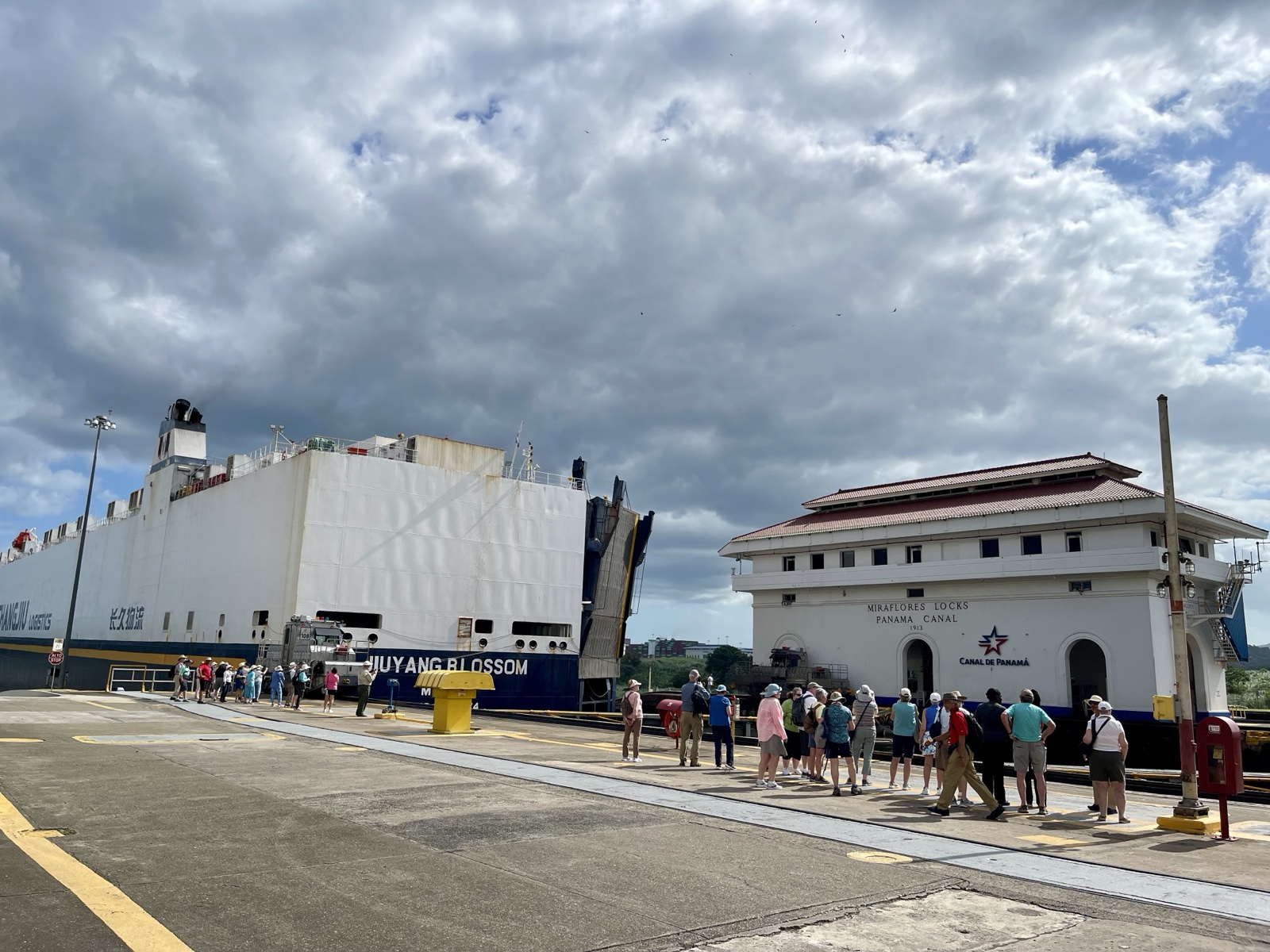
The moment the ship entered the lock, every camera on the deck went up. Snapping photos, all I could think was "this is what I came to see." I'd seen the Panama Canal in news and textbooks plenty of times, but the real thing is on a different scale.
For the whole canal — Caribbean side up through the three Gatun chambers to Gatun Lake, across the lake and the Culebra Cut, and back down through Pedro Miguel and Miraflores to the Pacific — there's a separate piece with a 10-step interactive walkthrough. It also covers the chronic water shortage that comes with a rain-fed canal, and Japan's position as the No. 3 user: How the Panama Canal Works — an interactive walkthrough (Panama Travel Notes #4).
Travel guide (general info)
※ This section combines public information with the author's notes; please confirm the latest entry, safety, and operating details on the official sites.
Panama Canal basics
- Opened in 1914 under U.S. construction. About 82 km long, with Gatún Lake (26 m above sea level) at its centre — a "lock canal" that lifts and lowers ships through chambers.
- Expansion completed in 2016; the new Neopanamax locks (Agua Clara on the Caribbean side, Cocolí on the Pacific) allow vessels of up to ~366 m ("New Panamax").
- Handed over from the U.S. to Panama on 31 December 1999. The canal is now run by the Panama Canal Authority (ACP).
Miraflores Visitor Center
- Located on the Pacific side at the original Panamax-class locks. The four-storey building includes viewing decks, a 3D film, exhibits and a restaurant.
- Entry (2025): non-resident adults around B/.20.42 for the deck, ~B/.25 with the museum. Discounts for children, students and Panamanian residents.
- Real-time transit times are posted on the official visitcanaldepanama.com. Peak viewing is generally morning (9:00–11:00) and afternoon (14:00–16:30).
Access and tips
- 15–25 minutes by car from central Panama City; about USD 7–15 with Uber or another ride-hailing app. Buses also depart from Albrook Mall.
- The "mules" are the electric locomotives running along rails on either bank of the locks; they don't propel ships forward but keep them centred laterally — ships move under their own power.
- The Agua Clara Visitor Center on the Caribbean side (near Colón) shows the larger Neopanamax vessels passing through the expanded locks — a different experience from Miraflores.
References
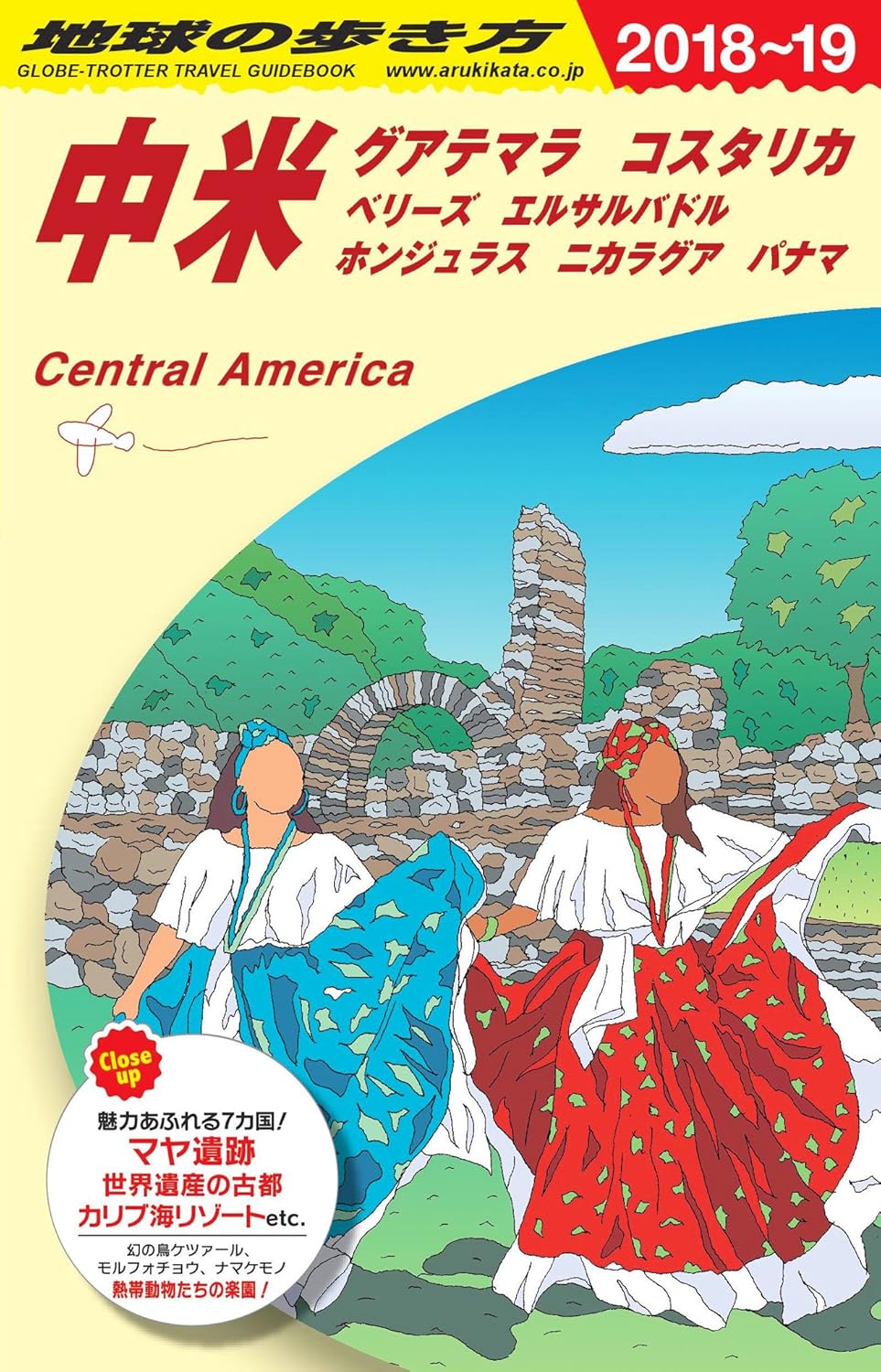
Panama and Central America travel info in one volume — Chikyu no Arukikata: Central America covers seven Central American countries including Belize and Panama, the go-to Japanese-language guidebook.