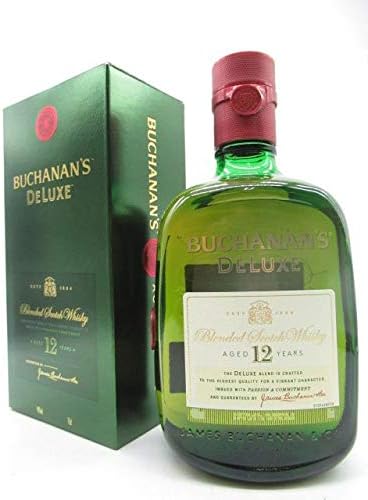
The Buchanan's Deluxe 12 sitting on my shelf came from a friend from Belize who is currently studying in Japan. "This was my favourite back in Belize," he said as he handed it to me — bought either back home in Belize or on his US transit, then carried in his suitcase all the way to Japan. Real gratitude on this one.
Green glass, red cap, and on the front the portrait of founder James Buchanan. Once you've seen it, you don't forget it; in any Latin American liquor store it's parked in a place of honour on the shelf.
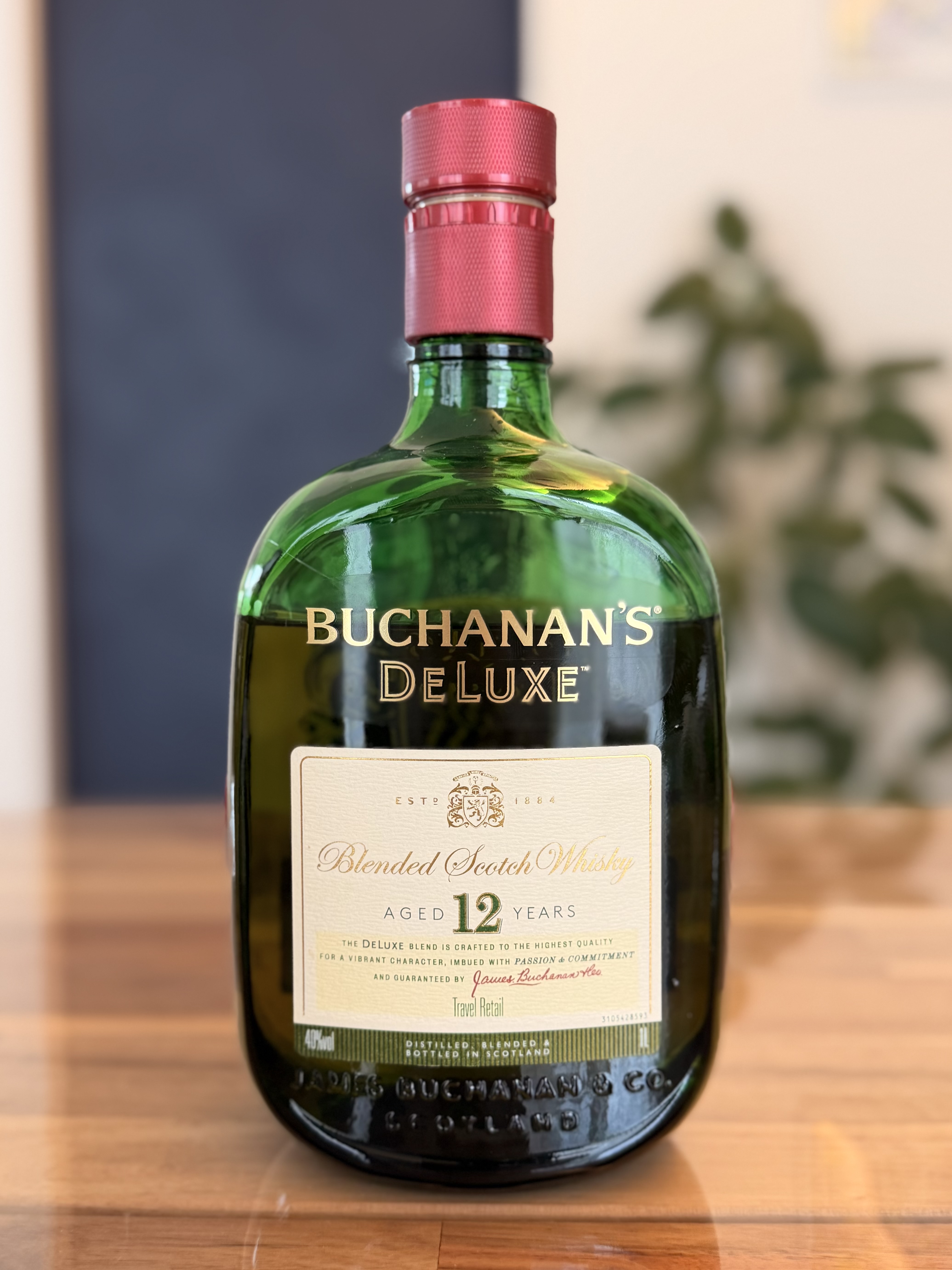
Latin America's "gift Scotch"
Buchanan's is a brand under the British spirits giant Diageo. It was founded in 1884 when James Buchanan set up his blending business in London, and it carries Royal Warrants going back to Queen Victoria and Edward VII — a properly old-school name in Scotch.
What's interesting is that it sells overwhelmingly more in Latin America than in the UK itself. Diageo's reports show Buchanan's earning the bulk of its revenue in Mexico and Colombia, with Latin America a top-tier consumption region globally. The cultural slot of "the Scotch you bring when you visit a friend" is fixed, and at any local supermarket or airport duty-free it gets a wide piece of shelf space.
Belize is a former Commonwealth territory (formerly British Honduras), bordering Mexico and Guatemala. The official language is English but the everyday food and trade culture is continuous with Latin America, so Scotch culture and the Latin American gift-giving culture flow together naturally. "I wanted my friend in Japan to taste my favourite from home," he said with a smile — and that whole continuous-culture story is in this one bottle on my shelf.
A 12-year-old, the shape of a blend
It's a 12-year-aged Blended Scotch combining malt and grain whiskies, at 40% ABV. Glendronach and Dalwhinnie in Speyside are reportedly key malts, and while it doesn't have the sharpness of a single malt, it's exceptionally smooth on the palate.
Nose: honey, light cereal, a faint dried fruit from sherry casks. Palate: vanilla and caramel sweetness up front, then the green apple and pear typical of Speyside. Finish: gentle, with almost no peat. It works neat, but on the rocks or with a small splash of water it really finds its balance. In Latin America it's most often served on the rocks in a glass packed with ice — and that's probably the most natural way to drink it.
Drinking is best done with the context of the place; that thought has come to me a lot lately. Buchanan's was born in Scotland, but the green bottle probably shines brightest at a Latin American dinner table at night. The bottle on my shelf in Japan carries the distance my friend hauled it in his suitcase — and all of that cultural heat with it.
Buchanan's — Background
※ This section combines public information with the author's notes; please confirm the latest details on the official sites.
Founder James Buchanan
Born 1849 in Canada, of Scottish descent. Set up as an independent blender in London in 1884. Received Royal Warrants from Queen Victoria and Edward VII; later created Baron Woolavington. The green bottle and red label have been the trademark since the early days.
Diageo's Latin America strategy
After a series of corporate consolidations from 1986 onward, the brand sits under Diageo. The company positions Buchanan's as its leading Scotch for Latin America, with a presence in Mexico, Colombia, and the US Hispanic market that rivals Johnnie Walker. Demand is extremely high around Father's Day and Christmas.
Main range
Deluxe 12 is the standard. Above it: Master, Special Reserve 18, Red Seal 21, Buchanan's Two Souls. All at 40% ABV. In Japan it's mainly available as a parallel import; the 12 typically sells for around ¥2,500–3,500.
In Japan it's mostly a parallel import. For anyone who wants to open that green bottle — the classic Latin American souvenir — at home too.