March 2014. A month earlier I had hand-built a brace for a stroke patient at the small clinic in San Vito, my assignment site. The brace had stayed on my mind, and when an errand came up that needed me in the capital, I wanted to see Costa Rica's National Rehabilitation Center while I was there. A senior fellow volunteer agreed to show me around.
From San Vito to San José was seven-plus hours on a mountain bus. I left early in the morning and got into the capital around noon.
What CENARE is
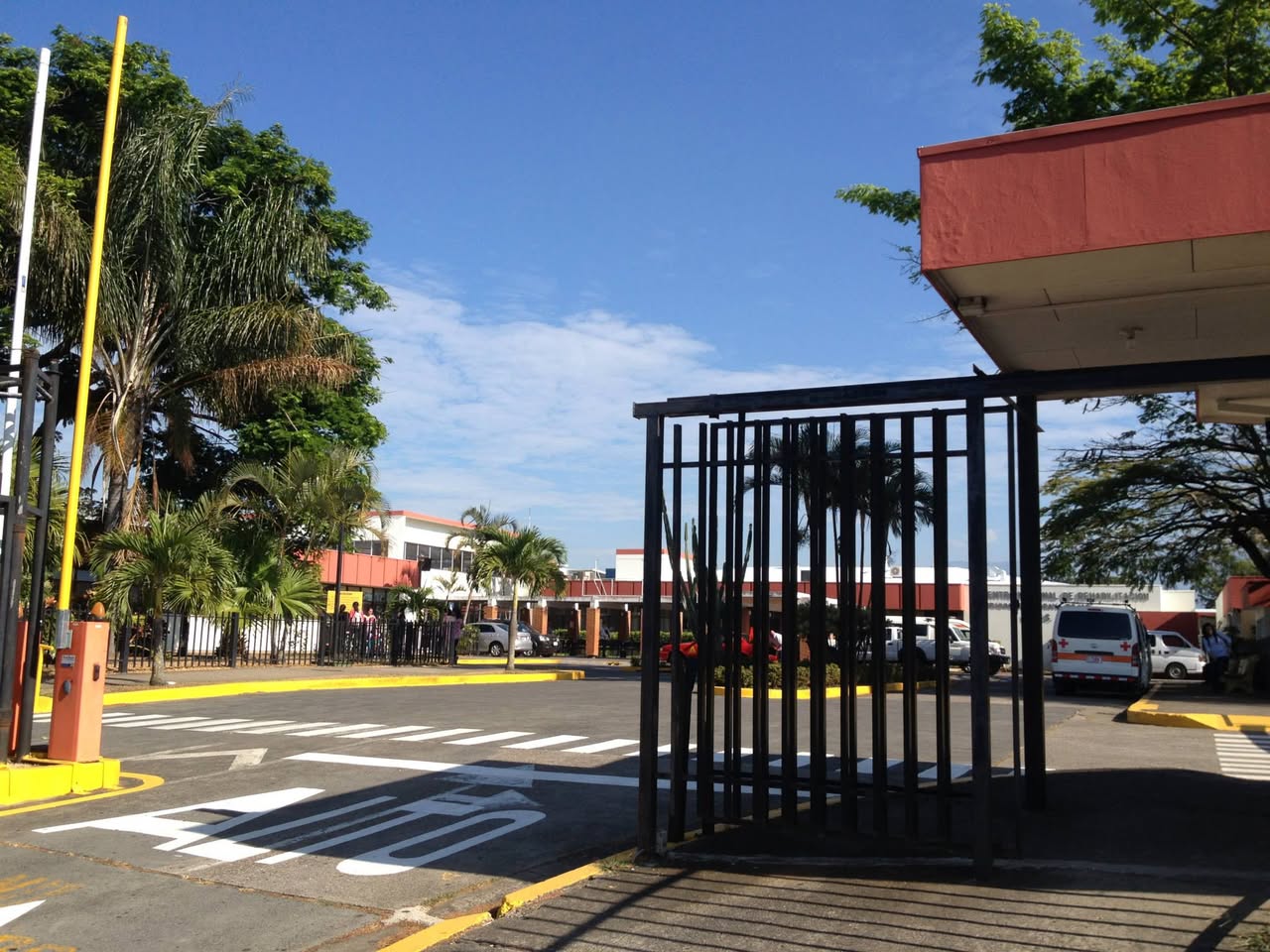
CENARE is Centro Nacional de Rehabilitación "Dr. Humberto Araya Rojas" — the national rehabilitation center run by Costa Rica's social security system, the CCSS. It sits in the La Uruca district on the outskirts of San José, opened in 1977, and is the hub of public rehabilitation services for the entire country.
Its starting point traces back to a major polio outbreak in 1950s Costa Rica, when more than 50,000 children are recorded to have been affected. The senior doctors of that generation spent the following decades building the country's rehabilitation infrastructure. Dr. Humberto Araya Rojas, the pediatrician whose name the center carries, was at the heart of that work.
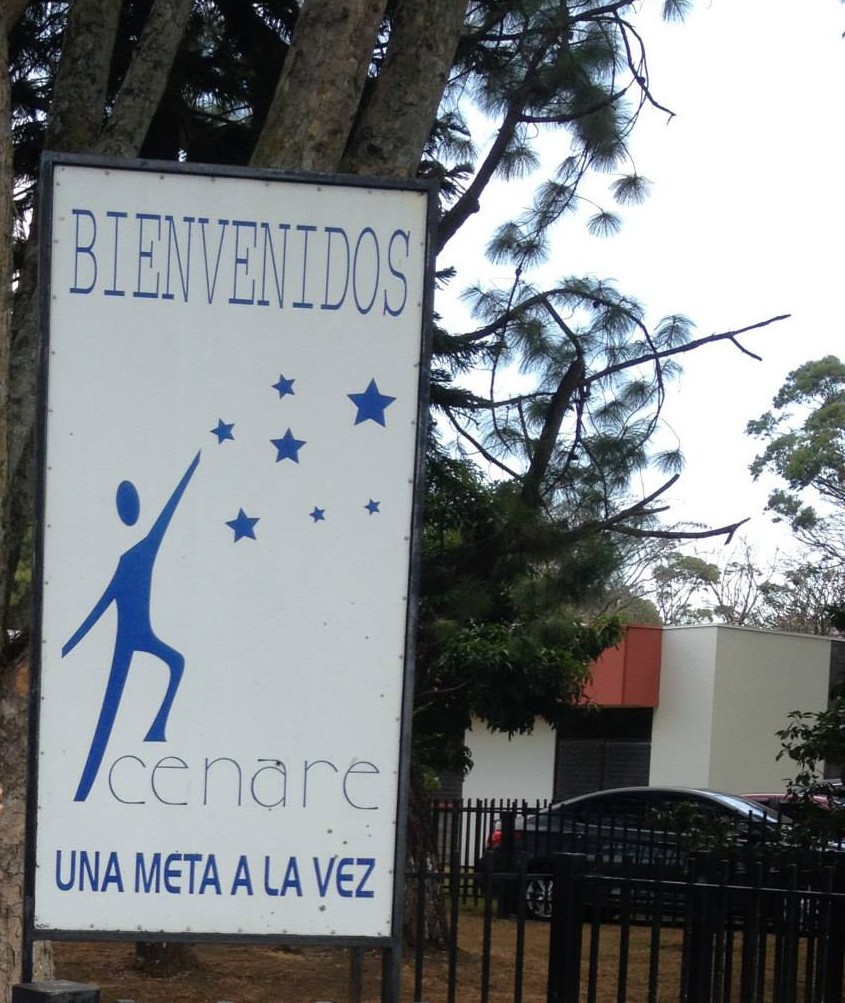
Bienvenidos cenare — Una meta a la vez
Just past the front gate stood a sign: Bienvenidos (Welcome), with the CENARE logo — a blue silhouette reaching for a star — and below it Una meta a la vez, "One goal at a time." Four Spanish words that sum up the essence of rehabilitation. Standing there straight after spending weeks going from hardware store to hardware store to put together one brace, that phrase stuck with me for a long while.
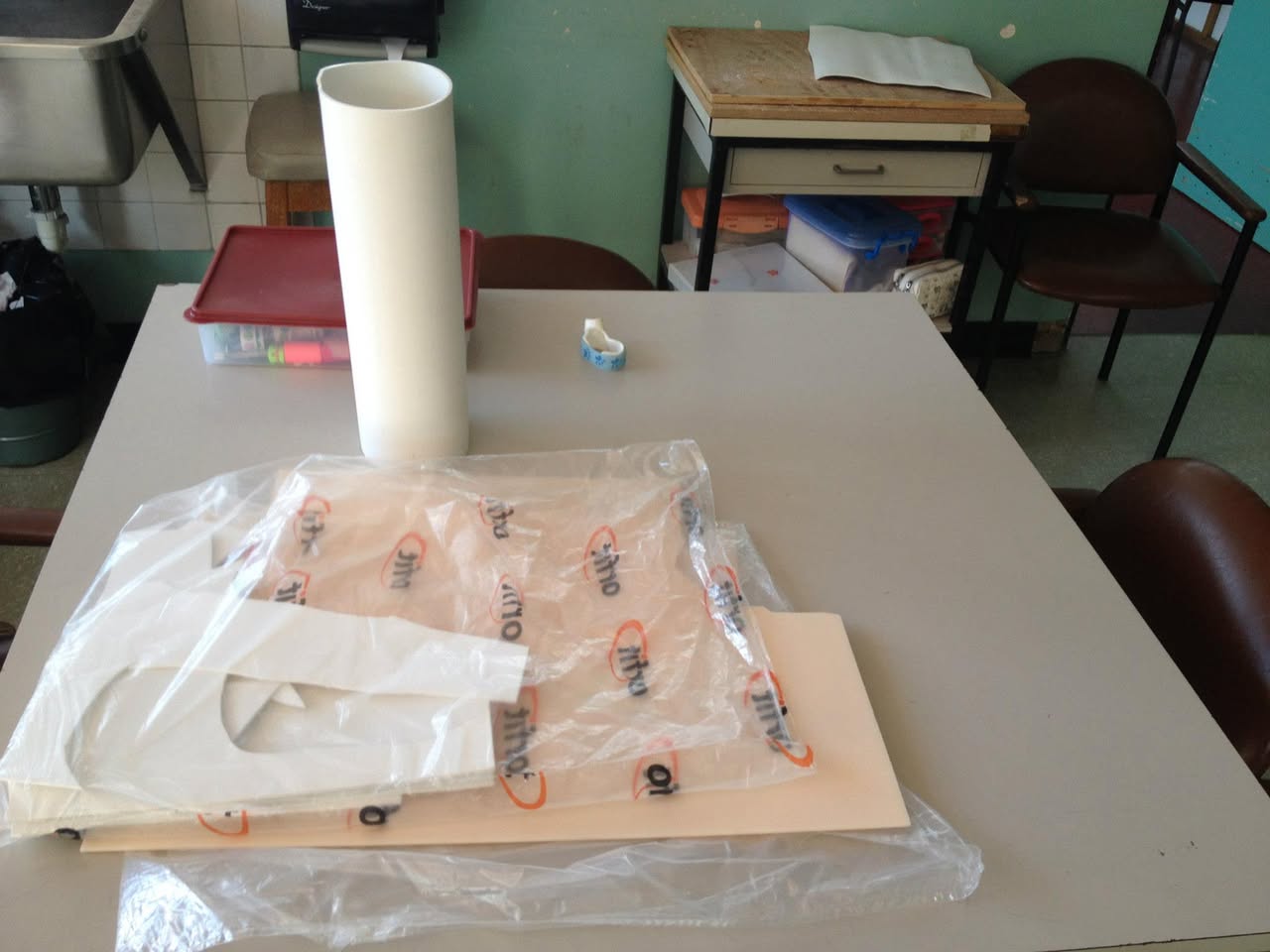
Contracture-prevention tools made from PVC pipe
The first thing that caught my eye inside was a stretching device made of pieces of PVC pipe — a simple tool for preventing the contractures (joint stiffening) that can follow a stroke. Plain construction, nothing fancy. The kind of thing I could probably build myself in an afternoon.
The senior volunteer guiding me said, quietly: "This one too — apparently a past volunteer taught them how to make it." A bit of know-how left behind by a Japanese staff member here years ago, still in daily use. The work had taken root. Short comment, but it rearranged something in my head: what I was doing day to day in San Vito sat on top of a timeline measured in decades, not months.
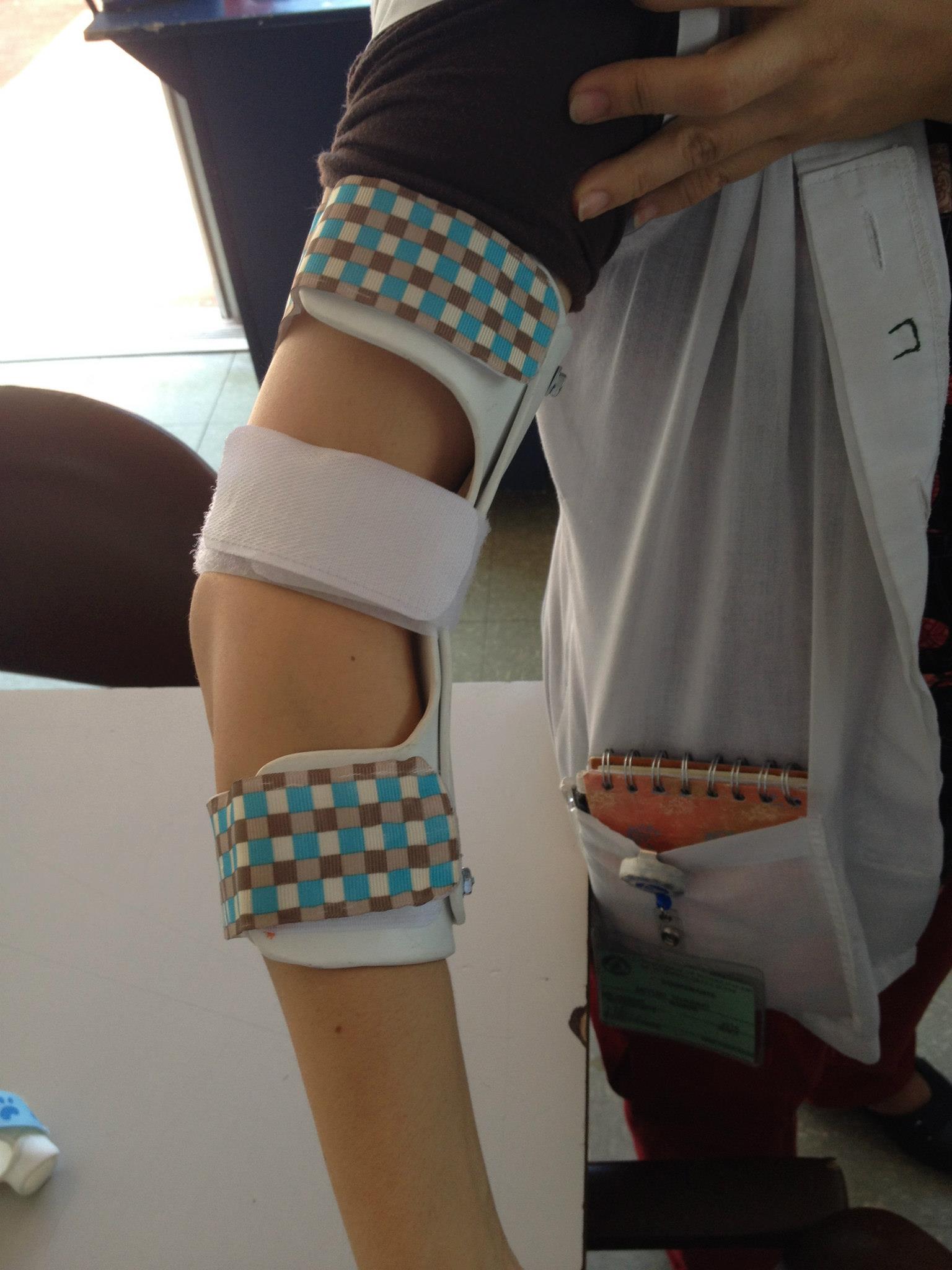
Inside the orthotics room
Then the orthotics room. Knee braces lined up cleanly on the shelves — sorted by size, sorted by type. "No latest-generation equipment, but for the physical therapy side, they're actually better stocked than what you'd typically see in Japan," the senior volunteer said, half-joking. Even just looking at the shelves, you could tell this was a place that had been put together over decades.

The sensory mat I wanted back in San Vito
In the training room there was a rubber mat covered in small round bumps — a sensory mat, used to deliver tactile stimulation through the soles of the feet. Useful for post-stroke sensory re-education, also for foot care in patients with diabetic neuropathy. In a Japanese rehab room it would be unremarkable, but San Vito had nothing like it — really, the San Vito clinic had no dedicated training equipment at all. Just my hands, the patient's body, and the walker borrowed from the local nursing home on a good day.
"Sensory mat — want one for San Vito." I scribbled it down right there in my notebook. The rehab equipment you actually need is rarely that long a list. But the gap between a place that has it and a place that doesn't is wider than you'd think.

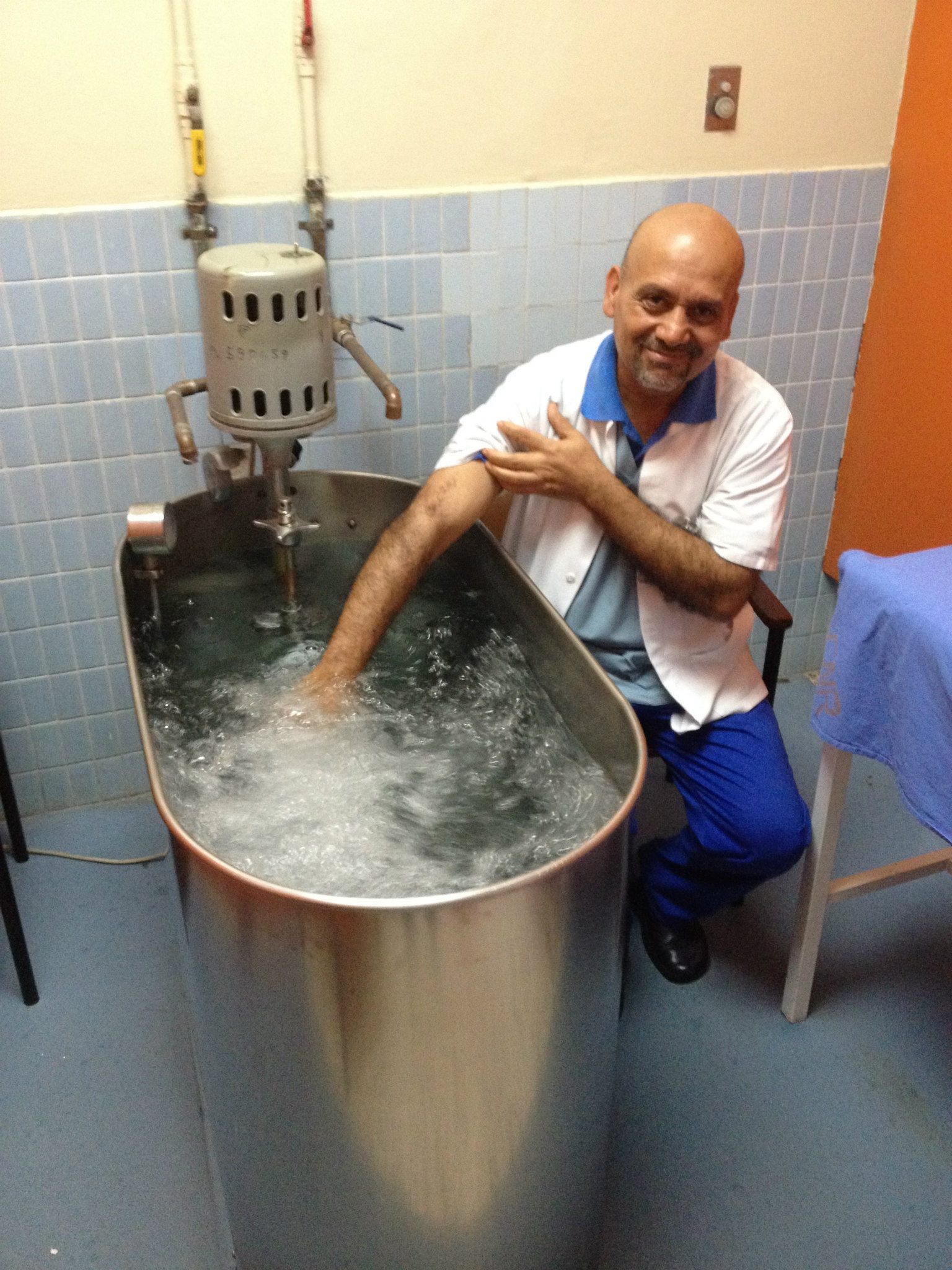
A lift into the pool
Further inside, a pool for hydrotherapy. Mounted at the poolside was a lift designed to lower a seated patient — someone who can't get into the water on their own — directly into the water. Some facilities in Japan have these, but I hadn't seen one in my own clinical experience. Finding one in a public Costa Rican facility was, frankly, unexpected.
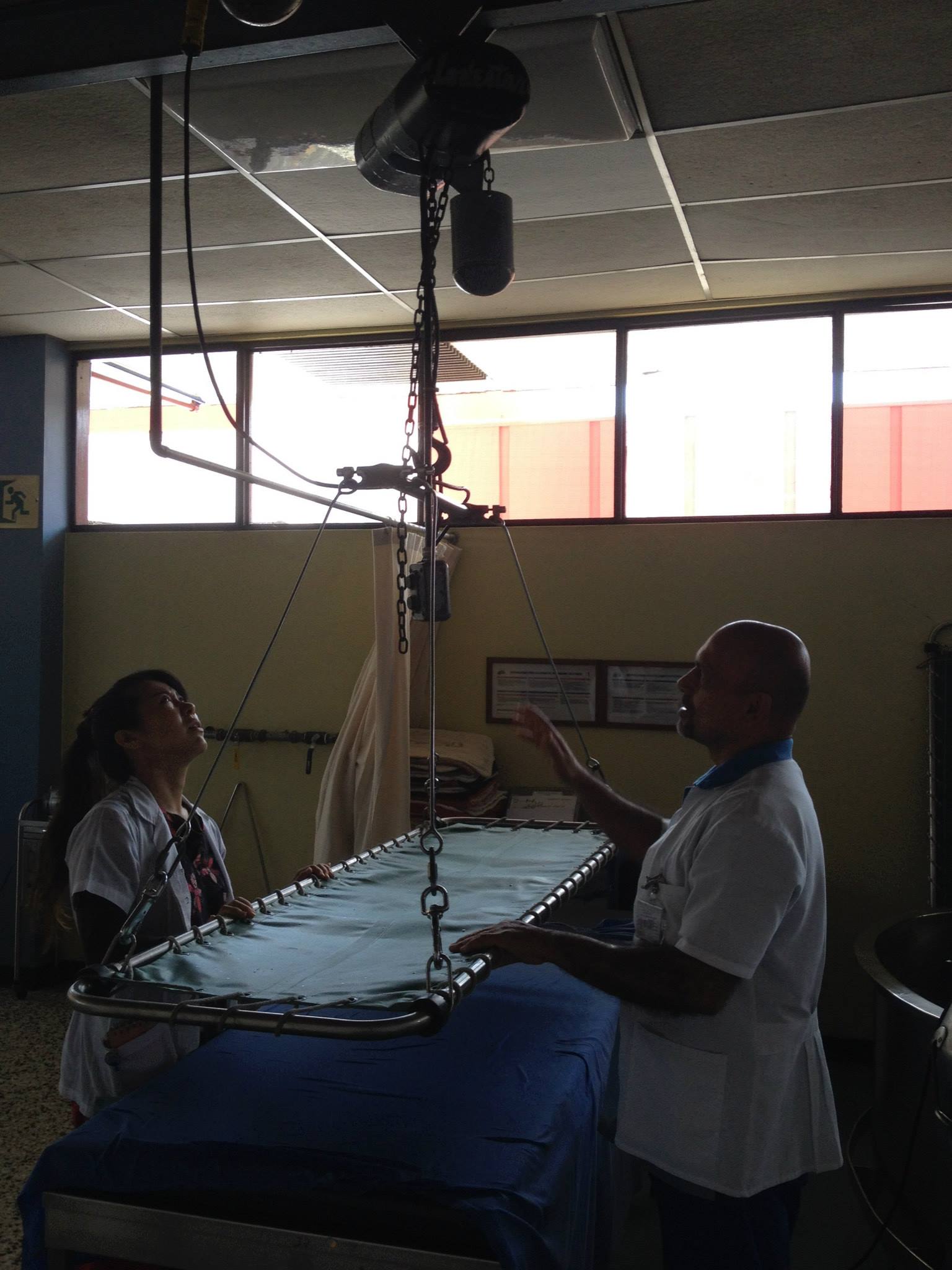
Big equipment I saw running for the first time
The last room I was taken into had a large piece of equipment I'd never seen in person. A device that supports the whole body in standing while assisting movement; I knew the concept existed and that some facilities in Japan had it, but I had never seen one in actual operation within my own clinical experience up to that point. "Want to try this someday," I wrote in my notes. Walking into a place described as "no latest equipment" and meeting a machine you've never seen running — that's a fun kind of surprise.
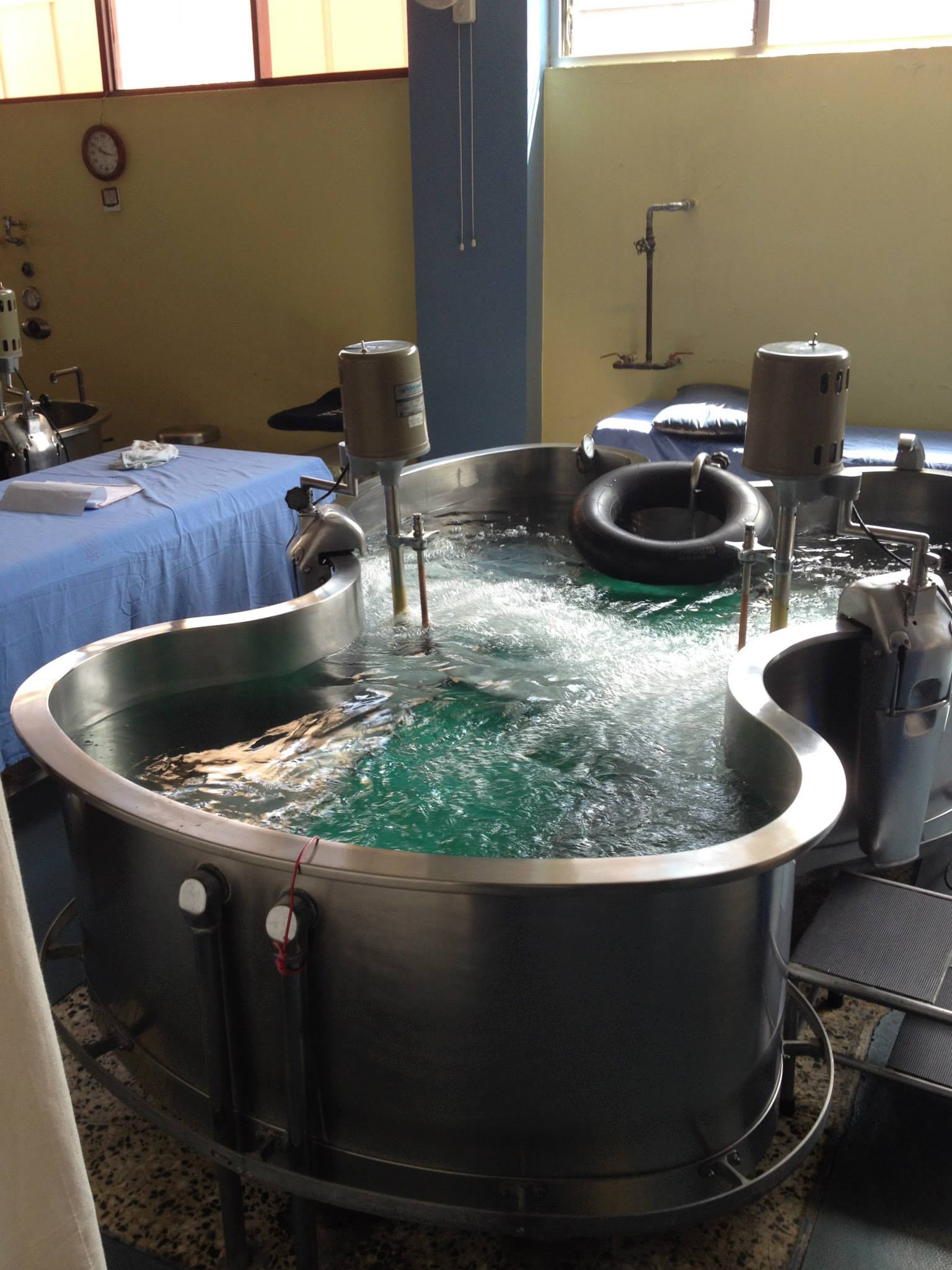
The view that ended up shaping later research
The tour wrapped up late in the afternoon. I thanked the senior volunteer and took the evening bus back to San Vito. Rocking through mountain roads on the way home, the thing rolling around in my head wasn't the equipment itself — it was something quieter.
Within one and the same country, the things missing from the San Vito clinic were sitting matter-of-factly on the shelves at CENARE. Between an assignment site where I had to build a brace by hand and a national center where braces are made as a profession, there was more than a seven-hour bus ride of physical distance — there was the length of the institutional path a patient has to walk to get from one to the other. You have to see a place that has before you really notice what isn't there. That's what the visit meant to me, looking back.
Background (general information)
This section is editorial context compiled from public sources. For the latest system details, please check the official channels below.
CENARE (Costa Rica's National Rehabilitation Center)
- Full name: Centro Nacional de Rehabilitación "Dr. Humberto Araya Rojas"
- Location: La Uruca, San José Province, Costa Rica
- Operated by: CCSS (Caja Costarricense de Seguro Social)
- Opened: 28 March 1977
- Historical context: A large polio epidemic in 1950s Costa Rica (over 50,000 children recorded as affected) drove the initial push for a national rehabilitation system. Dr. Humberto Araya Rojas began drawing up plans for the center in 1965; it took over two decades to bring CENARE into being.
Costa Rica's rehabilitation and orthotics supply
- Geographic concentration: Rehabilitation and orthotic fabrication capacity is concentrated in the capital. Patients in rural areas either travel hundreds of kilometers to CENARE or rely on the limited regional alternatives
- Public orthotic provision: For post-stroke care, the standard publicly funded short-leg brace is the SHB (Shoehorn Brace). Wait times to receive one are commonly several months to over half a year
- Variety of devices: Operating on a constrained budget and limited specialist workforce narrows the brace types actually available in practice. Options like Tamarack ankle joints aren't routinely seen on the floor
Further reading
- CCSS — CENARE official page
- Caja Costarricense de Seguro Social (CCSS)
- Ministerio de Salud Costa Rica (Costa Rica Ministry of Health)
- WHO — Priority Assistive Products List
Note: This article is a personal record of a single 2014 visit. CENARE's current facilities, equipment, and procedures may differ from what is described here. Please consult CCSS and CENARE's official information for the latest details.