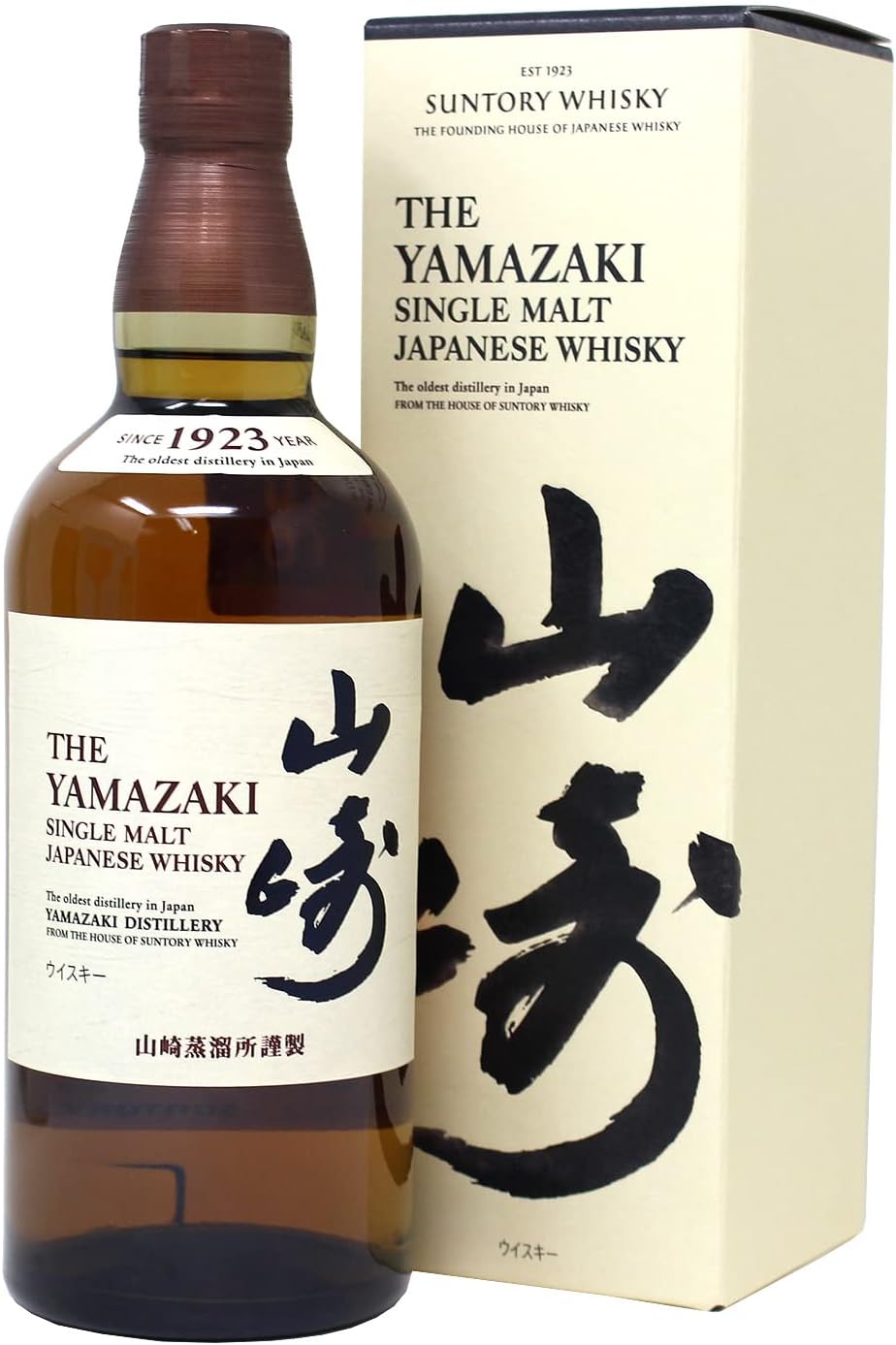
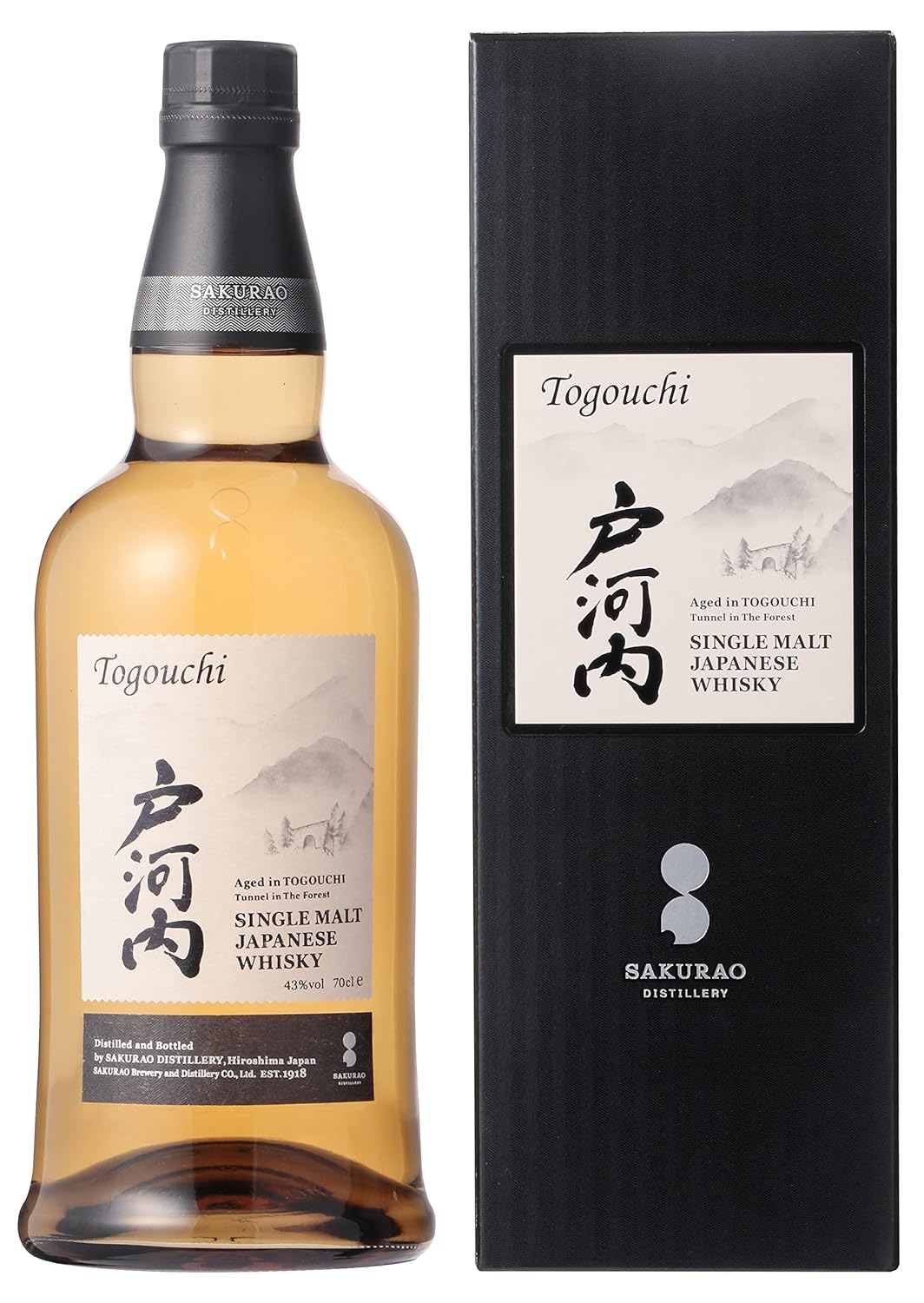
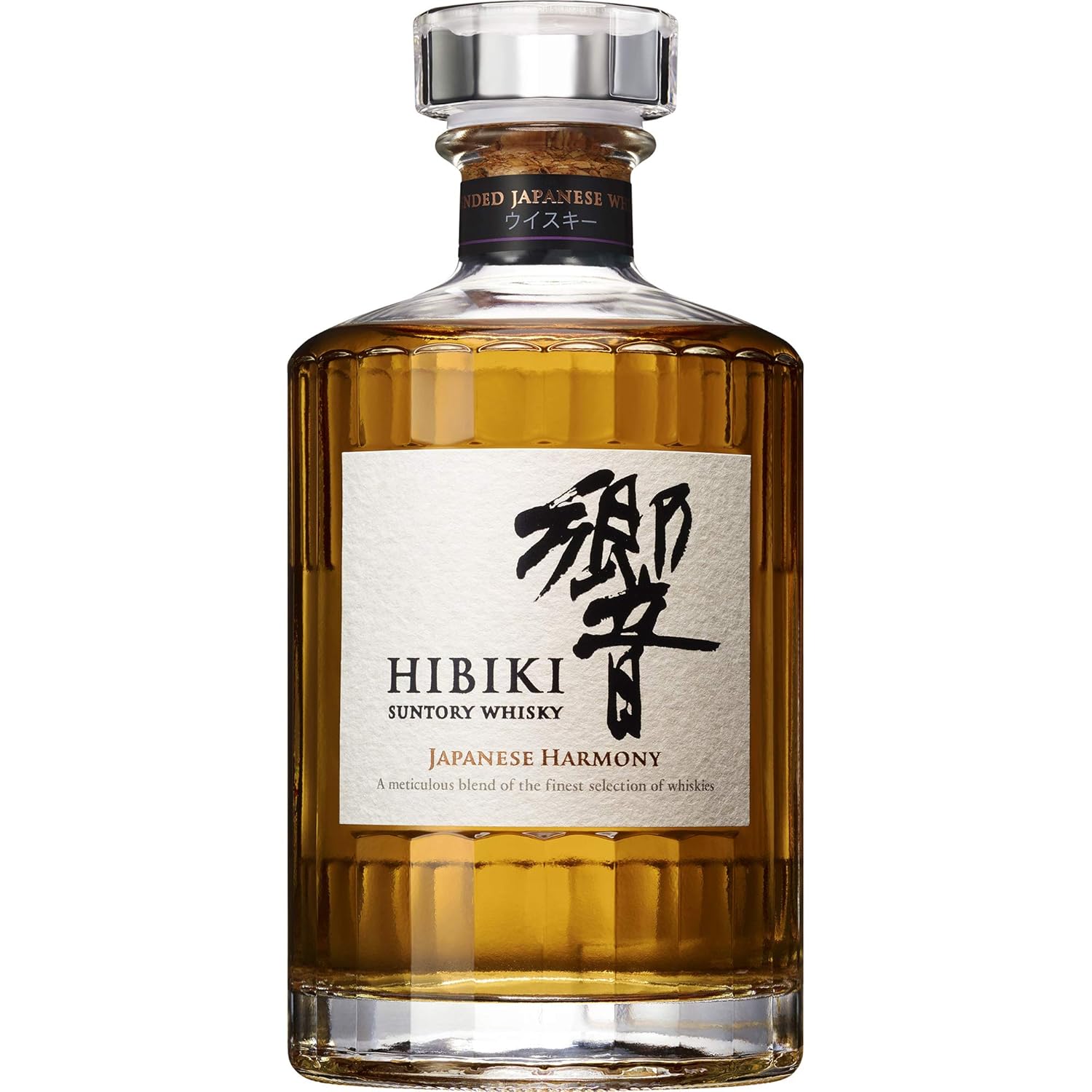
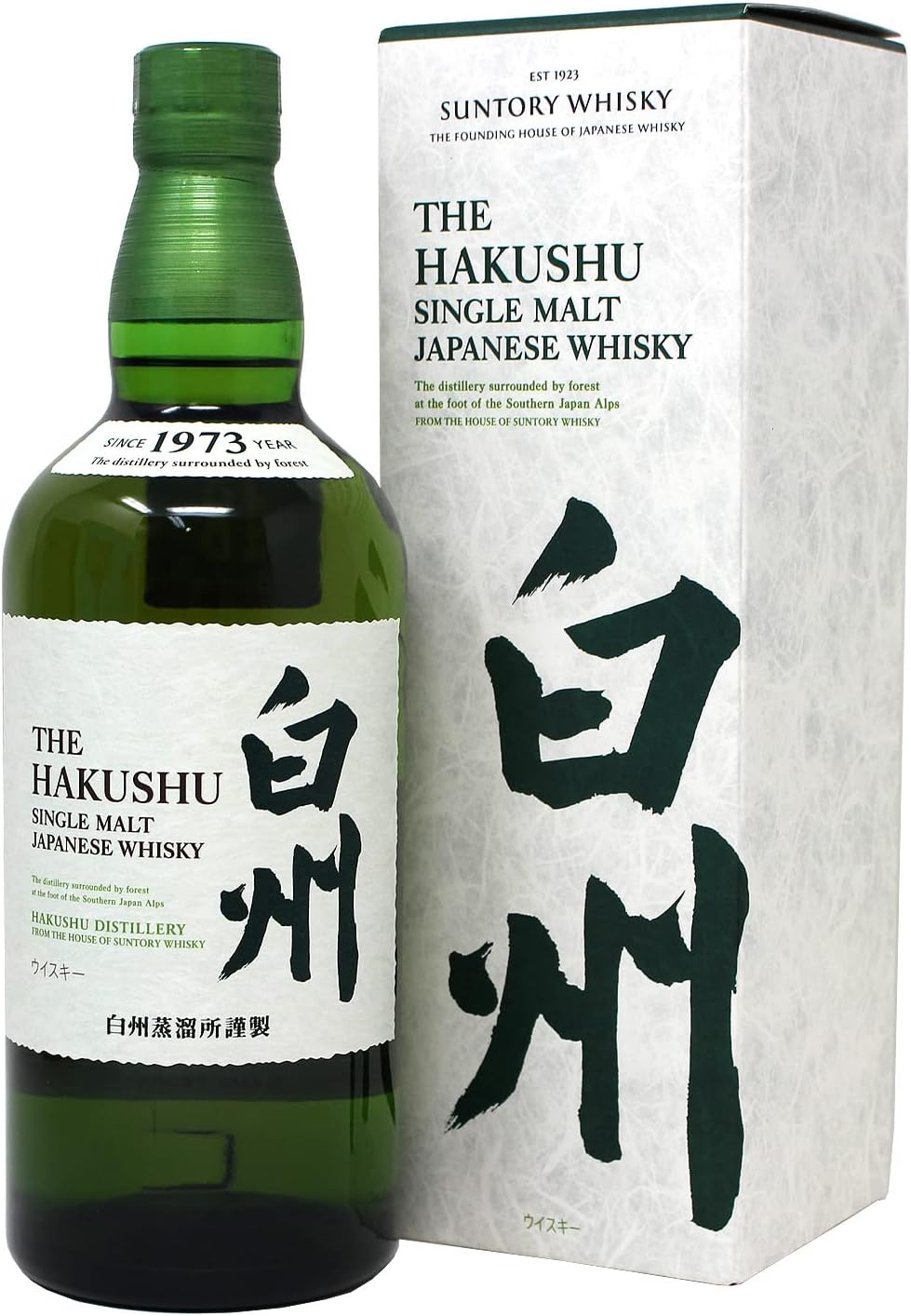
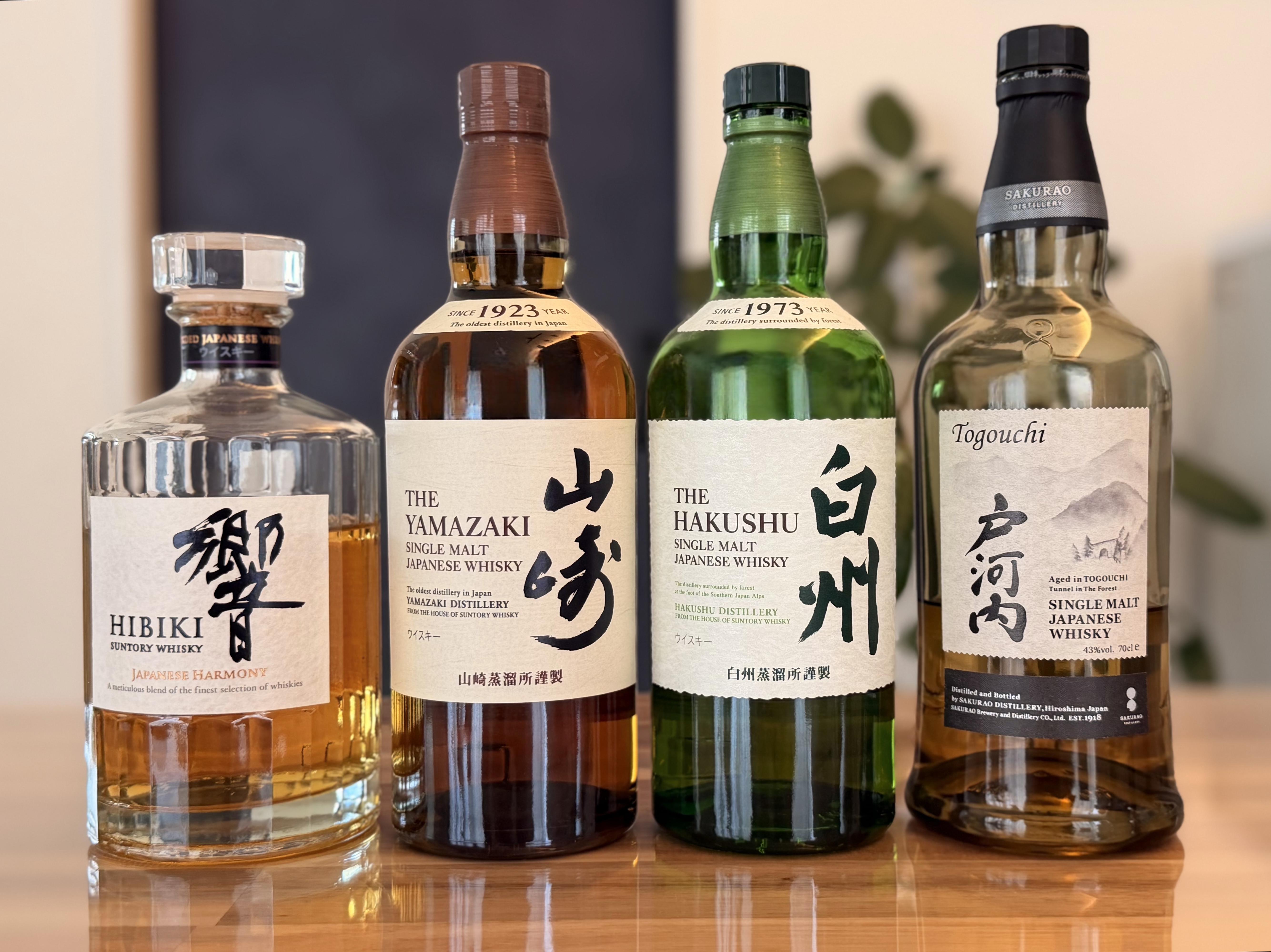
One shelf in my cabinet has four Japanese whiskies on it. Yamazaki, Hibiki, Hakushu, and Togouchi — the first three are Suntory's so-called "big three," and the last is a quietly admired bottle from a mid-sized distillery in Hiroshima. I pick by mood and what I'm eating, but if you ask me straight: the two I reach for most are Yamazaki and Togouchi. This is a quick run through all four, and why those two end up on top.
Yamazaki Single Malt (especially fond of)
In 1923, Suntory's founder Shinjirō Torii built a distillery in the Yamazaki valley on the border of Osaka and Kyoto. That was the start of Japanese whisky. Yamazaki Distillery is the origin of Japanese whisky, and the Yamazaki Single Malt made there is now a globally recognized bottle.
The flavour axis is "fresh and fruity." On the nose: pear, peach, honey, plus a Suntory-specific oriental note (kyara, sandalwood) from the mizunara oak casks they cultivated themselves. On the palate: full fruit; the longer-aged lots gain honey-like sweetness and weight. An elegant single malt that sits comfortably before, during, or after a meal.
What I like most is how Yamazaki holds its finish — one pour stays with me for thirty minutes or so. Right for that last drink of the night. The non-aged (NV) bottling already shows enough of the Yamazaki character; with prices being what they are, the realistic plan is to pick one up whenever you actually see it.
Togouchi Single Malt (especially fond of)
The other one I keep coming back to is Togouchi Single Malt, made by Chugoku Jōzō in Akiōta, Hiroshima Prefecture. Standing next to the Suntory big three, it gives off a quiet but unmistakable presence.
What makes Togouchi distinctive is its railway-tunnel maturation. Casks are aged inside the disused Togouchi railway tunnel of the former JNR Kabe Line, which runs through Akiōta. Underground, the temperature stays stable year-round, with low humidity swings — so maturation is slow and even, and the result has a settled woody note that's unusual for Japanese whisky.
Nose: malty cereal sweetness, dried fruit, a faint smoke. Palate: very soft mouthfeel — earth and wood, rather than the bright glamour of the Suntory big three. Because it's the lesser-known one, it's easier to find than Yamazaki, Hibiki, or Hakushu, and the price is genuinely reasonable. I'd recommend it to anyone who feels Japanese whisky has gotten too expensive to try; for me it's a household pillar alongside Yamazaki.
Hibiki Japanese Harmony
Suntory's flagship blend, Hibiki Japanese Harmony. It combines malt from Yamazaki and Hakushu with grain whisky from Chita, harmonizing the personalities of multiple cask types — white oak, Spanish oak, mizunara, bourbon — into the "Harmony" of the name.
The drinking is "harmony" in the truest sense — not a single dominant note, but a balanced whole. Honey, white flowers, grapefruit, mizunara kyara. The finish lands neatly. Neat it's poised; as a highball it can sit next to almost any cuisine. The bottle to open when guests come over.
The 24-faceted bottle echoes the 24 traditional solar terms of the Japanese calendar — it's almost an art object on its own. Set it on a table and the table changes.
Hakushu Single Malt
Suntory's second distillery, Hakushu Distillery, sits in Hokuto in Yamanashi Prefecture, where they make Hakushu Single Malt. The location — at the foot of Kai-Komagatake in the Southern Alps, surrounded by forest at 700 m — has earned it the nickname "the forest's whisky."
The character is fresh and light. Green apple, mint, light peat, white pepper. Where Yamazaki is full-bodied, Hakushu slips in cleanly. The Hakushu highball is the way Suntory officially recommends it: a tall glass with a big chunk of ice, Hakushu, hard-sparkling soda, and finally a slap of mint dropped in — for a summer evening it's hard to beat.
I do think it's an outstanding food whisky, but of the four it's the one I reach for least. The reason is simple: I lean toward "neat, slowly," and Hakushu's true ground really is the highball. With guests, though, it consistently lands well.
The fun of Japanese whisky is that each bottle carries a different Japanese landscape on its back. Yamazaki is the bamboo groves of Osaka. Hibiki is the precision of craft. Hakushu is the Southern Alps forest. Togouchi is a tunnel in the mountains of Hiroshima. Every time I tilt a glass, I'm taking a small trip to that place.
Japanese Whisky — Background
※ This section combines public information with the author's notes; please confirm the latest details on the official sites.
Suntory Yamazaki Distillery (1923–)
Shimamoto, Mishima District, Osaka. Japan's first whisky distillery. Founded by Shinjirō Torii; the first master blender was Masataka Taketsuru, who later founded Nikka. The site is near the confluence of the Katsura, Uji, and Kizu rivers — a humid basin climate well suited to whisky maturation.
Suntory Hakushu Distillery (1973–)
Hakushu, Hokuto, Yamanashi Prefecture. At 700 m elevation, using groundwater from the Southern Alps. The grounds are also a forest park, with tours and tastings available. Built deliberately to contrast Yamazaki's weight with a lighter, brighter character.
Togouchi Whisky and Chugoku Jōzō
A whisky from Chugoku Jōzō (SAKURAO B&D) in Hatsukaichi, Hiroshima. Maturation takes place in an underground cellar inside the former JNR Kabe Line's Togouchi railway tunnel (around 400 m elevation) in Akiōta, where temperature stays stable year-round — yielding the bottle's distinctive smoothness. It has won several international awards.
The "Japanese Whisky" definition
In 2021 the Japan Spirits & Liqueurs Makers Association set voluntary standards for "Japanese Whisky": ingredients limited to malt, cereals, and Japanese-sourced water; saccharification, fermentation, and distillation in Japan; aged for at least three years in wooden casks; bottled in Japan; minimum 40% ABV. Yamazaki, Hibiki, Hakushu, and Togouchi all meet those standards.
Global demand for Japanese whisky
Since the 2010s, Japanese whiskies have racked up high marks at the World Whiskies Awards and ISC, and global demand has surged. Stock pressure forced temporary or permanent suspension of bottlings like Yamazaki 12, Hakushu 12, and Hibiki 17, and consistent availability at original retail prices is still difficult. The growing attention paid to mid-sized distilleries like Togouchi is the flip side of that pressure.
All four are available on Amazon.co.jp. Suntory's big three run above list price thanks to tight supply, but Togouchi can still be had at a genuinely reasonable price.