On April 27, 2025, leaving Ōkawa Elementary School behind, I rode my XSR900 toward Matsushima. That morning, Kadonowaki Elementary School; at midday, Ōkawa. Both were places where the memory of the tsunami is deeply carved. Along the same Miyagi coast, in the evening, I rode to just one more place — Matsushima, one of Japan's "Three Views."
Matsushima came to be called one of the "Three Views of Japan" back in the Edo period. Alongside Amanohashidate and Miyajima, one of three great scenes, it has long been set down in poems and travel journals; Bashō, too, stopped at this bay on the journey of Oku no Hosomichi. — To be honest, none of that pedigree was much in my head as I rode in. But when I reached the bay and saw the sea, I did think: ah, this is a view someone would want to write down. On the calm water, island after island, each with its pines.
Matsushima Bay holds some 260 islands, large and small. Arriving at the bay, I first parked the bike at the foot of the vermillion bridge to Fukuura Island — the Fukuura Bridge.
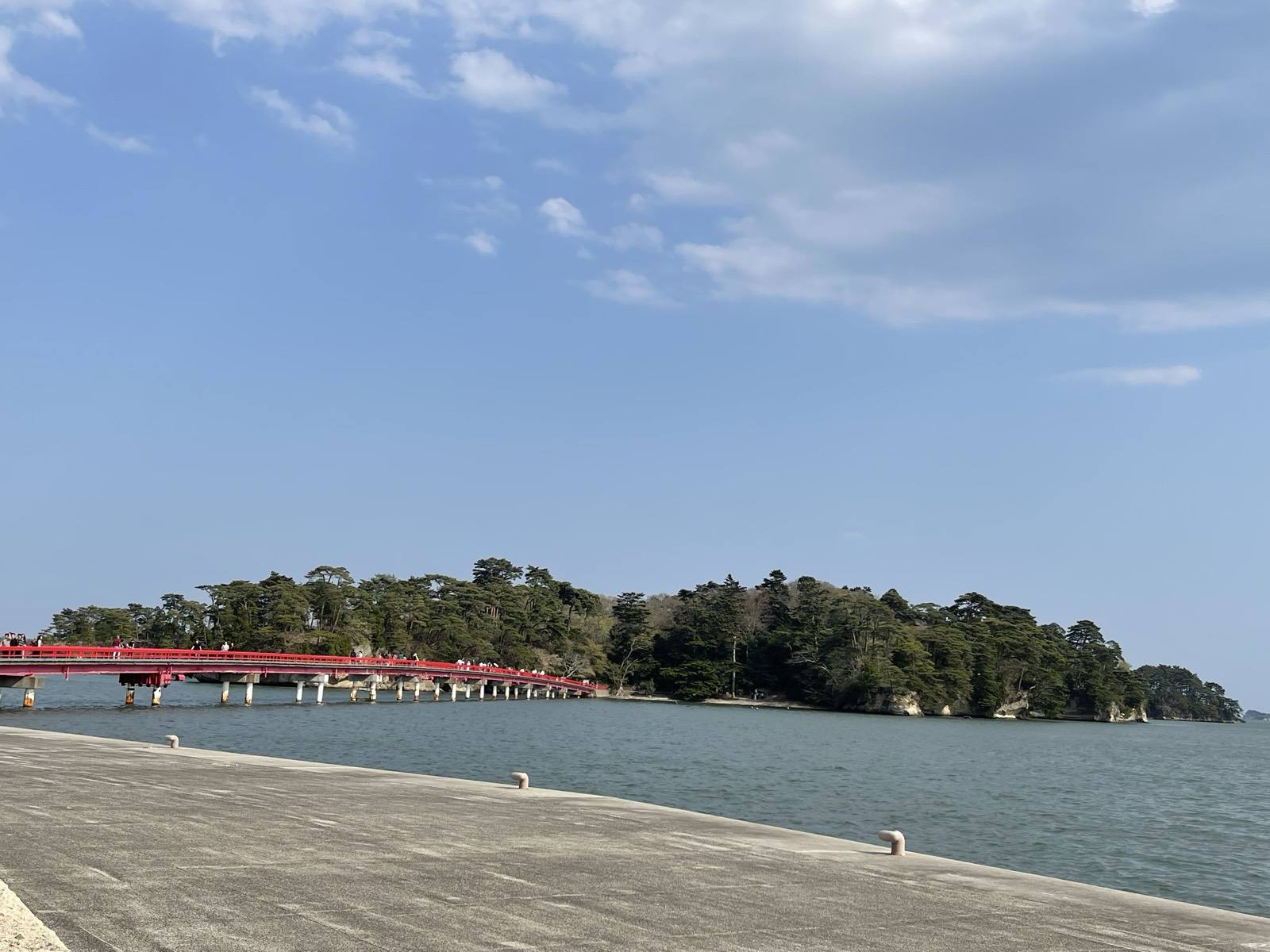
Crossing the bridge costs a fee. On a one-day dash, with time scarce, I did not cross this time. Even so, the red bridge seen from the shore, and the green of the island beyond, were picture enough. Fukuura Island, past the bridge, is said to be an island of plants laced with walking paths. Walking it, I save for the next time I come. The sea was astonishingly calm.
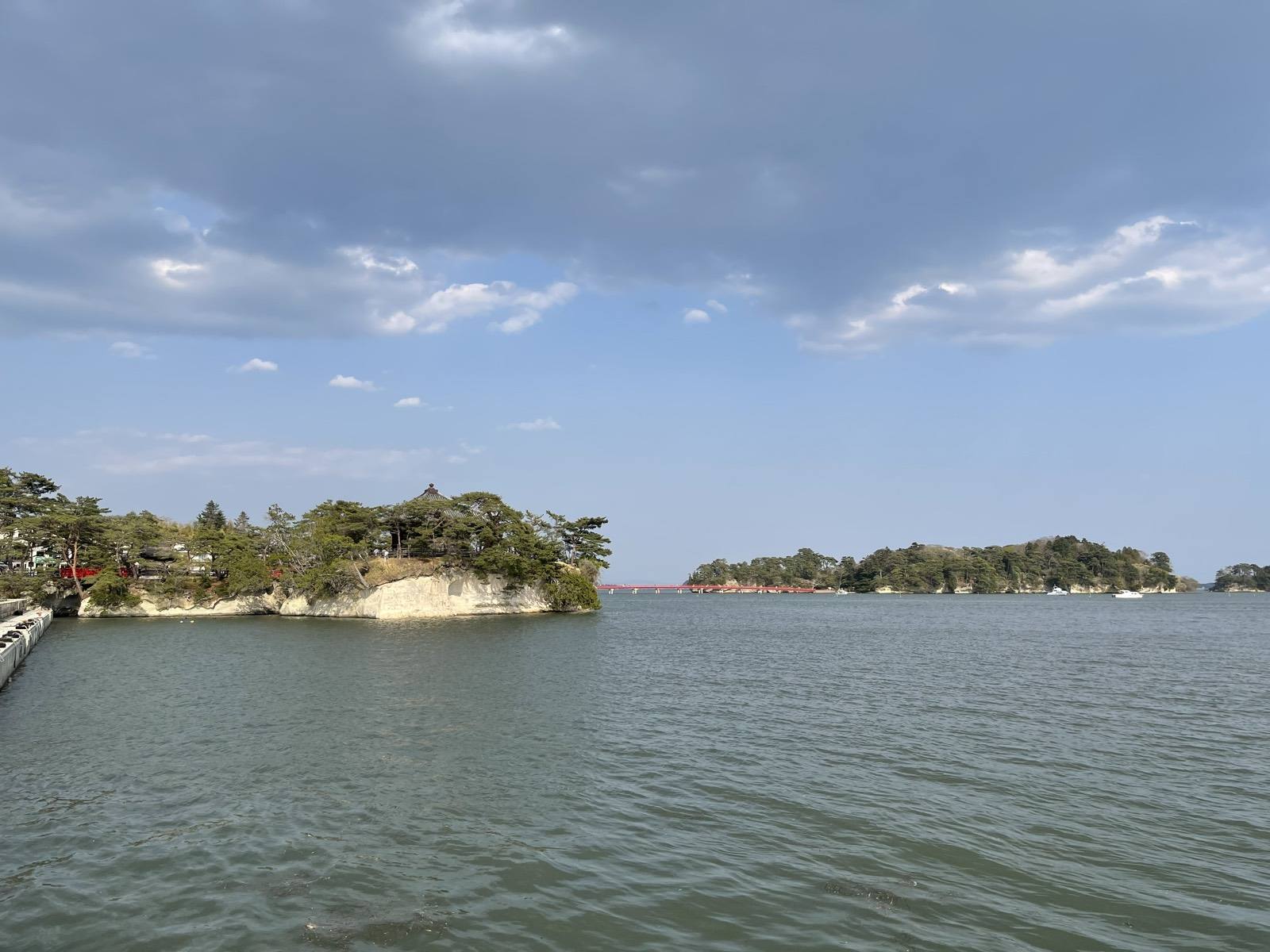
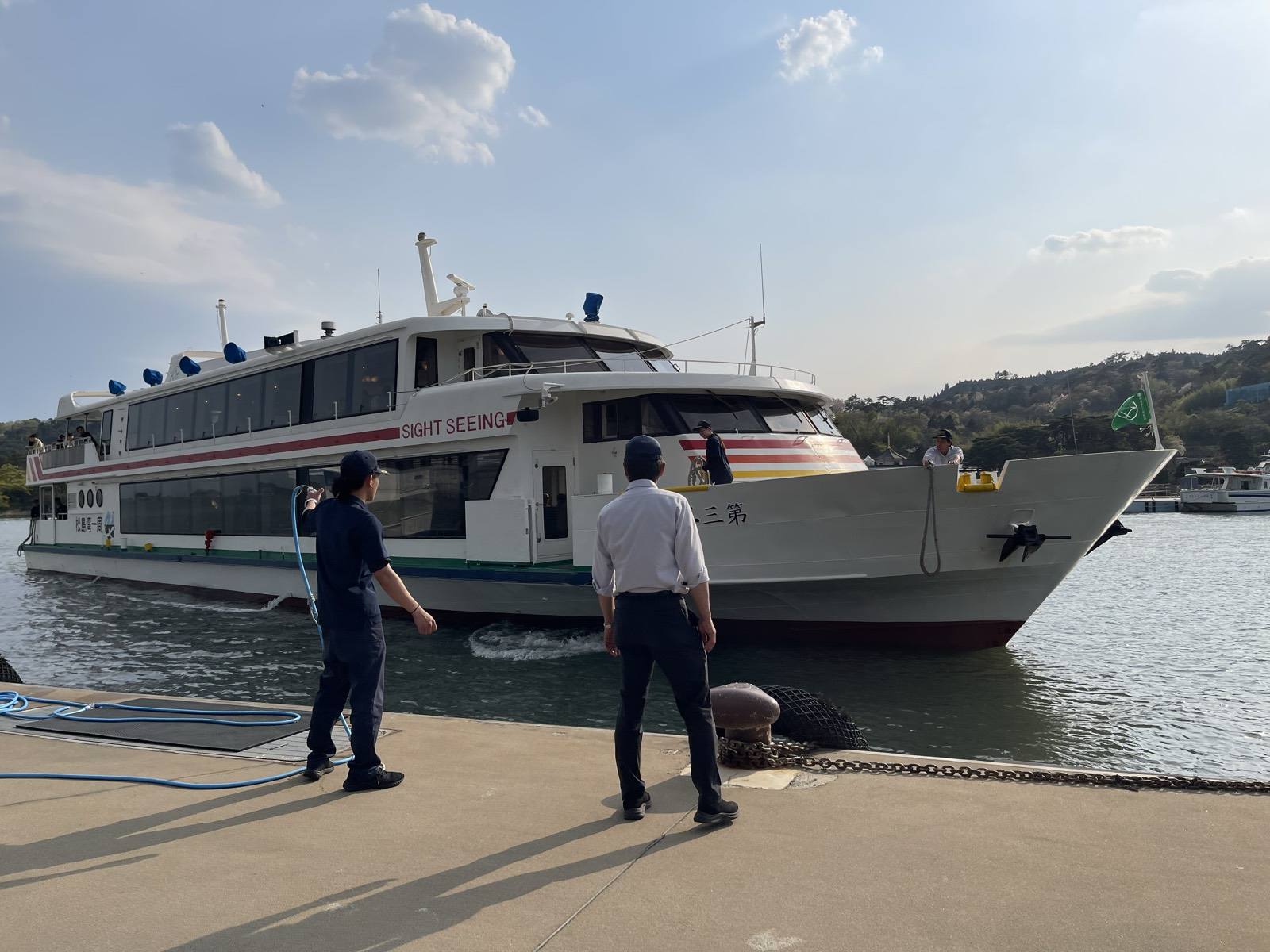
Boarding the cruise boat
Matsushima can be toured by sightseeing boat. From the central pier, a route winds among the islands and back in about 50 minutes. Since I had come this far, I decided to take it.
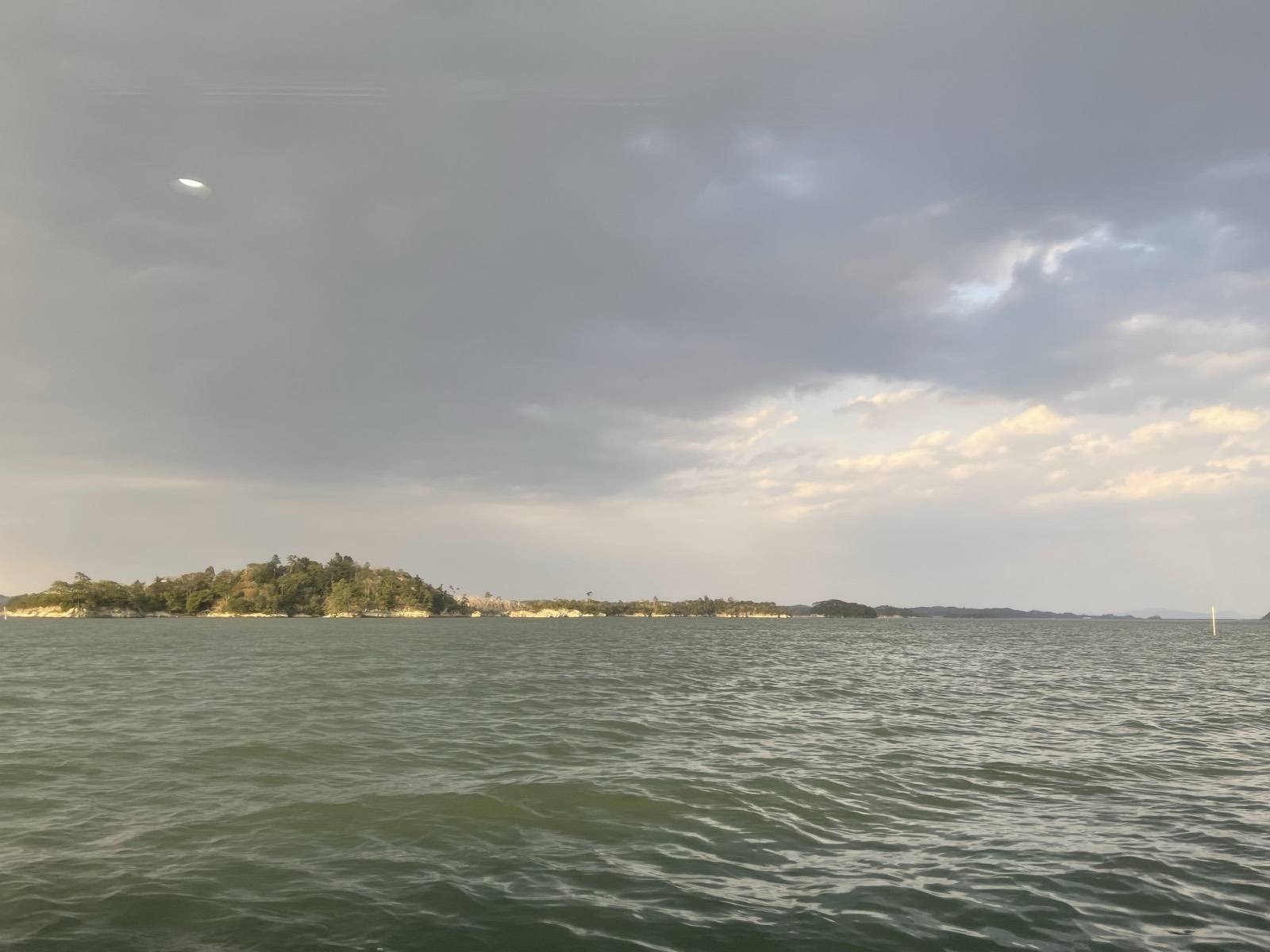
As the boat left the pier, islands closed in at once. The islands of Matsushima are each a different shape — an island with a flat head and pines on top; an island wave-cut and narrowed at its feet; two islands leaning together. Onboard, commentary played for each island as it passed — its name, and the story behind it. That was good. To watch the scenery simply flow by, against seeing it after hearing one name and one story — even the same island looks different.
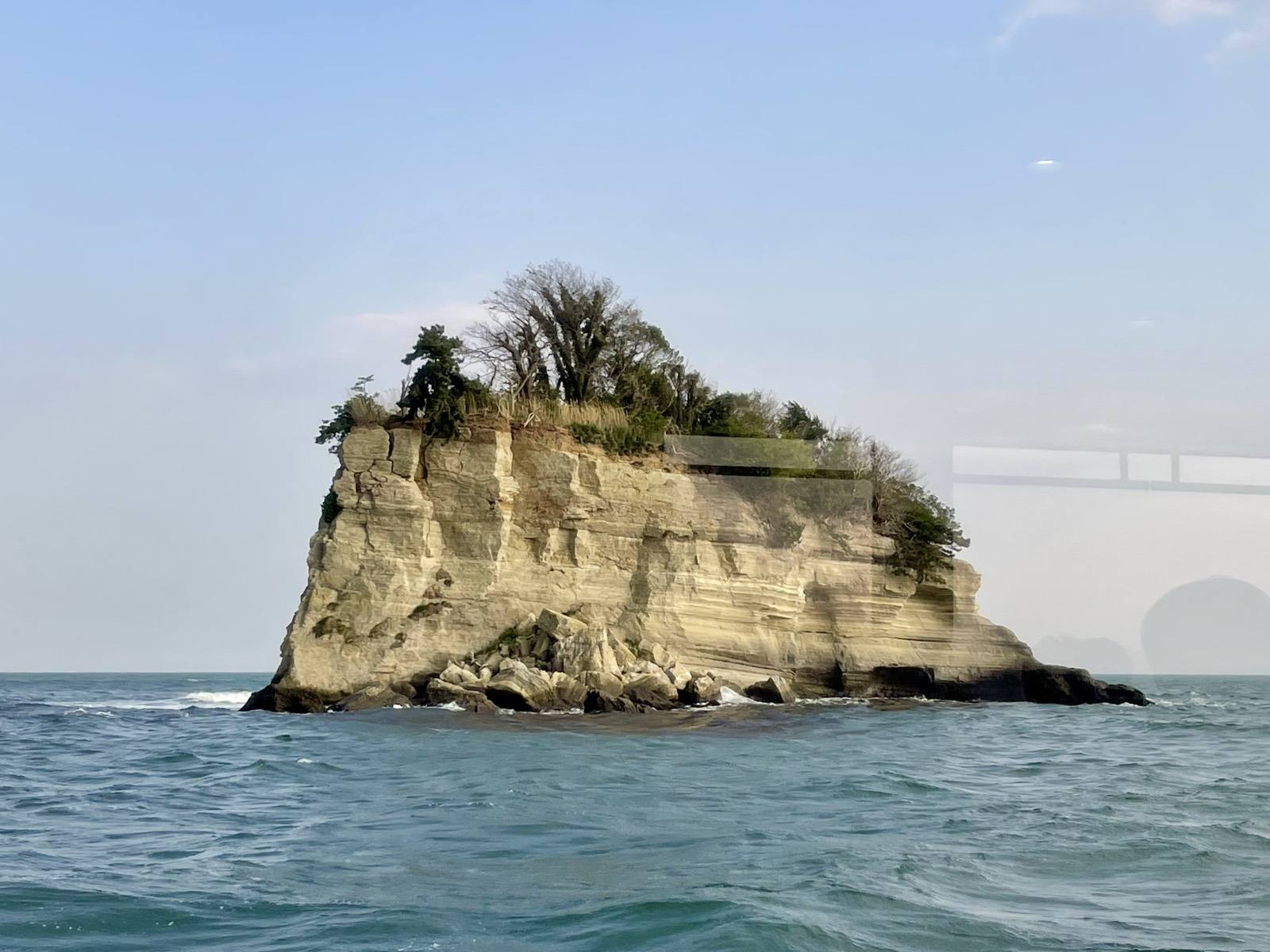
The soft light of late April. Beyond the window, my eyes moved on their own, island to island.
The islands of Matsushima, they say, are soft rock shaped over a long, long time by waves and wind; that is why their feet are narrowed and their heads gone flat. Many of the bay's islands have names, and the onboard commentary picked up each one. Only a few of them stayed with me, though.
The islands, and that sea
Matsushima Bay, they say, was not struck in its inner reaches by the 2011 tsunami as severely as the Sanriku coast was. The deeply indented terrain, and the islands crowding the bay, softened the force of the waves. Godaidō, standing at the water's edge — an old hall built in the time of Date Masamune — and Zuiganji, the national treasure, both survived.
— And yet, the islands themselves took the waves. The island communities that ended up shielding the inner bay were themselves badly hit. It is not that the side doing the shielding came through unharmed.
To eyes that had seen Kadonowaki that morning and Ōkawa at midday, this calm bay and its islands did not look like mere scenery. The same Tōhoku sea — in one place it swallowed a town, in another it softened the waves. And yet the sea itself is only one.
Ending the trip
"How peaceful." — In the wind on the deck, I thought it plainly. After seeing two heavy places one after another, perhaps the stillness sank in all the more.
I got off the boat and set straight off home. I could not stop at Godaidō or Zuiganji, and the oysters Matsushima is famous for I left, too, for next time. A one-day dash is, more or less, like that. What you miss becomes a reason to come again.
From the walls of snow on the Bandai-Azuma Skyline, to the hill at Kadonowaki, the schoolyard at Ōkawa, and then the gentle sea of Matsushima — two days and one night in Miyagi carried me a long way. The Tōhoku coast holds all of this within a single shoreline. Next time, I think I will come a little more slowly.
Before you go
- Matsushima Bay cruises: sightseeing boats tour the islands from the central pier and elsewhere; a route of around 50 minutes is standard. Check schedules and fares on each operator's official site.
- Fukuura Bridge: a vermillion bridge to Fukuura Island, about 252 m long. Crossing requires a toll (the island has walking paths).
- Godaidō & Zuiganji: landmarks of the Matsushima coast area, both within walking distance. There was no time to visit this time.
- Getting there: within walking distance of Matsushimakaigan Station (JR Senseki Line). By car or motorcycle, there is parking nearby.